

If you are considering architecture as a career today, one question can be difficult to ignore: will architects be in demand in 10 years?
The most evidence-based answer is yes, architects are likely to remain in demand, although the profession may look very different by 2036. There is no single reliable global employment forecast that tells us exactly how many architects the world will need in 2036. However, current employment projections, urban growth, India’s development outlook, renovation requirements and the transformation of the building sector all point towards a continuing need for architectural expertise.
Technology will undoubtedly change the work architects do. Artificial intelligence, BIM, automation and advanced design software are already making some processes faster. At the same time, architects are being asked to solve increasingly complex problems involving climate, urbanisation, building performance, housing, infrastructure and the reuse of existing buildings.
So, the future of architecture jobs is not simply a story about whether architects will survive AI. It is about how the role of the architect will evolve.
Official Job Projections Still Show Demand for Architects
One of the clearest indicators comes from the latest occupational forecast published by the U.S. Bureau of Labor Statistics (BLS).
BLS projects employment of architects, excluding landscape and naval architects, to grow by 4% between 2025 and 2035, which it describes as about as fast as the average for all occupations. Employment is projected to rise from approximately 124,600 architects in 2025 to 129,900 in 2035, representing roughly 5,300 additional jobs.
BLS also projects about 6,900 openings for architects each year, on average, during this period. Importantly, those 6,900 openings should not be confused with 6,900 completely new jobs every year. Many are expected to arise because existing workers retire, change occupations or otherwise leave the workforce.
That distinction makes the figure much more accurate.
BLS also specifically expects architects to be needed for the construction and renovation of homes, schools, healthcare facilities and other structures, particularly for sustainable design. It notes that BIM, measuring technologies and AI are increasing productivity but may also allow architects to participate more broadly across the building process and assume new responsibilities.
Although these statistics apply to the United States rather than the entire world, they provide useful evidence that one major labour market is projecting continued demand for architects through 2035, not the disappearance of the profession.

Growing Cities Will Continue to Need Architectural Expertise
Urbanisation is another major reason the future demand for architects remains significant.
According to the United Nations’ World Urbanization Prospects 2025, cities are now home to about 45% of the world’s population of 8.2 billion people. The UN also projects that roughly two-thirds of global population growth between now and 2050 will occur in cities, with most of the remaining growth occurring in towns.
The 45% figure needs to be described carefully. It refers specifically to people living in cities under the classification used in World Urbanization Prospects 2025, rather than being a general figure for everyone living in all types of urban settlements.
Nevertheless, the direction is clear. Cities and towns will have to accommodate more people while dealing with housing, transport, public space, healthcare, education, infrastructure and environmental pressures.
This does not automatically translate into one architecture job for every new building. But it does mean that the problems architects, urban designers and other built-environment professionals work on are not disappearing.
The architecture career future will increasingly involve questions about how cities can grow without becoming less liveable, how housing can respond to density, how public spaces can perform better and how development can work with infrastructure instead of overwhelming it.
Also read – Architecture After 12th: Important Things Every Future Architect Must Know
Will Architects Be in Demand in India in the Next 10 Years?
The outlook for architecture jobs in India deserves particular attention because India is entering a major period of urban and built-environment transformation.
The Government of India’s Economic Survey 2025–26 states, citing World Bank estimates, that India’s towns and cities could be home to about 600 million people by 2036, or around 40% of the country’s population, compared with roughly 31% in 2011. The Survey also stresses that Indian cities function as critical economic infrastructure and require deliberate investment and strategic planning.
That is particularly relevant because 2036 is almost exactly the 10-year horizon students asking about the future scope of architecture in India are interested in.
Real estate projections provide another indicator of the scale of development being discussed. A February 2026 KPMG in India report projects India’s real estate market size increasing from approximately ₹26.4 trillion in 2025 to ₹88 trillion by 2030.
However, this figure needs an important qualification: growth in real estate is not the same thing as growth in architect employment.
India does not have a directly comparable architect-specific 2025–2035 occupational forecast in the sources used here like the BLS forecast available for the United States. Real estate and urbanisation figures should therefore be treated as indicators of activity in the built environment, not as guarantees of jobs or salaries for architecture graduates.
Still, housing, workplaces, educational facilities, hospitals, hospitality projects, urban infrastructure, transport-linked development and redevelopment all require planning and design expertise. KPMG also points to infrastructure investment and the increasing importance of Tier-2 and Tier-3 cities as drivers of future real estate activity.
That gives students a more realistic reason to be positive about the future of architecture in India.
Climate-Responsive Architecture and Building Performance Will Matter More
One of the biggest changes in the architecture profession may come from the environmental performance of buildings.
The UN Environment Programme’s Global Status Report for Buildings and Construction 2025–2026 states that buildings and construction account for around 37% of global CO₂ emissions and nearly 50% of global material extraction. The sector also represents an estimated 11–13% of global GDP.
Perhaps even more relevant to future architects, UNEP states that half of the buildings that will exist in 2050 are still to be built or renovated.
That means architects will not only be designing new buildings. A major part of the future built environment will involve upgrading, adapting and improving buildings that already exist.
Issues such as energy performance, passive cooling, heat resilience, daylight, ventilation, water management, material selection and embodied carbon are likely to become increasingly important parts of architectural decision-making.
For architects in India and other hot or rapidly urbanising regions, climate-responsive architecture could become particularly valuable. Designing for shade, orientation, thermal comfort and reduced energy demand is becoming less of a niche design philosophy and more of a practical performance requirement.
Architects who understand both design and building performance may therefore have a stronger position in the architecture job market of the future.
Renovation and Adaptive Reuse Could Create an Entirely Different Kind of Demand
The future of architecture is not only about constructing more buildings.
UNEP estimates that the world is currently adding around 12.7 million square metres of floor area every day. At the same time, enormous quantities of existing building stock will need renovation, improvement or adaptation over the coming decades.
BLS also specifically identifies renovation as one of the areas expected to contribute to demand for architects through 2035.
This makes adaptive reuse architecture increasingly relevant.
Offices may become housing or mixed-use spaces. Industrial buildings may become cultural or commercial destinations. Older homes, schools and public buildings may require upgrades for accessibility, energy efficiency and changing patterns of use.
For architects, this means future work may involve asking not only, “What should we build?” but also, “What can we intelligently preserve, transform and reuse?”
That requires design judgment, knowledge of existing structures, material understanding and the ability to work within constraints. These are areas in which architectural expertise can remain highly valuable even if the rate of completely new construction changes.
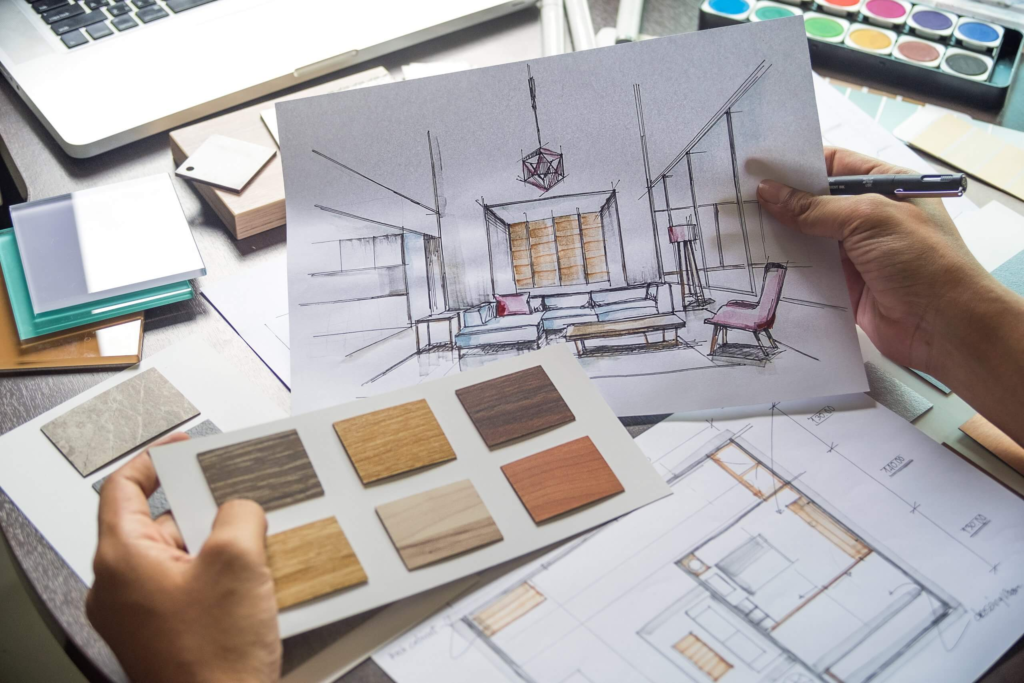
Will AI Replace Architects? The Latest Evidence Is More Complicated
Any discussion about whether architects will be in demand in 10 years has to address artificial intelligence honestly.
AI adoption in architecture is accelerating rapidly. RIBA’s AI Report 2026 says nearly three-quarters of architectural practices surveyed, around 74%, are now using AI in at least some of their projects.
But the latest research is less uniformly optimistic about employment than it was only a year earlier.
RIBA reported in 2026 that 59% of practices surveyed believe AI adoption will lead to staff reductions across the architecture profession. Another 61% agreed that AI could make it more difficult for early-career professionals to acquire essential skills and experience, because some tasks traditionally used for training may increasingly be automated. RIBA also noted that there was not yet clear evidence of sector-wide AI-driven staff cuts at the time of publication.
Those findings should not be ignored.
At the same time, 77% of respondents said AI could never replace human creativity, while RIBA emphasised the continuing importance of creativity, critical thinking, professional judgment and professional oversight.
So, saying “AI will never affect architecture jobs” would be inaccurate. Saying “AI will replace all architects” would also go far beyond the available evidence.
The more realistic expectation is that AI will change the composition of architectural work.
Routine production, visualisation, administrative work, documentation and some forms of analysis may become faster or require fewer hours. Early-career roles may consequently evolve. At the same time, architects will still need to interpret briefs, coordinate complex projects, communicate with clients, evaluate alternatives and exercise professional judgment.
The architects most in demand in the future may therefore be those who know how to work with AI rather than pretending it does not exist.
BIM and Digital Skills Will Change What an Employable Architect Looks Like
AI is only one part of the technological transformation of architecture.
BIM has already changed how architects coordinate information with engineers, consultants and contractors. BLS specifically notes that improvements in BIM, measuring technology and AI are increasing architectural productivity. It also says those productivity improvements can enable architects to become involved in more of the overall building process.
The future architect may therefore need a combination of design thinking, BIM skills, building-performance knowledge, digital workflows and communication ability.
That does not mean every architect must become a software developer.
Technology is valuable when architects understand how to use it to investigate possibilities, communicate decisions and coordinate increasingly complicated projects. The ability to question an automated output may become just as important as knowing how to generate one.
This could make architectural judgment more important, not less.
Architecture Careers Could Also Become More Diverse
Another reason the question “will architects be in demand in 10 years?” cannot be answered by looking at one job title alone is that architecture graduates already work across several connected professions.
BLS field-of-degree data show people with architecture degrees working not only as architects but also in management, project management, construction management, landscape architecture, urban planning and other occupations.
Future architecture careers could therefore become increasingly flexible.
Some architects may specialise in healthcare or housing. Others may move towards urban design, building performance, heritage conservation, computational design, project management, development or construction.
This is important for students because an architecture degree can develop skills that extend beyond conventional architectural practice, although professional registration requirements vary between countries and must still be considered for anyone who wants to practise as a registered architect.
So, Will Architects Be in Demand in 10 Years?
Based on the strongest current evidence, architects are likely to remain in demand over the next decade, but the nature of that demand will change.
The latest U.S. employment projection shows architect employment growing through 2035. The United Nations expects cities to absorb a large share of future global population growth. India’s Economic Survey expects around 600 million people to live in towns and cities by 2036. UNEP shows that the building sector remains enormous in both economic and environmental terms, while half of the buildings expected to exist in 2050 are still to be built or renovated.
None of those facts guarantees that architecture will become an easy career or that every graduate will immediately find a well-paid position.
AI is also creating genuine uncertainty, particularly around routine work and early-career roles. The newest RIBA research makes that risk clearer than earlier studies did.
But the evidence does not point towards a world that suddenly stops needing architectural expertise.
Instead, the future of architects in 2036 is likely to favour professionals who can combine design ability with technology, BIM, climate-responsive thinking, building performance, communication and strong professional judgment.
Students entering architecture today should therefore avoid preparing only for the profession as it currently exists.
Prepare for the profession it is becoming.
Architecture will change over the next 10 years. For architects willing to change with it, that may create new opportunities rather than simply take old ones away.







Join the discussion