

Architecture is no longer just drawn — it is engineered, simulated, rendered, and optimized in real time.
If you’re not upgrading your toolbox in 2026, you’re designing in yesterday’s language.
Today, I want to walk you through the UNMATCHED 2026 toolbox for architects and designers — the apps, AI tools, plugins, and software that are redefining architectural workflows, BIM coordination, 3D visualization, and design productivity.
Even the best digital toolbox cannot replace clarity of thought. If you’re struggling to begin a project, you may need a reset before reaching for new software. Here’s a practical guide on How to Start Designing When You Feel Stuck: 6 Strategies for Architecture Students
After 15 years in practice, I can confidently say this: the firms that adopt the right architecture tools in 2026 will lead the industry.
Let’s build your UNMATCHED stack.
Why Every Architect Needs a 2026 Digital Toolbox
Architecture in 2026 is no longer about knowing software. It’s about mastering a UNMATCHED digital ecosystem.
Over the last 15 years in practice, I’ve seen the transition from manual drafting to CAD, from CAD to BIM, and now from BIM to AI-augmented architectural workflows. Each shift wasn’t optional. It was evolutionary.
And 2026? It’s another leap.
If your toolbox still revolves around one primary software and scattered plugins, you’re not optimizing your architectural design workflow — you’re limiting it.
The Shift from Drafting to Intelligent Design Systems
Earlier, we designed and then tested. Today, AI in architecture allows us to simulate, optimize, and validate before we even finalize a form.
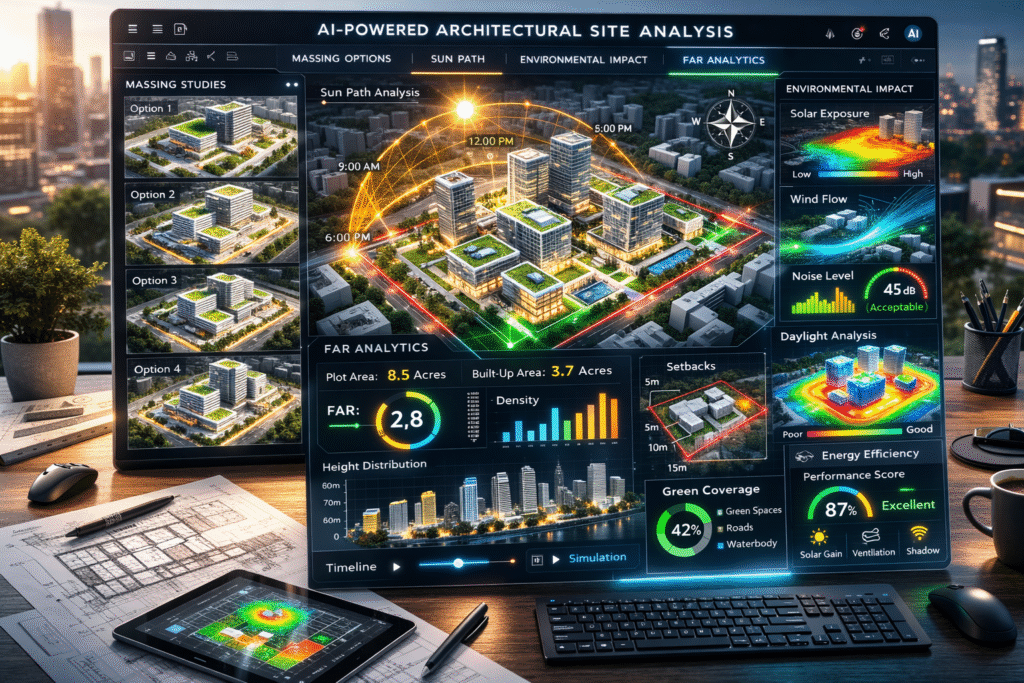
Modern architecture tools in 2026 don’t just draw lines — they analyze sunlight exposure, optimize circulation efficiency, calculate FAR utilization, simulate wind flow, and generate multiple massing options in minutes.
That’s not convenience. That’s competitive advantage. The architect who embraces AI tools for architects isn’t replacing intuition — he’s amplifying it.
Speed Without Compromising Design Integrity
Let me be clear. Speed alone does not define excellence. But in today’s professional landscape, turnaround time directly impacts client confidence, approvals, and profitability.
The new generation of architectural productivity tools and workflow automation platforms allows us to:
- Automate repetitive documentation
- Synchronize BIM data across teams
- Generate rapid feasibility studies
- Produce real-time visualization
What earlier took days now takes hours. And what took hours now takes minutes. This is what a 2026 digital toolbox for architects and designers truly delivers — UNMATCHED efficiency without sacrificing design rigor.
AI Is Not Replacing Architects — It’s Reshaping Decision-Making
One common fear I hear from young designers is:
“Will AI replace architects?”
The honest answer? No.
But architects who understand architecture technology trends in 2026 will replace those who ignore them. AI doesn’t design context. It doesn’t interpret cultural nuance. It doesn’t understand human emotion embedded in space.
What it does exceptionally well is process data. When integrated into BIM software 2026 environments, AI assists in clash detection, code compliance suggestions, cost forecasting, and performance simulations. That changes how we make decisions. We move from reactive problem-solving to proactive optimization. That is the UNMATCHED shift.
The Real Question You Should Ask Yourself
Are you designing buildings? Or are you building systems that help you design better buildings?
A true UNMATCHED 2026 architecture toolbox is not about downloading every trending AI tool.
It’s about curating:
- Intelligent concept tools
- Reliable BIM platforms
- High-speed rendering engines
- Automation plugins
- Mobile ideation apps
A structured, layered digital ecosystem. Because in 2026, architecture is no longer just about form-making. It’s about workflow mastery.

AI-Powered Concept & Planning Tools (Design Faster. Design Smarter. Design UNMATCHED.)
If there is one category redefining architectural workflows in 2026, it’s AI-powered concept and planning tools. This is where speed meets intelligence.
And more importantly — this is where architectural intuition is amplified, not replaced.
After years of manual feasibility studies, sun path simulations, and massing iterations, we now have platforms that compute these in minutes. But the real power isn’t automation. It’s informed decision-making.
Generative Site Analysis & Massing Intelligence
Early-stage design used to depend heavily on instinct and back-and-forth revisions.
Now tools like Autodesk’s Autodesk Forma are transforming site feasibility into a data-driven process.
Forma allows architects to:
- Generate multiple massing options instantly
- Analyze daylight performance
- Evaluate wind impact
- Simulate noise conditions
- Optimize FAR utilization
Instead of guessing performance, you measure it.
Another powerful platform is Hypar. Hypar doesn’t just model geometry — it embeds logic into building systems. You can automate layout generation, structural grids, and spatial systems using reusable computational definitions.
AI-Driven Feasibility & Rapid Layout Generation
When working on housing, mixed-use, or commercial developments, feasibility can consume days. Enter tools like TestFit. TestFit automates unit layouts, parking optimization, and density analysis in seconds.
As someone who has spent years optimizing circulation cores manually, I can tell you — tools like this shift the conversation from “Can it fit?” to “How can it perform better?” This changes client meetings dramatically. You present options instantly. That is UNMATCHED professional leverage.
AI Concept Visualization & Moodboarding
Concept ideation has also evolved. Architects are now using platforms like Midjourney to explore:
- Material palettes
- Atmospheric lighting
- Facade expressions
- Conceptual spatial moods
While it does not replace modeling software, it accelerates creative exploration. Used correctly, AI visualization tools allow architects to test emotional direction before investing hours in 3D modeling.
But here’s a critical consideration from experience: AI-generated imagery must remain a reference, not a final representation. Architecture is not about aesthetics alone — it’s about structure, context, and constructability.
Why These Tools Matter in 2026
Let’s pause and ask something important.
Why are AI tools for architects in 2026 becoming essential rather than optional? Because projects are becoming:
- Denser
- Faster-paced
- Data-heavy
- Performance-driven
Municipal regulations are stricter. Clients demand sustainability metrics. Investors want efficiency numbers. AI-powered concept tools help you respond with clarity. Instead of reacting to constraints, you integrate them from day one. That is the UNMATCHED difference.
BIM & Modeling Software That Defines Professional Practice in 2026
If AI accelerates ideas, BIM and modeling platforms turn them into buildable reality. In 2026, professional credibility is directly tied to how intelligently you model, coordinate, and document projects.
This is the backbone of serious architectural practice.

Industry Standard BIM Platforms
Autodesk Revit remains the dominant BIM ecosystem worldwide. Why it still leads:
- Integrated documentation
- Parametric families
- Multi-disciplinary coordination
- Cloud collaboration via Autodesk Construction Cloud
Revit is no longer just modeling software. It’s a data management engine for entire buildings.
Computational & Parametric Design
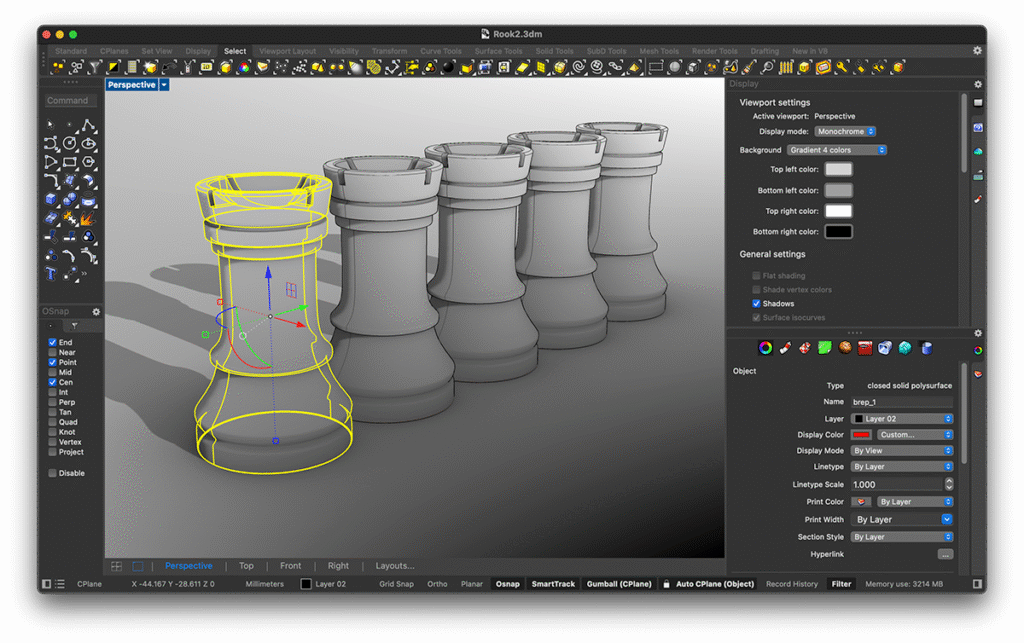
For architects pushing geometry and performance logic: Rhinoceros 3D + Grasshopper remains unmatched. Why? Because parametric workflows allow:
- Algorithmic façade systems
- Performance-driven structures
- Adaptive geometry
- Custom fabrication-ready outputs
This is where architecture becomes system-based instead of manually drafted.
Real-Time Visualization Integration
Designers now expect instant feedback. Enscape and Twinmotion allow live rendering directly from BIM models. No export chaos. No long render queues. Just real-time decision-making.
Why This Matters in 2026
Clients expect:
- Data transparency
- Clash-free documentation
- Sustainable performance metrics
- Faster delivery timelines
Modern BIM workflows integrate structure, MEP, sustainability, and cost from day one. That’s not optional anymore. It’s professional baseline.
Rendering, Visualization & Presentation Tools That Win Clients in 2026
In 2026, design quality alone isn’t enough. If you can’t communicate it powerfully, you lose leverage.
Visualization is no longer “final polish.” It’s a strategic persuasion tool.
High-End Photorealistic Rendering
For ultra-real visuals that sell projects:
V-Ray Still the gold standard for cinematic realism, advanced lighting control, and material accuracy.
Lumion Fast, dramatic, and perfect for quick-turn client presentations.
These tools turn technical models into emotional experiences.
Real-Time & Interactive Experiences
Static images are powerful. Interactive walkthroughs are unforgettable. Unreal Engine is now widely adopted in architecture for:
- Immersive walkthroughs
- VR-ready environments
- Real-time lighting simulations
- Large-scale urban visualization
When clients can walk through their future building — decisions accelerate.
AI-Enhanced Presentation Workflow
Architects are increasingly using AI tools like DALL·E for concept visuals and Adobe Photoshop for final composition refinement. Result?
- Faster mood exploration
- Stronger storytelling boards
- High-impact competition visuals
But the key in 2026 isn’t just rendering. It’s narrative.
Why This Matters
Clients don’t buy floor plans. They buy vision. The firms that present clearly, immersively, and emotionally — win more projects. Visualization today is not decoration. It’s strategic influence.
Productivity, Collaboration & Automation Tools That Save 10+ Hours Per Week
In 2026, the competitive edge isn’t just better design. It’s faster execution with fewer errors. The right productivity stack can literally give you back a full workday every week.
Cloud Collaboration & Documentation Control
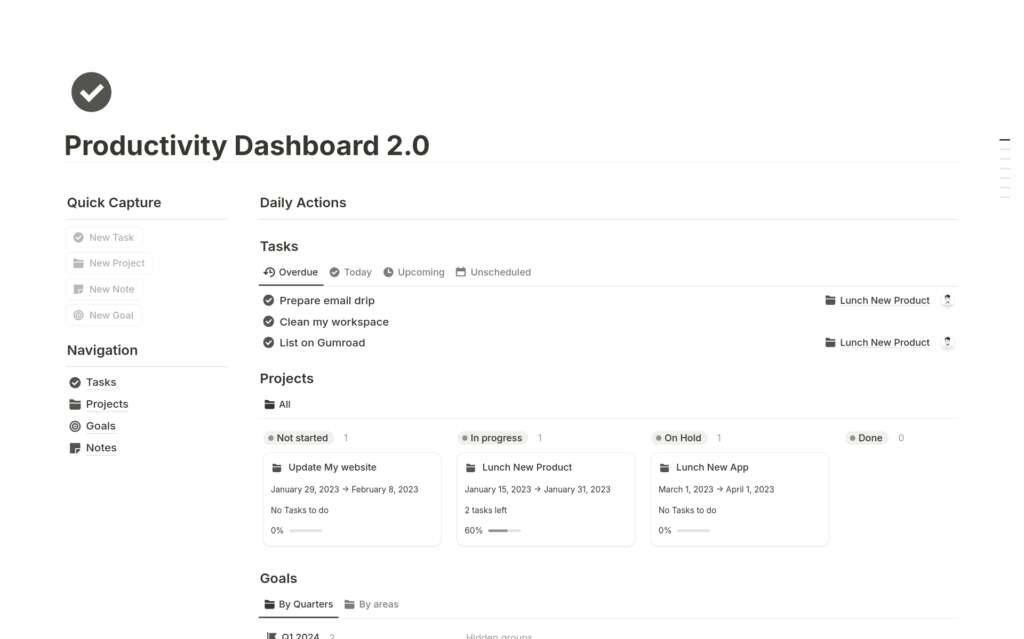
Notion Used for project dashboards, client tracking, design logs, and internal SOPs.
Slack Centralized team communication with integrations for BIM alerts and file updates.
Google Drive Structured file systems + shared documentation = zero version chaos.
In 2026, email chains are a liability. Centralized communication is baseline professionalism.
Automation Inside Design Software
Small automations = massive time savings.
Dynamo Automates repetitive tasks in Revit — renumbering, tagging, sheet creation.
Zapier
Connects tools like Notion, Slack, and Drive to automate notifications and workflows. Imagine:
- Automatic client progress updates
- Auto-generated project folders
- Instant file sync notifications
That’s operational leverage.
Time & Task Optimization
Toggl Track billable hours accurately.
Asana Visual task boards for deadlines, milestones, and coordination.
When architects treat workflow like a system, not chaos — output scales.
Why This Matters
Most architects don’t lose projects because of design. They lose them because of:
- Delays
- Miscommunication
- File errors
- Missed deadlines
Productivity tools are invisible — but transformative. In 2026, efficiency is design intelligence.
The Ultimate 2026 Toolbox: A Final Reflection
Architecture in 2026 is not defined by software. It is defined by how intelligently we use it.
Over the past fifteen years in practice, I’ve learned that tools do not make great architects — but the right tools, used with intention, create an UNMATCHED level of clarity, precision, and confidence. And that is where the real shift lies.
The 2026 digital toolbox is not about chasing trends or downloading every new AI platform that appears on your feed. It is about building a layered ecosystem that strengthens your thinking. AI-powered concept tools help you evaluate options before committing. BIM platforms structure your ideas into coordinated systems. Rendering engines transform data into emotional persuasion. Automation tools quietly remove friction from your daily workflow.
When these layers begin to work together, your practice changes.
You stop reacting to problems and start anticipating them. You stop spending energy on repetitive drafting corrections and start investing it in spatial refinement. You stop presenting drawings and start presenting vision.
This is where architecture becomes strategic again.
The future of architecture technology in 2026 is not about speed alone. It is about intelligent speed. It is about performance-driven design. It is about environmental simulation, real-time visualization, collaborative BIM ecosystems, and workflow automation that allows architects to think more clearly and deliver more confidently.
Clients today expect transparency, efficiency, sustainability metrics, and immersive presentations. Teams expect synchronized models and smooth data exchange. The market rewards firms that combine creativity with operational excellence.
And that is why your toolbox matters. Not because tools define you — but because they expand your capacity.
The architects who will lead this decade are not those resisting AI in architecture. Nor are they those blindly depending on it. They are the ones integrating it thoughtfully into a structured architectural workflow.
The question is no longer whether to adopt these tools. The question is how intentionally you build your stack. Because in 2026, excellence is not accidental. It is systemized. And when your systems are strong, your creativity becomes UNMATCHED.



Join the discussion