
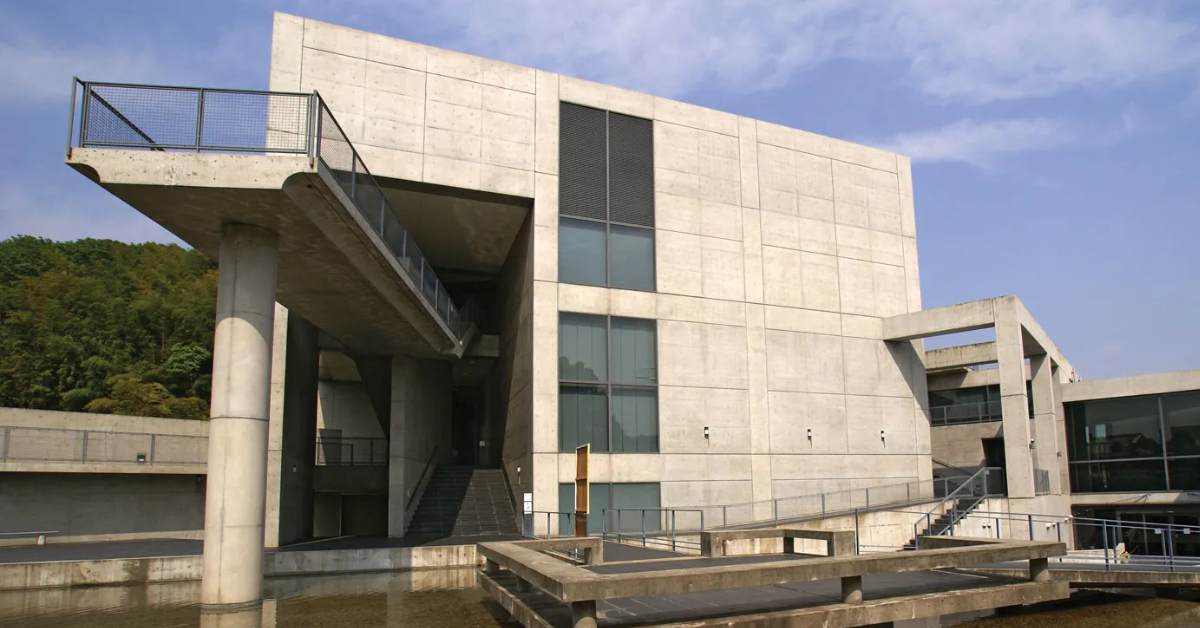
A Church That Speaks Without Ornament
In the world of contemporary architecture, very few buildings have influenced architects, designers, and students as deeply as the Church of the Light by Tadao Ando. Located in Ibaraki, Osaka, Japan, this small Christian church has become one of the greatest examples of minimalist architecture, sacred architecture, and modern concrete architecture. Despite its modest size, the Church of the Light continues to inspire people because it proves that architecture does not need expensive materials, decorative details, or grand dimensions to create a meaningful emotional experience.
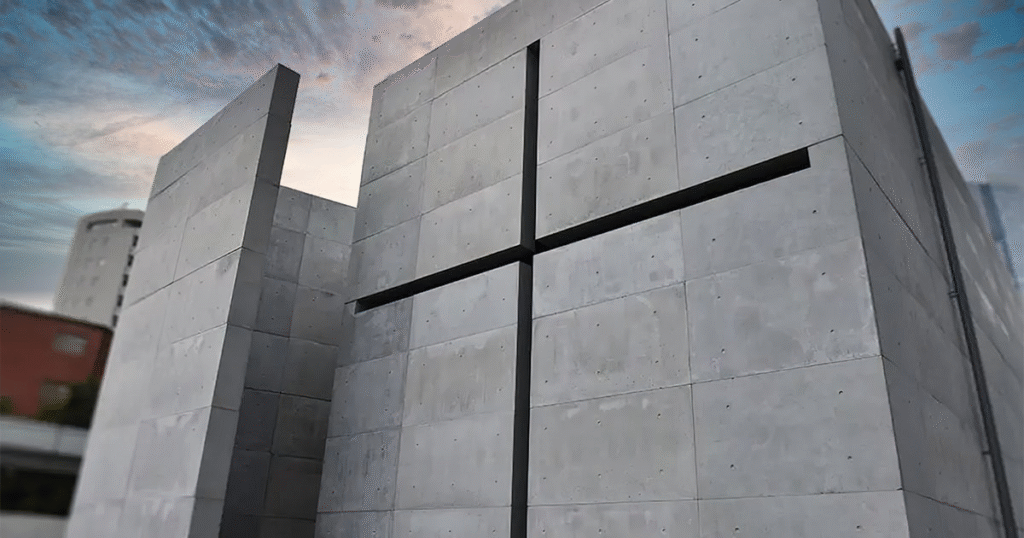
The Church of the Light demonstrates how exposed concrete, natural light, darkness, and carefully designed proportions can transform an ordinary space into something extraordinary. Instead of relying on traditional religious decorations, Tadao Ando allows architecture itself to evoke spirituality. The famous cross-shaped opening carved into the concrete wall has become one of the most recognizable symbols in modern architecture.
This architectural masterpiece teaches us that the relationship between light and shadow, space and silence, and material and emotion can be far more powerful than ornamentation. Even decades after its completion, the Church of the Light remains one of the finest examples of emotional architecture.
Tadao Ando’s Philosophy: Designing Through Simplicity
Tadao Ando is widely known for creating buildings that focus on human emotions rather than visual complexity. Unlike many architects who use bold forms or luxurious materials, Ando believes architecture should encourage reflection, calmness, and a stronger connection with nature.
His signature use of smooth exposed concrete, clean geometric forms, and natural light appears in many of his iconic projects. However, the Church of the Light represents perhaps the purest expression of his philosophy. Every wall, every opening, and every proportion serves a purpose.
Rather than filling the building with decoration, Ando removes unnecessary elements. This process of reduction allows visitors to focus entirely on space, light, and silence. The result is architecture that feels peaceful, timeless, and emotionally powerful.
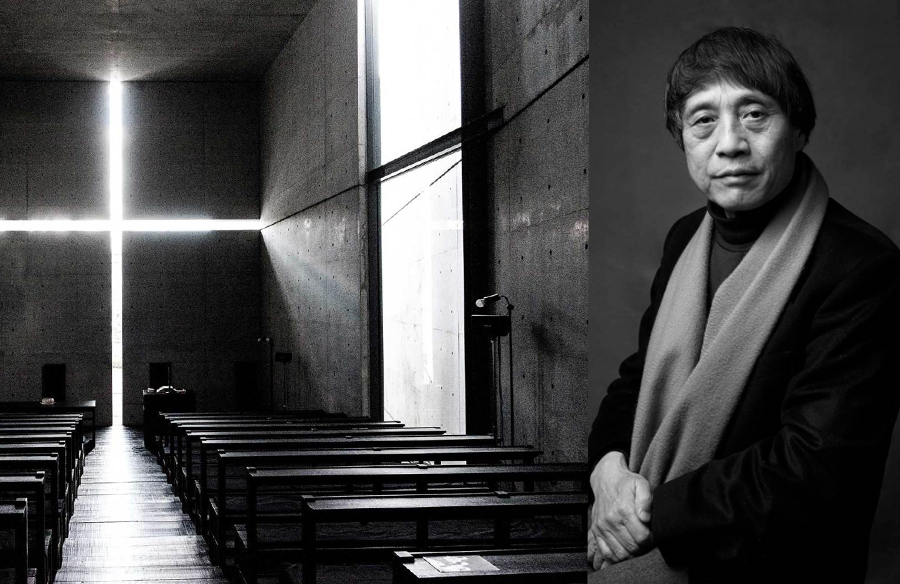
The Story Behind the Church of the Light
Completed in 1989, the Church of the Light was designed as an addition to an existing Christian community in Ibaraki, Osaka. The budget was extremely limited, forcing Ando to think creatively instead of relying on expensive construction techniques.
The church consists of a simple rectangular concrete box intersected by an angled wall. At first glance, the building appears almost industrial because of its plain exposed concrete exterior. However, this simplicity is intentional. The modest appearance prepares visitors for the dramatic interior experience.
As people enter the church, they leave behind the distractions of everyday life. The transition from the outside world into the quiet, dimly lit interior becomes part of the spiritual journey itself.
Also read – The Fascinating Story of Casa Batlló: 7 Reasons Gaudí’s Masterpiece Still Captivates Barcelona
Exposed Concrete: More Than a Construction Material
One of the defining features of the Church of the Light is its use of fair-faced exposed concrete. While concrete is often associated with heavy infrastructure or commercial buildings, Tadao Ando transforms it into a material of elegance and serenity.
The concrete walls are incredibly smooth and precisely finished. Their subtle texture reflects natural light softly, creating gentle variations throughout the day. Instead of feeling cold, the concrete creates a sense of permanence, stability, and quiet strength.
The absence of additional finishes also highlights craftsmanship. Every formwork joint and tie-hole is carefully aligned, demonstrating remarkable construction precision. This attention to detail reinforces Ando’s belief that beauty comes from honesty in materials.
The exposed concrete becomes a silent background that allows natural light to become the building’s primary architectural feature.
The Cross of Light: The Building’s Most Powerful Element
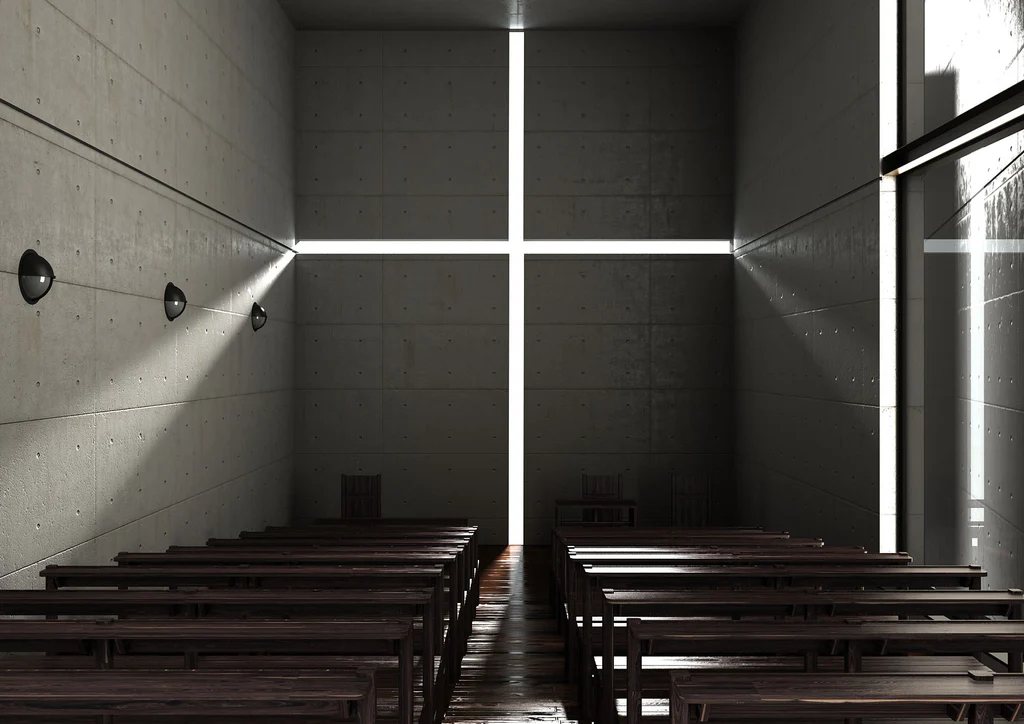
The most iconic feature of the Church of the Light is undoubtedly the cross-shaped opening cut directly into the eastern concrete wall behind the altar.
Rather than placing a traditional cross inside the church, Tadao Ando removes concrete to create one. During daylight hours, sunlight enters through this opening and projects a brilliant illuminated cross into the otherwise dark interior.
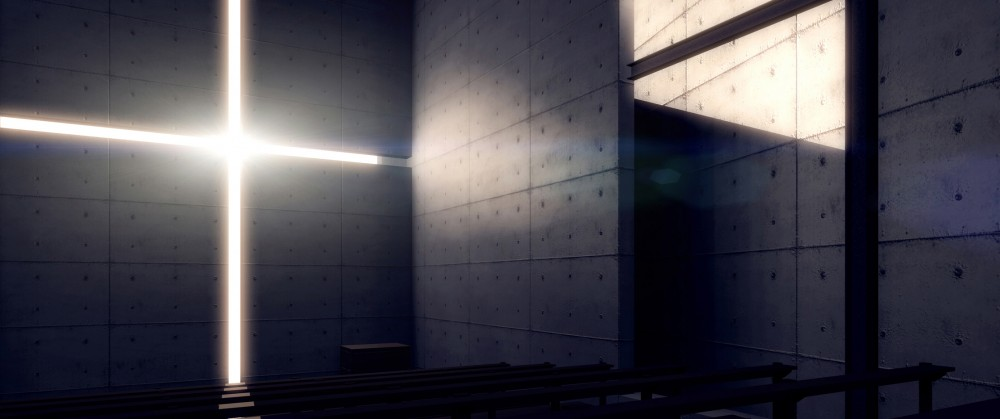
This simple architectural gesture transforms light into a sacred symbol. The cross changes continuously throughout the day as the sun moves across the sky, making every visit unique.
The design demonstrates how natural light in architecture can become more meaningful than decorative objects. Here, light itself becomes the central element of worship.
Darkness as an Essential Design Tool
Many modern buildings prioritize bright interiors with maximum daylight. The Church of the Light takes the opposite approach by embracing darkness.
The interior remains intentionally dim, allowing visitors’ eyes to gradually adjust. As the surrounding space fades into shadow, attention naturally shifts toward the glowing cross of light.
This controlled use of darkness creates emotional contrast. Without darkness, light would lose its dramatic impact. Ando carefully balances these two elements to create an atmosphere of contemplation and spiritual focus.
The building proves that shadows are not empty spaces but essential components of architectural design.
Natural Light Creates Constantly Changing Architecture
Unlike artificial lighting, sunlight changes every minute of every day. This constant movement makes the Church of the Light feel alive.
Morning sunlight creates sharp beams across the concrete surfaces. Afternoon light softens the interior with warmer tones. Seasonal variations also affect the appearance of the cross, ensuring that no two experiences are exactly the same.
This dynamic relationship between architecture and nature reflects Ando’s philosophy that buildings should respond to the environment rather than dominate it.
Natural light transforms static concrete into an ever-changing architectural canvas.
Minimalism That Creates Maximum Emotion
Minimalism is often misunderstood as empty or plain. The Church of the Light proves that minimalist architecture can produce deep emotional experiences.
There are no colorful decorations, elaborate carvings, stained glass windows, or luxurious finishes. Instead, the architecture relies on proportion, geometry, texture, silence, and light.
This simplicity removes distractions and encourages visitors to become more aware of the space itself. Every architectural element contributes to an atmosphere of peace and reflection.
The emotional impact comes not from what has been added, but from what has been intentionally removed.
Geometry and Spatial Composition
The Church of the Light is composed of simple geometric forms, yet the spatial experience feels remarkably complex.
The angled wall that intersects the rectangular volume creates a carefully choreographed circulation path. Visitors cannot immediately see the glowing cross when entering. Instead, the architecture gradually reveals the interior, building anticipation and emotional engagement.
This sequence of movement demonstrates Ando’s mastery of spatial storytelling. Rather than simply designing rooms, he designs experiences.
The precise proportions also contribute to the sense of balance and harmony, making the relatively small church feel much larger than its actual dimensions.
Silence as an Architectural Material
One of the most remarkable qualities of the Church of the Light is its silence. The building does not rely on visual spectacle to impress visitors.
The thick concrete walls reduce external noise, creating an environment where even small sounds become noticeable. This acoustic calmness strengthens the spiritual atmosphere.
Silence works together with darkness, concrete, and light to create a complete sensory experience. Visitors often describe feeling peaceful almost immediately after entering the church.
This demonstrates that architecture can influence emotions through more than visual design alone.
Why Architects Continue to Study the Church of the Light
Architecture schools around the world frequently include the Church of the Light in their curriculum because it teaches timeless design principles.
Students learn how limited budgets can inspire creative solutions rather than restrict innovation. They study how geometry, proportion, natural light, and honest materials can produce architecture of extraordinary emotional depth.
The project also illustrates sustainable thinking before sustainability became a global movement. Instead of relying heavily on technology, the building uses daylight as its primary design feature.
Its influence can be seen in countless contemporary churches, museums, homes, and public buildings that emphasize simplicity and emotional connection.
The Lasting Legacy of Tadao Ando’s Masterpiece
More than three decades after its completion, the Church of the Light remains one of the most photographed and admired examples of modern architecture.
Its influence extends beyond religious buildings. Interior designers, architects, landscape architects, and students continue to draw inspiration from its use of exposed concrete, minimalist design, and natural lighting.
The project proves that architecture is not measured by size, cost, or complexity. Instead, great architecture is remembered because of how it makes people feel.
In an era where many buildings compete for attention through bold forms and extravagant materials, the Church of the Light reminds us that simplicity often creates the strongest emotional impact.
When Light Becomes Architecture
The Church of the Light by Tadao Ando is much more than a place of worship. It is a lesson in how minimalist architecture, exposed concrete architecture, natural light, shadow, spatial design, and architectural emotion can come together to create an unforgettable experience.
By reducing architecture to its most essential elements, Ando demonstrates that beauty does not depend on decoration. Instead, it emerges through thoughtful design, precise craftsmanship, and a deep understanding of human perception. The iconic cross of light, the quiet concrete walls, and the carefully controlled darkness continue to inspire architects across the world because they show that the simplest ideas often leave the deepest impression.
As architecture increasingly embraces sustainability, wellness, and human-centered design, the Church of the Light remains more relevant than ever. It stands as a timeless reminder that when concrete, darkness, and light are used with purpose, architecture can move beyond construction and become a profound emotional experience.



Join the discussion