
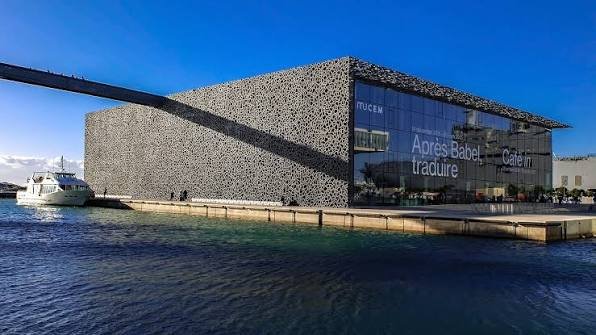
Marseille is a city shaped by centuries of cultural exchange, trade and maritime history. Standing at the entrance to its historic Old Port, the Mucem (Museum of European and Mediterranean Civilisations) celebrates this shared heritage through architecture, exhibitions and cultural experiences.
Opened in June 2013, Mucem brings together contemporary architecture and historic heritage. Designed by Rudy Ricciotti in association with Roland Carta, its striking concrete façade and waterfront location make it one of Marseille’s most recognisable cultural landmarks.
Quick Take: Mucem is more than a museum. Its contemporary J4 building, historic Fort Saint-Jean and extensive Mediterranean collections create a cultural destination connecting architecture, history and communities across the Mediterranean.
Exploring Mucem’s Brilliant Architecture
The architecture of Mucem is a remarkable combination of contemporary design and historical context. The main J4 building features a 72-metre square form wrapped in an intricate, lace-like concrete screen. Designed by Rudy Ricciotti with Roland Carta, this distinctive exterior filters sunlight and creates changing patterns of light and shadow throughout the day.
The museum extends across three sites: the contemporary J4 building, the historic Fort Saint-Jean and the Conservation and Resource Centre (CCR). Two footbridges connect the waterfront museum with the fort and the surrounding city, creating a continuous visitor experience.
The building’s open terraces, outdoor ramps and panoramic views make the architecture an experience in itself, connecting visitors with the harbour and Mediterranean landscape.
Discovering Mediterranean Heritage Through Mucem
Mucem explores the cultures and histories of the Mediterranean, from ancient civilisations to contemporary society. Its multidisciplinary approach brings together archaeology, anthropology, history, art and cultural studies.
The museum looks beyond individual countries to examine the connections, exchanges and influences that have shaped Mediterranean communities over generations.
Through objects, photographs, documents and contemporary artistic interpretations, visitors can understand how traditions, beliefs and everyday practices have travelled across the region.
Must-Explore Exhibitions at Mucem Marseille
Mucem presents permanent, semi-permanent and temporary exhibitions that explore different aspects of Mediterranean life and culture.
Its Galerie de la Méditerranée offers a thematic journey through the region’s cultural history, while temporary exhibitions introduce new perspectives on subjects ranging from food and traditions to migration, identity and contemporary society.
The museum’s exhibition programme changes over time, making every visit an opportunity to discover something different. Visitors interested in particular themes should check the official Mucem exhibition programme before planning their visit.
How Mucem Preserves Mediterranean Culture
Beyond displaying historical objects, Mucem plays an important role in preserving and studying Mediterranean heritage.
Its collections include hundreds of thousands of objects, alongside photographs, documents and other cultural materials. Research, conservation and educational activities help protect these resources and make them accessible to future generations.
The Conservation and Resource Centre in Marseille’s Belle de Mai district provides dedicated facilities for collection storage, preservation and research.
This work reflects the museum’s wider mission: keeping Mediterranean cultural memory alive while encouraging new conversations about its relevance today.
The museum’s approach also highlights how cultural institutions and thoughtfully designed public spaces can make heritage more accessible to the wider community.
Image 5 – Preserving Mediterranean Heritage
Mucem Marseille: A Guide for History and Architecture Enthusiasts
For visitors interested in architecture, history and culture, Mucem offers several experiences in one destination.
Some highlights include:
- Explore J4: Discover the contemporary architecture, exhibitions and panoramic rooftop views.
- Visit Fort Saint-Jean: Walk through the restored historic fort, its gardens and cultural spaces.
- Experience the footbridges: Enjoy the connection between the modern museum, historic fort and surrounding city.
- Discover Mediterranean exhibitions: Explore the region’s traditions, history and contemporary cultural conversations.
- Enjoy the waterfront: Take in views of Marseille’s harbour and the Mediterranean Sea.
The museum is located near other significant landmarks, including Marseille Cathedral and the historic Le Panier district. Before visiting, check the official Mucem visitor information for current opening hours, access arrangements and ticket details.
The Art of Lighting in Mucem’s Unique Structure
Lighting plays an important role in the museum’s architectural identity. The concrete screen surrounding the J4 building filters natural daylight, creating delicate patterns of light and shadow across its surfaces.
As daylight changes, the façade takes on different visual qualities, giving the building a dynamic relationship with its surroundings.
At night, the museum’s lighting design gives the structure a distinctive presence along Marseille’s waterfront. The illuminated building becomes a landmark connecting the city, architecture and sea.
Conclusion
Mucem Marseille demonstrates how architecture can become a bridge between history, culture and contemporary life. Its expressive concrete façade, connection to Fort Saint-Jean and diverse Mediterranean collections create an experience that goes beyond a conventional museum visit.
By bringing together historic preservation, contemporary design and cultural exchange, Mucem celebrates the shared identity of Mediterranean communities.
It is not simply a place to observe history; it is a place to understand how cultures connect, evolve and continue to shape our world.


Join the discussion