
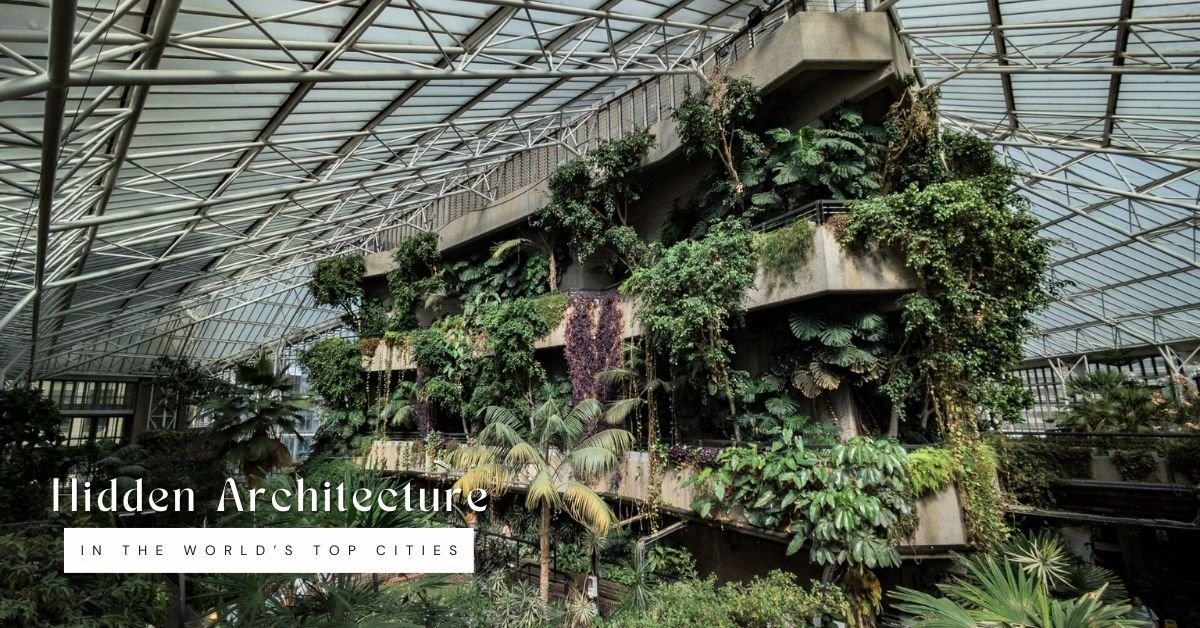
The world’s most popular cities draw millions of visitors each year. Yet, many of their most fascinating corners remain surprisingly overlooked. As most tourists stick to famous circuits of Instagram-approved attractions, equally wonderful, lesser-known architectural marvels quietly go unnoticed. Architecture is the living embodiment of history, offering insight into the societies that created it. Iconic buildings tell us a lot about the styles, politics, and cultural trends of their era. To truly ‘see’ the city, visitors should try to look beyond its more popular landmarks.
If you’re an architecture-lover (or just someone who enjoys uncovering a city’s soul through its buildings), here are some lesser-known architectural marvels to hit up on your next big trip to an urban jungle.
New York
Museum (Synagogue) at Eldridge Street

Built: 1887
Restored: 2007
Style: Gothic Revival
Significance: The first wave of Eastern European Jewish immigrants built this Synagogue, now a museum, as a grand landmark of their culture, adorned with beautiful ornamentation & filled with artefacts. It is one of the finest religious buildings in the city, standing as a reminder of the diverse communities that have shaped, and continue to shape, New York’s identity.
The Gould Memorial Library

Built: 1900
Style: Beaux Arts
Significance: “A library, in its purest form, is a Temple of Learning“, the ancient Greeks believed. This is what the noted architect Stanford White envisioned & created in the Gould Memorial Library. The influence of the Pantheon is clearly seen in its cruciform layout, rotunda, stained glass windows & majestic dome. It’s a true testament to Greek classical design & grandeur.
Paris
Lavirotte Building

Built: 1901
Style: Art Nouveau
Significance: The 1901 winner of Paris’s “Most Beautiful Facade” is a visual delight in fantasy & flair. This apartment building is so heavily decorated with various elements, details & materials that the viewer doesn’t know where to look! The architectural marvel is peak Parisian creativity pushed to its imaginative limits.
Cité de la Mode et du Design

Built: 2008
Style: Art Nouveau
Significance: This creative center looks like a lime green viper snaking along the Seine, coiling around the concrete shell of a former storehouse. Renovated to house exhibitions, events & commercial activities, it is a bold take that breaks away from the norm and presents a curious blend of industrial history with futuristic design.
Rome
Galleria Sciarra
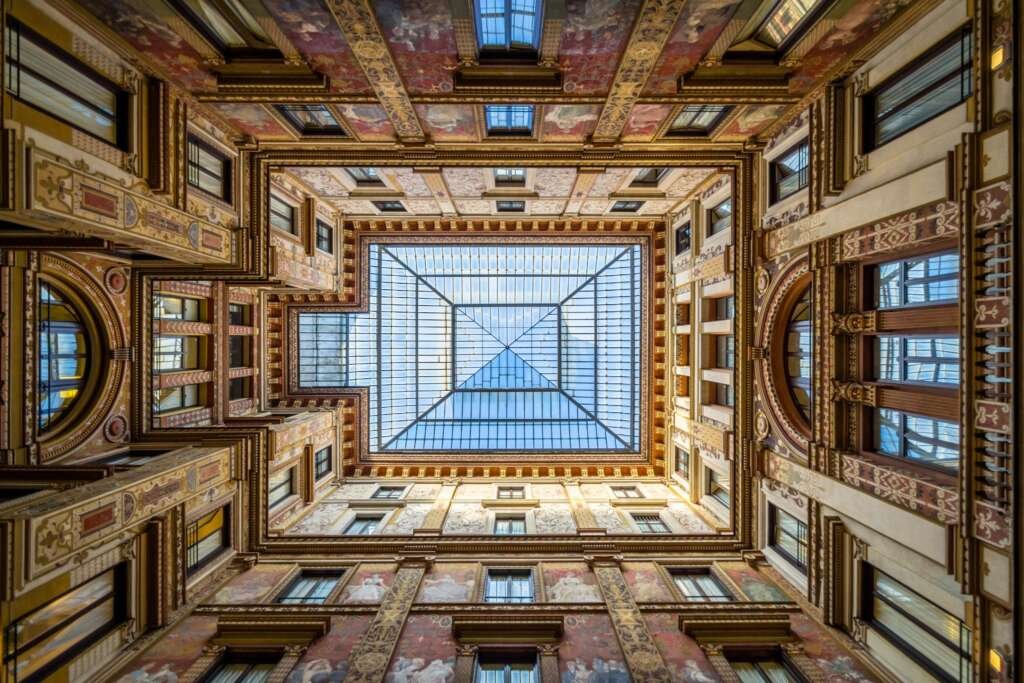
Built: 1885-1888
Style: Art Nouveau
Significance: When in Rome, don’t be surprised to find a hidden architectural marvel in every corner. One such wonder is the Galleria Sciarra, essentially a courtyard in a busy, 4-storied building. Less of a traditional courtyard and more of a gallery, all of its walls are covered with ornate frescoes in the classic Liberty style. Painted at a time of great change in Rome (the Modernization of Rome), the art centers around “Glorification of Women”, reflecting the ideologies of the time.
Vicus Caprarius: City of Water
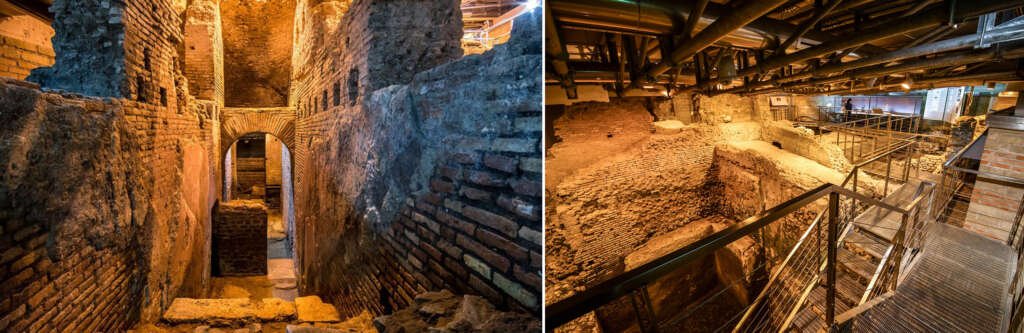
Built: Probably 1st or 2nd AD
Unearthed: 1999
Style: Ancient Roman
Significance: Archaeology buffs will appreciate a visit to this ancient city located 9m below the famous Trevi fountain. Discovered only recently, Vicus Caprarius reveals centuries of Roman history through layered ruins; from imperial apartments to medieval additions. Named after the ancient water reservoir still fed by the Aqua Virgo (Rome’s only functioning aqueduct today), this hidden underground world leaves no doubt that the Roman Empire’s mastery of architecture and engineering was nothing short of extraordinary, giving us stellar insight into a long-lost civilisation.
Palazzo della Civiltà Italiana
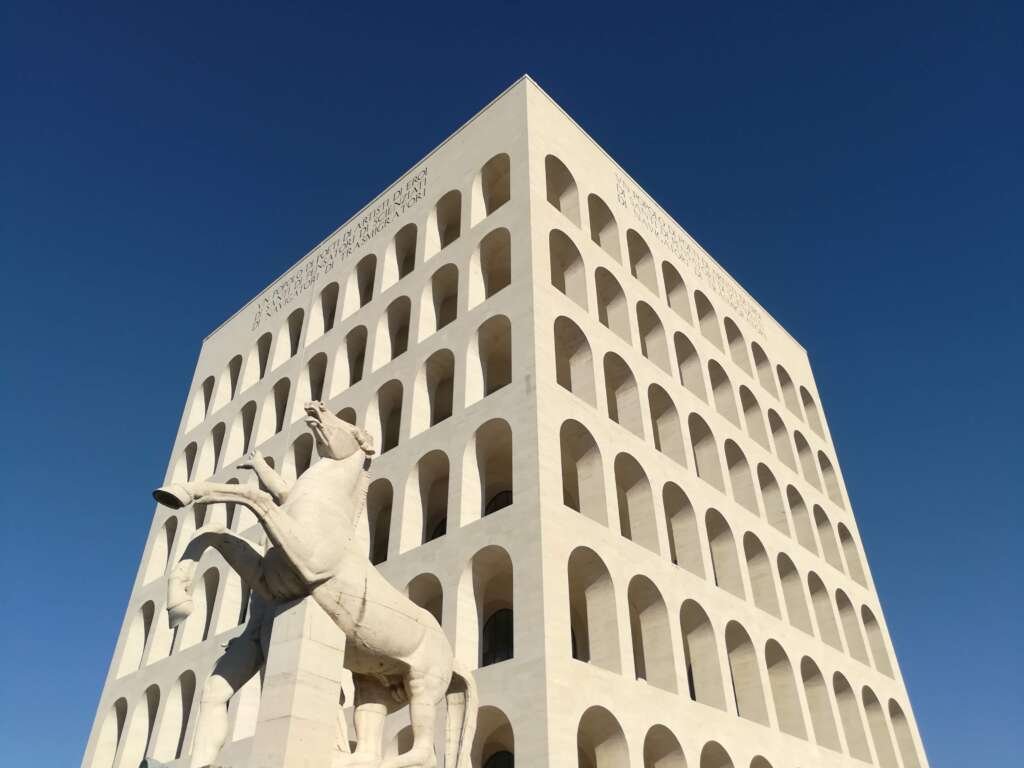
Built: 1938-1943
Style: Neoclassicism
Significance: The ‘Square Colosseum’ is a minimalist take on classic Roman architecture, designed to embody Mussolini’s regime, under whose rule it was built. Cladded completely in Travertine marble to imitate the signature stone aesthetic of ancient Roman architecture, its simple yet bold arches clearly reference the Colosseum. It provides a refreshing alternative for anyone needing a break from the city’s densely layered history.
Tokyo
Reversible Destiny Lofts
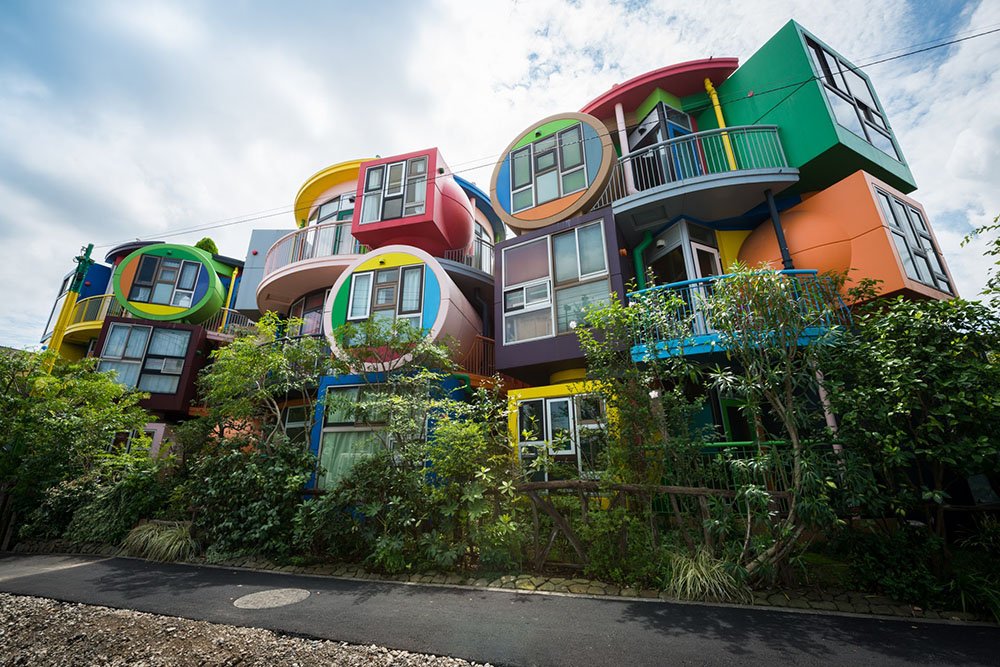
Built: 2005
Style: Modern
Significance: The kind of experimental housing that can only be found in Japan, the Reversible Destiny Lofts feature nine vividly colored residential units that are painted in 14 bright hues inside and out. The building is more of a playground than a home, designed to challenge the regular construct of ‘living’. This “undying architecture” encourages people of all ages to explore new, optimistic, dynamic ways of interacting with their living spaces. Although it’s a residential building, visitor tours can be booked through their website.
Reiyukai Shakaden Temple
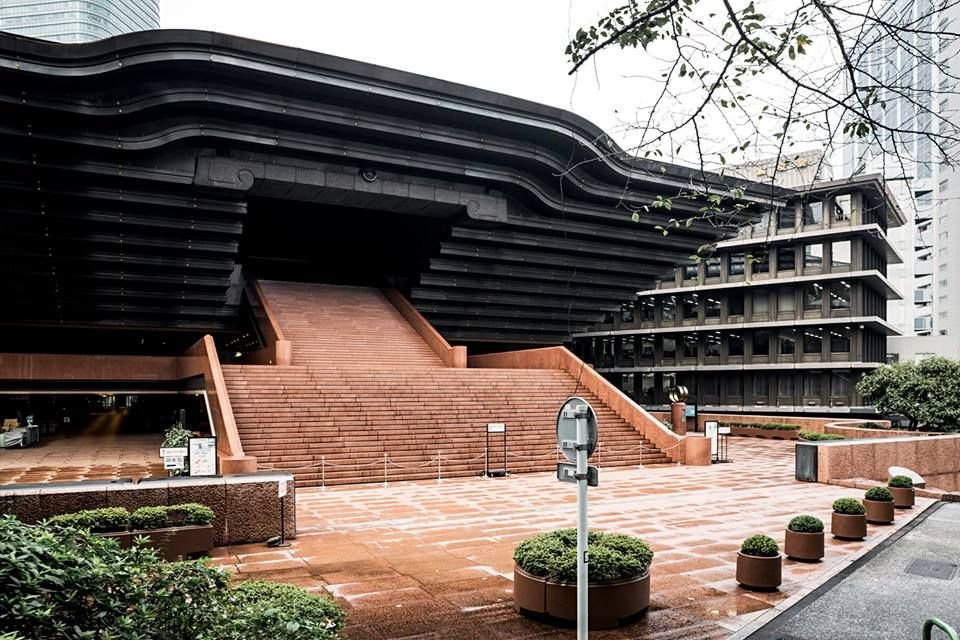
Built: 1975
Style: Brutalist, Futuristic
Significance: This temple flips standard Buddhist architecture on its head, literally! While other temples in Tokyo follow traditional norms, this stunning, spaceship-like feat of engineering defies them. Covered with black granite, it houses a spacious hall on the inside. Despite its imposing appearance, it has a calm, peaceful ambience and is rarely crowded. It’s rare to find a temple that challenges convention so confidently, isn’t it?
London
Barbican Conservatory

Built: 1980s
Style: Brutalist
Significance: Once voted “London’s ugliest building”, and a complete contrast to the traditional, symmetrically laid & well-planned landscape gardens of the British, this overgrown, dystopian botanical setting isn’t a result of abandonment but rather, a deliberate architectural choice that shows modernism co-existing with nature.
Sir John Soane’s Museum
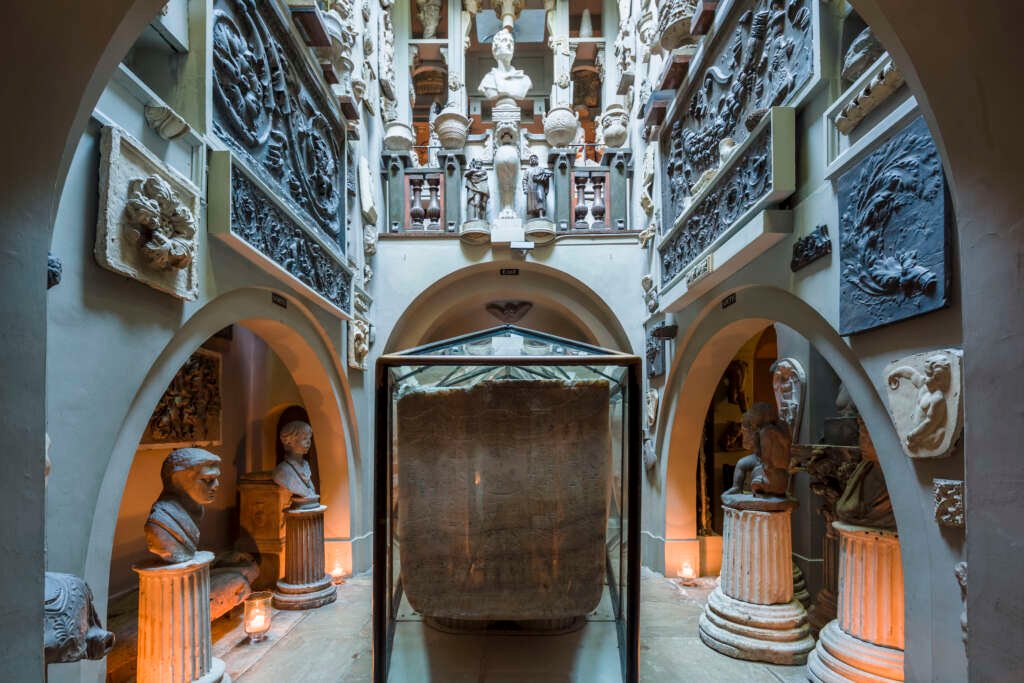
Built: Early 19th Century
Style: Neo-Classical
Significance: Originally the home of Regency-era architect John Soane, this structure is just as interesting on the inside as on the outside. The museum is preserved exactly as the architect left it in 1837, with his lifelong collection of paintings, sculptures, drawings, and antiquities arranged in a chaotic but poetic manner opposite to the orderly symmetry characteristic of classical design.
Hong Kong
Blue House Cluster
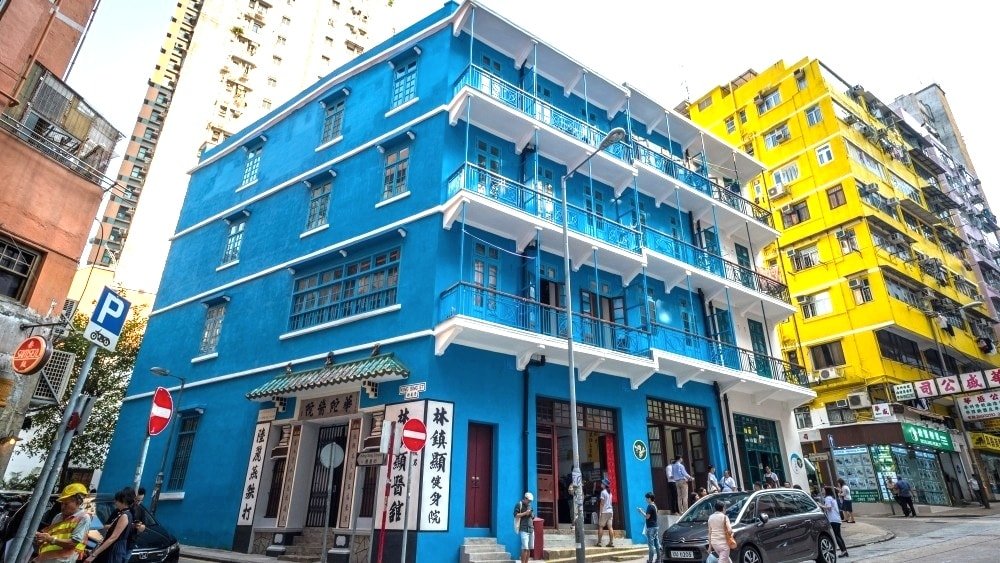
Built: 1920s
Style: Tong Lau (traditional Chinese tenement)
Significance: This building is one of the few remaining, well-preserved examples of Pre-War balconied tenements in Hong Kong that sought to address the increasing population density at the time. Flanked by two other tenement buildings, the Yellow & Orange houses, the Blue House forms a unique heritage cluster that houses residents, a community centre, a museum, and even a few cosy restaurants. The architectural marvel is living history.
Asia Society Hong Kong Centre
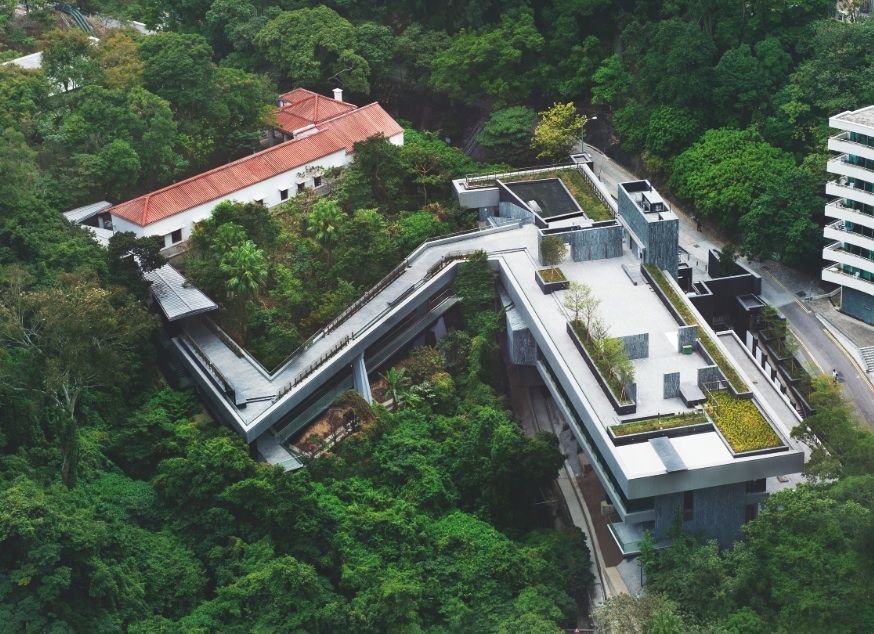
Built: 2012
Style: Mix of Colonial and Modern architecture
Significance: In a city where development usually takes precedence over heritage, this is a rare site that harmoniously blends Old, New and Nature while showcasing the powerful cultural evolution of Hong Kong.
These hidden gems are just the beginning; there are plenty of other lesser-known architectural marvels in the World’s top cities, waiting for us to look a little closer.
Did your favourite city make the list? Or do you know of a hidden gem we missed?
Or head over to Part 2 for more!

Join the discussion