
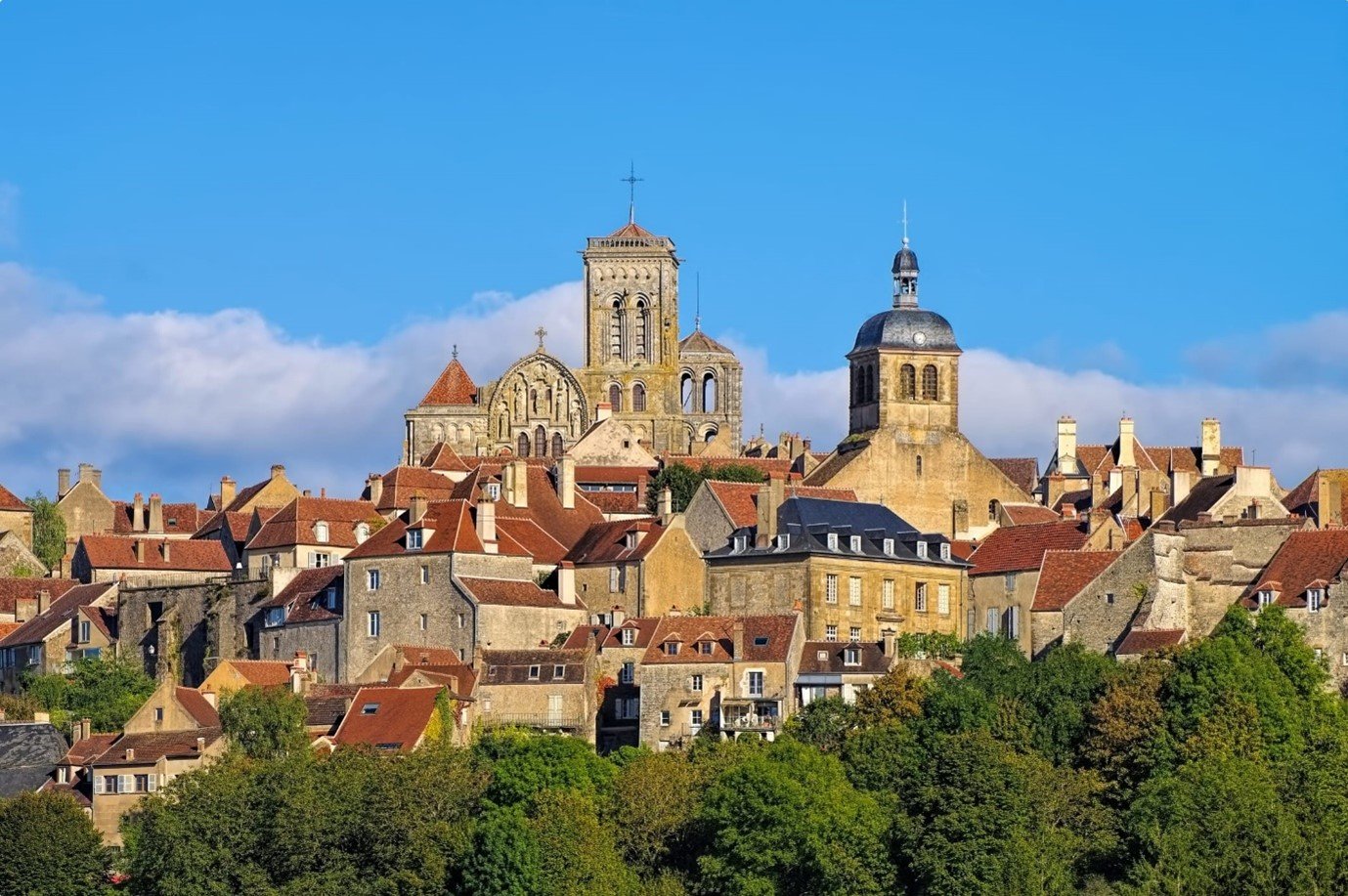
The Roman Architecture rooted in medieval Europe is not just a historical architectural style, but it is an expression of spiritual aspirations, community identity, and architectural innovation. From the 10th to 12th centuries, the Romanesque architecture was born and gave a structural logic to Roman antiquity, carving out the medieval aesthetic. The distinctive characteristics are marked by rounded arches, thick stone walls, vaults, and sculpted facades.
The European landscape was reshaped by Romanesque churches, setting of the soaring cathedrals of the Gothic Age. Understanding the Romanesque architecture it not examine European origin, but it involves other global architectural traditions as well.
Historical Context
After the long period of Viking invasion and political fragmentation, there came a time of stability, which led to the rise of the Romanesque period. With feudalism and monastic orders like Cluniac and Cistercians, a new typology of churches was seen across France, Germany, Spain, and Italy, designed to facilitate the growing population of monks, pilgrims, and worshippers.
Romanesque architecture is a reinterpretation, not revival. With Roman principles of rounded arches and vaults, there was an adaptation based on Christian cosmology and needs. These churches served as both houses of worship and symbols of territorial control, built on pilgrimage routes like Camino de Santiago, reinforcing the Church’s spiritual and socio-political dominance as in Romanesque Architecture: The First Style of the European Age.

Characteristics and Features of Romanesque Architecture
The hallmarks are the fortress-like appearance of the church building, embracing gravity and mass, designed for stability, protection, and endurance.
Rounded Arched
These rounded arches dominate doorways, windows, arcades, and vaults, forming the basis for structural innovations in roofing and elevation.
Barrel and Groin Vaults
Replacing the flat timber ceilings, barrel vaults based on fireproof stone construction, requiring thick walls and buttressing. Then came the groin vaults, intersecting barrel vaults gave more complex floor plans and weight distribution more effectively.
Massive Piers and Walls
Supporting heavy stone roofs, the use of thick walls and solid masonry was essential. Windows became narrow and relatively narrow, resulting in dim interiors, heightening spiritual solemnity.
Decorative Carving and Facades
With their heavy appearance, the Romanesque buildings have visual stories, biblical narratives carved out, and these were tools for a largely illiterate population.
Towers and Westworks
Twin towers on facades and large central towers had vertical emphasis and marked the presence of Christian authority over the landscape.
Some exemplary examples include Speyer Cathedral in Germany, Durham Cathedral in England, and Pisa Cathedral in Italy, each of which showcases regional adaptations and technical prowess.

From Romanesque to Gothic: Evolution
In the middle of the 12th century, Romanesque architecture started evolving. It started introducing vaulting, structural clarity, and vertical emphasis, which then became the Gothic style of architecture.
Romanesque architecture laid the foundation with
- Pointed arches allowed for great height and flexibility.
- Ribbed vaults to support slender structures.
- Flying Buttresses were used to divert structural stress and enabled large stained-glass windows.
- Rose windows and clerestories helped in interiors with light.
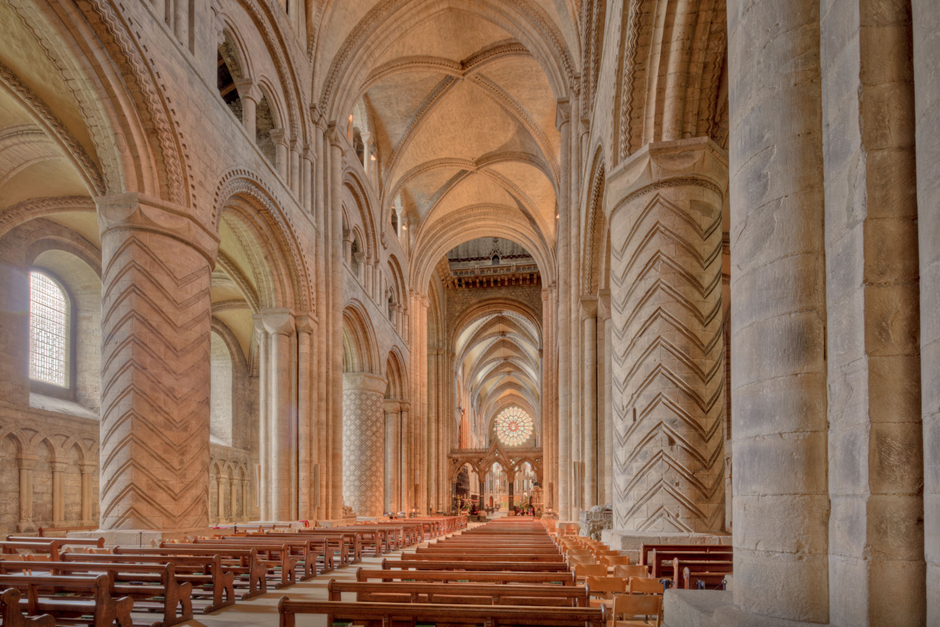
As Romanesque was earthbound, Gothic was a bit more. Durham Cathedral in northern England exemplifies this transitional phase with Romanesque solidity and Gothic aesthetics.
Romanesque Cathedrals and Indian Temple Architecture: Comparison
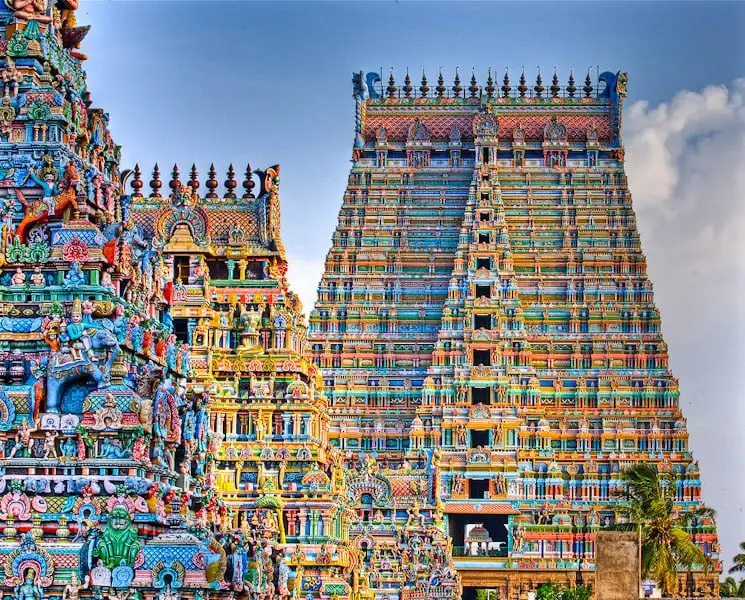
Indian Temples from medieval times, particularly from the Chalukya, Hoysala, and Chola period, 7 to 12th century CE. Both styles reflected sacred geometries, symbolic orientation, and mastery with stone. One of the key distinctions between the two is that Romanesque architecture focused on internal congregational spaces. In contrast, Indian temples focused on external form, the Shikhara or vimana, symbolising mythical Mount Meru. Another is that Roman temples had sombre and cavernous interiors, while Indian temples had detailed exterior sculptures. The Romanesque architecture focused on arches and vaults, while Indian temples focused on corbelling and intricate load distribution.
Also Read – The Shed, New York: Architecture in Motion and Cultural Innovation
Apart from dissimilarities, some of the common catches are the use of stone masonry, reflecting skilled craftsmanship. Both were rich in sculptural ornamentation to convey the religious narratives. The last, both had the architectural expression of spiritual cosmology and power. The Kailash Temple at Ellora, which is carved out monolithically from a cliff, demonstrates an impulse towards divine monumentalism through different formal languages.
Legacy of Romanesque Architecture: Why It Still Matters?
With the dominance of Gothic and Renaissance in the later period, the Romanesque legacy continues to influence modern designs and professionals, emphasising form, mass, and narrative ornamentation, which remains a source of inspiration. The Romanesque Revival of the 19th century brought back the arched and solidity of fortress-like mass, in the case of some institutional architecture in Europe and North America, as Trinity Church in Boston, USA.
Then, in the era of increased globalisation and heritage conservation, Romanesque buildings are preserved, mapped, and studied as a part of world architecture. UNESCO World Heritage Sites like Santiago de Compostela and Speyer Cathedral have transnational significance in cultural and engineering milestones. Today, the use of arches, rhythm, and masonry inspired by Romanesque principles is reinterpreted in sustainable, minimal, and regional design languages.
More than a style, an Architectural Statement
Romanesque architecture is not just a stylistic category; it is a testament to human resilience, creativity, and collective spirit, bridging the classical past and Gothic future, sacred form and structure. The legacy endures the relationship between architecture, spirituality, and society. Seen alongside global traditions, Romanesque architecture appreciates humanity in its built form. As a legacy, it still continues shaping our built environment and imagination.

Join the discussion