
Who Is an Interior Designer and What Do They Do?
An interior designer plans how an indoor space looks, feels and works. That sounds simple until you see the work behind it: measured drawings, lighting plans, material choices, vendor calls and a client who changed their mind twice. Many people in India want this career, but few know where to begin. Do you need a degree? Is the pay decent? How do you land the first project?
This guide covers the full path, from courses and qualifications to salary, portfolio and first clients. It also covers the harder parts, like late payments and crowded competition, so you start with open eyes.
Interior Designer vs Interior Decorator: Key Differences
A designer plans the space. A decorator dresses it. The two jobs overlap, which is why people mix them up.
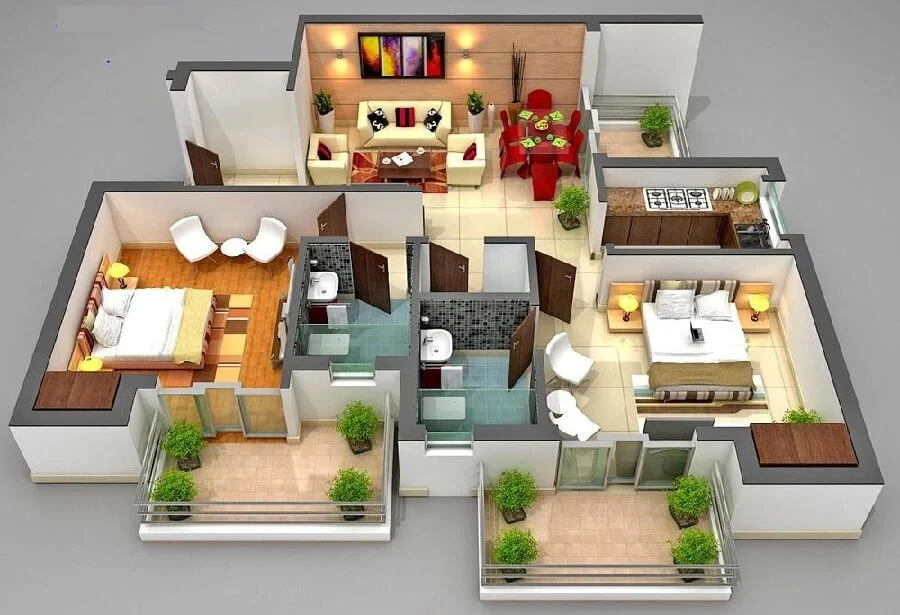
A designer works on layout, lighting, materials and sometimes structure. They draw plans and coordinate with contractors. A decorator focuses on the finishing layer: colours, furniture, curtains and accessories.
| Designer | Decorator | |
|---|---|---|
| Main focus | Layout, function, materials | Styling and finishing |
| Typical output | Drawings, 3D views, specifications | Mood boards, furniture and décor picks |
| Site involvement | High | Low to moderate |
Here is a quick test. If the job needs walls moved, ceilings dropped or wiring changed, you are in designer territory. If the room only needs new fabrics and furniture, that is decoration. Most Indian studios do both, so you can start in either and grow.
Qualifications You Need in India
Interior designer qualifications in India are more flexible than most people expect. You do not need to clear a licensing exam to practise. The title “architect” is legally protected, but “interior designer” is not.
Here is what employers and clients usually look for:
- 10+2 from any recognised board: the basic entry point for a bachelor’s programme. Most colleges accept any stream.
- A bachelor’s degree in interior design: such as B.Des or B.Sc in Interior Design. This is the strongest foundation.
- A diploma or advanced diploma in interior design: a shorter, practical route into studio jobs.
- A certificate course: good for quick skill building or a career switch.
- A B.Arch degree (optional): architects can also work in interiors, though this is a different route.
- A master’s such as M.Des (optional): useful for specialisation, research or teaching.
- Software skills: working knowledge of AutoCAD and SketchUp at the least.
- A portfolio of real or self-made projects: often the deciding factor.
- IIID membership (optional): the Indian Institute of Interior Designers adds credibility and connects you with peers.
Clients rarely ask for your marksheet. They ask to see your work. A degree opens doors, and a strong portfolio walks through them.
Interior Design Course in India: Degree, Diploma and Certificate
An interior design course in India comes at four levels. Choose based on your time, budget and goal. These are the course names you will see most often:
- Certificate in Interior Design (a few months to 1 year)
- Certificate in Computer-Aided Interior Design (about 6 months)
- Certificate in Interior Design and Decoration (about 6 months)
- Diploma in Interior Design (1 to 2 years)
- Advanced Diploma in Interior Design (1 to 3 years)
- B.Des in Interior Design (3 to 4 years)
- B.Des in Furniture and Interior Design, offered at NID (4 years)
- B.Sc in Interior Design (3 years)
- B.Des in Interior Architecture (4 years)
- Postgraduate Diploma in Interior Design (1 year)
- M.Des in Interior Design or Interior Architecture (2 years)
NID’s B.Des programmes run for four years and ask for 10+2 as the entry qualification.
If money or time is tight, start with a diploma and build real projects. If you want a design career at top studios or abroad, a degree helps more.
Top Interior Design Colleges and Entrance Exams in India
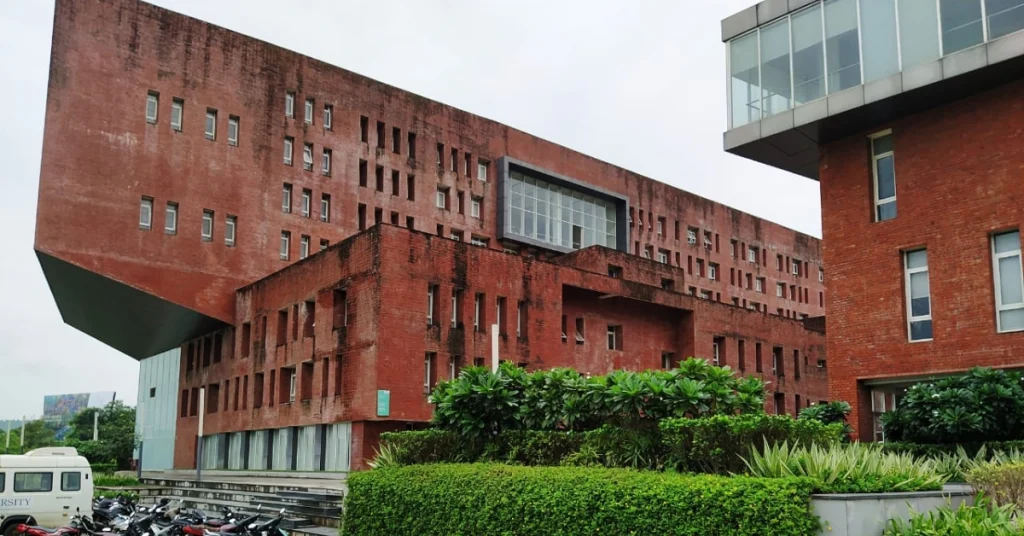
Several institutes are well known for design education. The table below lists popular options. Programme names and intakes change, so check each college’s official site before applying.
| College | City | Interior design programme | Entrance route |
|---|---|---|---|
| National Institute of Design (NID) | Ahmedabad | B.Des in Furniture and Interior Design | NID DAT |
| CEPT University | Ahmedabad | B.Des and M.Des in Interior Architecture | CEPT entrance and interview |
| Pearl Academy | Delhi, Mumbai, Jaipur, Bengaluru | B.Des and M.Des in Interior Architecture and Design | Pearl Academy entrance exam |
| Symbiosis Institute of Design | Pune | B.Des in Interior Design | SEED |
| MIT Institute of Design | Pune | B.Des and M.Des in Interior Design | MITID DAT |
| Srishti Manipal Institute of Art, Design and Technology | Bengaluru | Interior design programmes | Srishti entrance test |
| UID (Unitedworld Institute of Design) | Gandhinagar | Design programmes with interior options | UID DAT |
| Indian Institute of Art and Design (IIAD) | New Delhi | Interior design programmes | IIAD DAT |
NID is the best-known route. Its Design Aptitude Test (DAT) has two stages for both B.Des and M.Des. The prelims score only shortlists you for the mains round, and the mains stage includes a studio test that checks how you think and draw.
The next cycle is close. One tracker lists NID DAT prelims as tentatively scheduled for December 2026, so confirm dates on admissions.nid.edu. For a master’s, many students also look at CEED, the exam used by several IITs.
Interior Designer Skills You Must Build
Interior designer skills fall into two groups: craft skills and people skills. You need both. Start with these:
- Space planning: fitting furniture, storage and movement into a room so it feels natural
- Technical drawing: floor plans, elevations and working drawings that a carpenter can build from
- Colour and material knowledge: choosing finishes that look good and survive Indian weather and daily use
- Lighting sense: even a basic read on colour temperature can change how a room feels
- 3D visualisation: showing the client the result before work starts
- Budgeting and costing: estimating honestly before you promise a look
- Communication: listening well and explaining ideas without jargon
- Project management: tracking vendors, timelines and site work
- Time management: juggling several projects without missing handovers
The people skills decide how far you go. A client who trusts you pays on time and sends friends your way.
Software Every Beginner Should Learn
Interior design software saves hours and helps clients see the result before anything is built. You do not need to learn everything. Start small and add tools as projects demand.
| Job | Common tools |
|---|---|
| 2D plans and drawings | AutoCAD |
| 3D modelling | SketchUp, Revit, 3ds Max |
| Realistic renders | V-Ray, Lumion, Enscape, D5 Render |
| Mood boards and edits | Photoshop, Canva |
AutoCAD plus SketchUp is the most common starter pair in Indian studios. Add one rendering tool after that, and get good at it before collecting more.
AI visual tools are also entering the workflow. They are useful for early concepts but do not replace drawings and site knowledge. Our roundup of AI tools for architects and interior designers shows where they fit.
Why an Interior Design Internship Matters
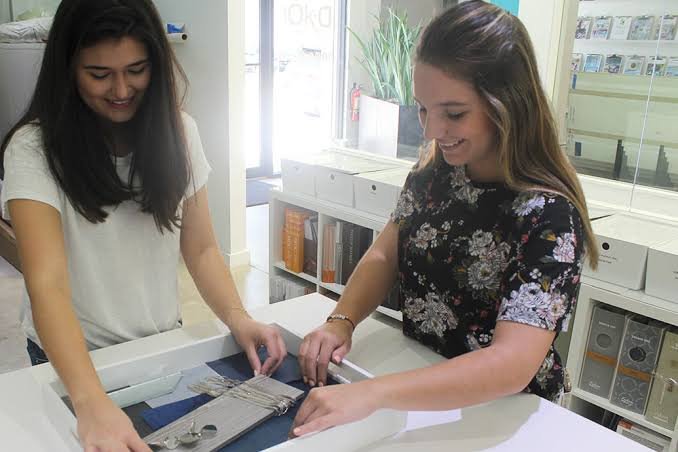
An interior design internship is where classroom ideas meet real sites. You see how a drawing becomes a built room, how vendors behave and how clients react to cost.
Aim for three to six months at a working studio. Small studios often give you more hands-on exposure than big firms, because you get pulled into every stage. Ask to join client meetings and site visits, even if you only observe.
Keep a simple log of what you worked on, the problems you faced and the fixes. This log becomes raw material for your portfolio and for interviews. Studios hire interns who show initiative, so ask for extra tasks.
How to Build an Interior Design Portfolio That Wins Clients
Your interior design portfolio is your strongest hiring tool. Show your thinking, not just pretty final photos.
Follow this simple structure:
- Pick five to eight of your best projects.
- For each one, show the brief, the plan, a 3D view and the finished result.
- Add two or three lines on why you made key decisions.
- Include a hand sketch or two to show how you think.
- Keep the whole file to about 15 to 25 pages.
Host it online on a simple website or Behance, and keep a PDF ready for job applications. Put your best project first, since many people only look at the first few pages.
Interior Design Career Opportunities in India
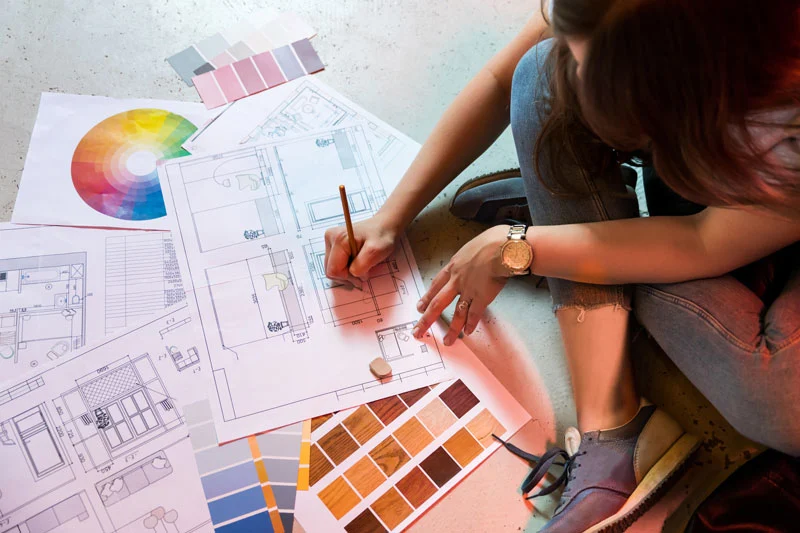
Interior design career opportunities go well beyond home makeovers. The industry is large and still growing: IMARC values India’s interior design market at about USD 39.9 billion in 2026, heading toward USD 74.7 billion by 2034.
Common roles include:
- Residential designer
- Commercial and office designer
- Retail and hospitality designer
- Exhibition and set designer
- Lighting designer
- 3D visualiser
- Project coordinator or site manager
- Material and product consultant
You can join a studio, work with a builder or a furniture brand, teach, or start your own practice. Many designers specialise after a few years, because a clear niche makes it easier to charge more and get referrals. Finding the right materials also becomes a daily task as you grow, which is why platforms that list verified product brands are useful.
Interior Designer Salary in India
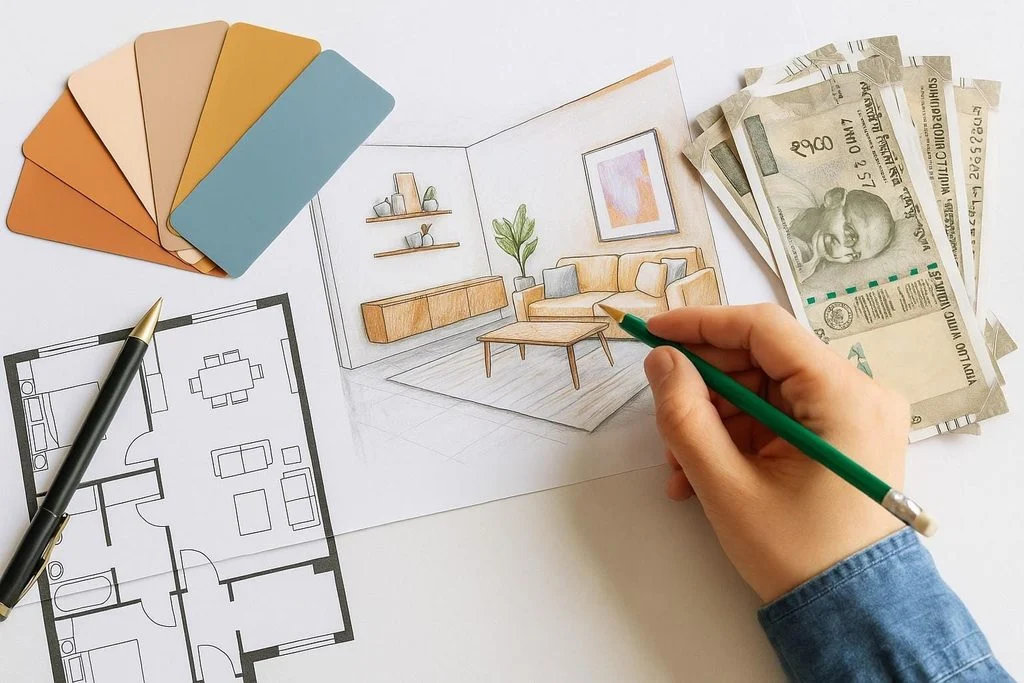
Pay varies a lot by city, employer and skill. Public salary sites show wide ranges. AmbitionBox, for example, lists interior designer salaries from about ₹1 lakh to ₹9 lakh per year. Freshers usually sit at the lower end. For junior designers, the same site shows ₹1 to ₹4 lakh per year for freshers.
City and employer type matter. In Bengaluru, ranges run roughly ₹1.8 to ₹7 lakh a year, and larger home-interior companies such as HomeLane and DesignCafe list higher bands for experienced staff.
| Stage | What to expect |
|---|---|
| Fresher | ₹1 LPA to ₹4 LPA |
| Mid-level (a few years) | ₹6 LPA to ₹8+ LPA |
| Senior or studio head | ₹10 LPA to ₹25+ LPA |
Freelancers have a wider spread. Listings show starting figures from ₹1.5 lakh to ₹12 lakh, but income is uneven month to month. Treat all of these as rough guides, because they are based on user-reported data.
How to Start as a Freelance

A freelance interior designer works directly with clients, without a studio behind them. You can start small and grow.
Begin with one or two low-fee projects from friends or family. Do them properly, photograph the results and ask for a testimonial. That is your first proof.
Next, decide how you charge:
- Per square foot: common for full home projects
- Fixed fee: good for single rooms or consultations
- Percentage of project cost: works for larger jobs with a clear budget
Always write down the scope, timeline and payment schedule. Build a small vendor list for carpentry, lighting, fabric and paint, because reliable vendors protect your reputation. Post your work on Instagram and Pinterest, since many clients find designers there.
Keep a few months of expenses saved. Early income is rarely steady.
What Problems You Will Face When You Do Interior Design

The work is rewarding, but it has real friction. Knowing it early helps.
- Tight budgets: Clients often want a premium look at a low cost.
- Scope creep: Small requests pile up, and unpaid work grows.
- Slow projects: Interior jobs can stretch across four to six months, which delays final payment.
- Vendor delays: One late delivery can hold up a whole handover.
- Payment gaps: Some clients pay late or in odd instalments.
- Price cutting: Some contractors offer “free design” to win the job.
Most of these shrink with clear contracts, staged payments and honest conversations about cost on day one. Do not skip the paperwork because the client is a friend.
Interior Designers’ Competition in 2026
The field is crowded. Fresh graduates, freelancers, large home-interior brands and online platforms all chase the same clients. Cheap 3D tools and AI visuals have made good-looking images easy for everyone.
So pretty renders no longer set you apart. What does? A clear niche, reliable delivery and trust. Small-home specialists, sustainable design, boutique retail and clinic interiors are examples of niches with room to grow.
Competition also has a bright side. The market is growing, and new housing and offices keep creating work. Designers who communicate well and finish on time still win repeat clients, even in a busy market.
Project Ideas to Showcase
No client yet? Create your own briefs. Treat each one like real work, with a budget, a timeline and a floor plan.
Good picks include:
- A 2BHK flat makeover on a fixed budget
- A compact home office
- A small café or bakery
- A boutique clothing store
- A clinic reception area
- A before-and-after of your own room
Here is a useful angle. One market report notes that 2 and 3 BHK homes make up about 95% of demand, and bedrooms and kitchens take roughly 54% of spending. So build at least two portfolio pieces around those spaces. Clients will recognise their own homes in your work.
How to Get Your First Job or Client

Follow these steps in order. Each one builds on the last.
- Finish two or three portfolio projects. Use real or self-made briefs, and show plans, 3D views and final images.
- Put your portfolio online. Use a simple website or Behance, and keep a PDF copy ready.
- Tell people you know. Message friends, family and former classmates that you are open to projects.
- Make a short list of studios. Pick small and mid-sized studios first, since they hire freshers more often.
- Send a short email. Share your portfolio link, name one of their projects you liked, and say why you want to work there.
- Follow up politely after a week. One gentle reminder is enough.
- Offer a free first conversation, not a free design. This helps you win clients without giving away your work.
- Share before-and-after photos on social media. Post regularly on Instagram and LinkedIn.
- Ask for a review and a referral after every project. Happy clients are your best source of new work.
Your first paid project will probably be small and a bit messy. That is normal. Treat it as a learning job and deliver it well.
Build Your Network Connections
Most design work comes through people. Start building your circle early.
- Attend design talks, expos and festivals to meet vendors and peers.
- Stay in touch with college seniors and mentors.
- Connect with architects, contractors and suppliers.
- Share your work on LinkedIn and Instagram regularly.
- Join local design groups or student chapters.
Events are especially useful because you meet many suppliers in one place. Our post on the benefits of an architecture exhibition explains what to look for.
Give before you ask. Share a useful tip, tag a vendor, or recommend someone. People remember that.
Course Fees and Duration: What to Expect
Fees swing widely by institute, city and level. Here are typical ranges:
| Course level | Duration | Approximate fee range |
|---|---|---|
| Short certificate | 3 to 12 months | ₹20,000 to ₹1 lakh |
| Diploma | 1 to 3 years | ₹50,000 to ₹3 lakh |
| B.Des at private colleges | 3 to 4 years | ₹2 lakh to ₹6 lakh per year |
| B.Des total programme cost | 3 to 4 years | ₹2.5 lakh to ₹22.7 lakh |
| Postgraduate diploma | 1 year | ₹5 lakh to ₹8 lakh |
These ranges come from several education sites. Short certificate and diploma courses cost from ₹20,000 to ₹1,00,000 in total, while a B.Des at private institutions typically charges ₹2 to ₹6 lakh per year. Across colleges, the full B.Des interior design programme ranges from about ₹2.54 lakh to ₹22.71 lakh. Diploma fees are listed from ₹50,000 to ₹3 lakh, and one-year postgraduate programmes are put at ₹5 to ₹8 lakh by the same source.
Premium private schools sit at the top. Pearl Academy is listed at roughly ₹5 to ₹6 lakh per year.
Budget for extras too: software licences, printing, model-making materials, site visits and a good laptop. Always check each college’s current fee page, because fees are revised every year.
Eligibility After 10th and 12th: Who Can Apply?
- After 10th: You can join many diploma and certificate programmes. Minimum marks and rules vary by institute.
- After 12th: You can apply for bachelor’s degrees. NID asks for 10+2 and a maximum age of 20 for B.Des, with relaxation for reserved categories. Many private colleges accept any stream, though some prefer art or science, and several ask for an entrance test, a portfolio or a studio round.
- After graduation: For NID’s M.Des, you need a bachelor’s degree of at least three years in any discipline. This means a graduate from another field can still move into design.
Rules change from year to year, so always confirm on the official admission page before you apply.
Which State Demand Interior Design More?
Demand follows real estate activity and income levels, and it is strongest in the big metros. Market reports do not agree on which region leads. IMARC says North India holds the largest share, while TechSci Research reports that South India is the largest market. They slice regions differently, so both can be true.
These states and city clusters offer the most work today:
- Maharashtra (Mumbai, Pune): Mumbai is a hub for premium housing and commercial projects, and office, retail and hospitality growth keeps designers busy.
- Delhi NCR (Delhi, Gurugram, Noida): It shows the highest spending in one study, about ₹580 per sq ft, and North India leads in IMARC’s market share.
- Karnataka (Bengaluru): Tech offices and a strong housing market drive demand, with spending near ₹520 per sq ft.
- Telangana (Hyderabad): Growing offices and new homes push demand, with spending around ₹490 per sq ft.
- Tamil Nadu (Chennai): It is named alongside Bengaluru and Hyderabad as a key southern hub because of strong real estate activity.
- Gujarat (Ahmedabad, Surat): Fast urban growth and new housing create steady work, and Ahmedabad is also home to NID and CEPT, which feeds the local design scene.
- Rajasthan (Jaipur): Jaipur is named among the north Indian growth centres.
Tier-2 cities are opening up too, since rising incomes there are creating new demand. A smaller city with fewer designers can be an easier place to stand out.
Conclusion
Becoming an interior designer in India does not depend on one fixed route. Pick a course that fits your budget, learn the core software, take an internship and build a portfolio that shows how you think. Competition is real, so choose a niche and deliver on time. Salaries start modest and grow with skill and reputation. If you keep learning and keep showing your work, this career can offer both creative freedom and steady income.
Frequently Ask Question About Interior Designer
Choose interior design if you enjoy rooms, materials and styling. Architecture covers whole buildings and needs a science background with maths. Architects can work in interiors, but interior designers cannot use the “architect” title.


Join the discussion