
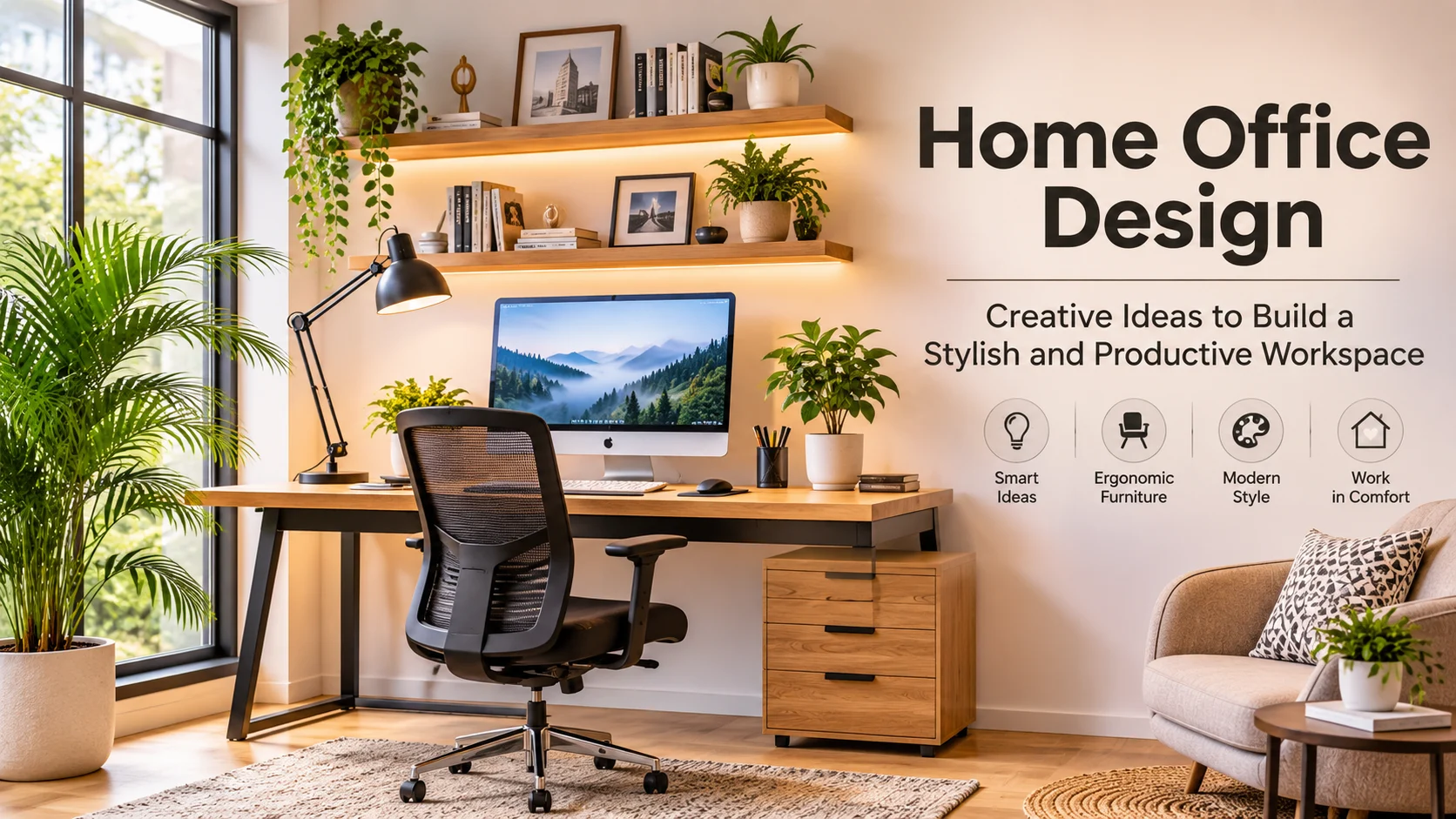
Working from home has changed the way people think about their living spaces. A home is no longer just a place to relax; for many professionals, it is also a place to work, attend meetings, develop ideas and manage daily responsibilities.
This change has made home office design an important part of modern interior design. A well-planned workspace can make everyday tasks more comfortable while maintaining a beautiful connection with the rest of the home.
However, creating a good workspace does not always require a separate room or a large investment. Even a small corner can become a functional office with the right furniture, lighting, storage and layout.
Whether you live in a spacious house or a compact apartment, thoughtful planning can help you create a workspace that reflects your personality and supports your daily routine.
Let’s explore some practical and creative ideas for designing a home office.
1. Choose the Right Location for Your Home Office
The first step in planning a workspace is selecting the right location. The position of your desk can influence comfort, concentration and how effectively you use the available space.
If you have a spare room, you can turn it into a dedicated office. However, if space is limited, consider using an unused bedroom corner, a quiet section of the living room or an alcove.
Some useful location ideas include:
- Near a window: Natural daylight can make the workspace feel brighter and more welcoming.
- In a quiet corner: Choose an area away from televisions, kitchens and busy household spaces.
- Inside a spare bedroom: A separate room can provide better privacy for meetings and focused work.
- Under the staircase: This unused area can become a compact workstation with custom furniture.
- In a living room corner: A small desk and shelving unit can create a workspace without taking over the entire room.
The goal is to select a location that balances privacy, comfort and available space.
2. Select Comfortable and Functional Office Furniture
Furniture is one of the most important elements of a successful workspace. A beautiful desk may look attractive, but it should also provide enough room for your computer, documents and everyday essentials.
A comfortable chair is equally important, especially for people who spend several hours working at a desk.
Consider these furniture options:
- Ergonomic office chair: Choose adjustable seating with suitable back and lumbar support.
- Functional work desk: Select a desk with sufficient width and depth for your equipment.
- Wall-mounted desk: A useful option for compact homes where floor space is limited.
- Adjustable desk: A sit-stand desk allows you to change your working position.
- Storage cabinets: Drawers and cabinets help keep documents and accessories organised.
For most people, a desk height around 71–76 cm is a useful starting reference, but the correct height depends on the user’s body and chair setup.
Good furniture planning makes home office design more comfortable and practical for everyday use.
3. Make Natural and Artificial Lighting a Priority
Lighting can completely change the appearance and functionality of a workspace. A poorly lit desk can make detailed work uncomfortable, while the right combination of natural and artificial light creates a more pleasant environment.
Whenever possible, position your desk near a window. Ideally, the window should be to the side of your computer screen to help reduce glare.
You can also combine different lighting types:
Natural lighting: Use daylight to make the room feel open and connected to the outdoors.
Task lighting: An adjustable desk lamp provides focused light for reading, writing and detailed work.
Ambient lighting: Ceiling lights or recessed fixtures provide general illumination.
Accent lighting: Wall lights or decorative lamps can add warmth and visual interest.
For video calls, consider placing a soft light in front of you rather than relying on a bright window behind your chair.
A thoughtful lighting arrangement improves both the appearance and usability of a workspace.
4. Choose Colours That Create the Right Atmosphere
Colour plays an important role in interior design because it influences the overall appearance and mood of a space.
For a home office, the best colour palette depends on your personal preferences and the style of your home.
Here are some colour combinations worth exploring:
- White and natural wood: Creates a clean, bright and minimal appearance.
- Sage green and beige: Adds a soft, nature-inspired feeling.
- Grey and charcoal: Gives the workspace a contemporary and sophisticated look.
- Blue and white: Creates a fresh and balanced environment.
- Warm neutrals: Beige, cream and light brown create a welcoming atmosphere.
You do not need to use the same colour throughout the room. An accent wall, colourful chair or decorative artwork can introduce contrast without making the space feel overwhelming.
5. Explore Smart Storage and Organisation Ideas
A cluttered desk can make even a beautifully designed room feel disorganised. Good storage planning helps maintain a clean working environment and makes everyday items easier to access.
Instead of filling the room with large cabinets, make better use of the available vertical and hidden spaces.
Practical storage solutions include:
- Floating shelves above the desk.
- Built-in cabinets for books and documents.
- Under-desk drawers for stationery.
- Wall-mounted organisers for frequently used items.
- Cable management trays to keep wires out of sight.
- Closed storage units for equipment and office supplies.
For compact apartments, vertical storage is especially useful because it keeps the floor area free.
Well-planned storage is an essential part of modern home office design, helping combine functionality with a clean interior appearance.
6. Small Home Office Design Ideas for Compact Spaces
Not every home has an extra room for a dedicated office. In apartments and smaller houses, the challenge is to create a workspace without making the rest of the room feel crowded.
Fortunately, a few smart design decisions can make a small area highly functional.
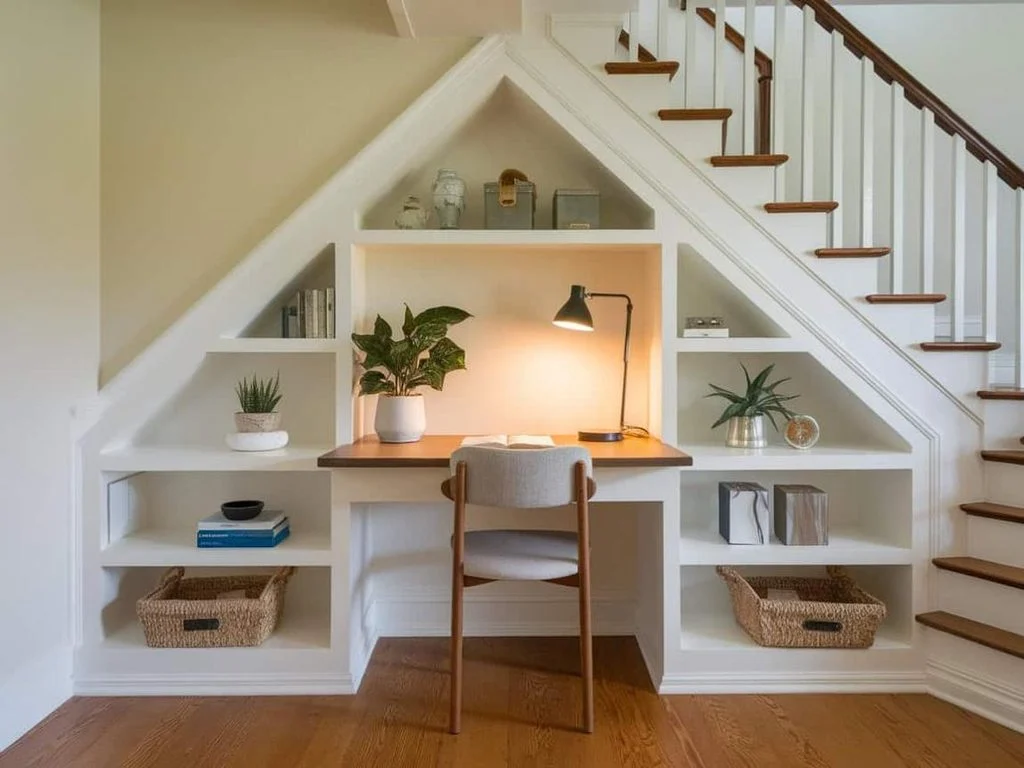
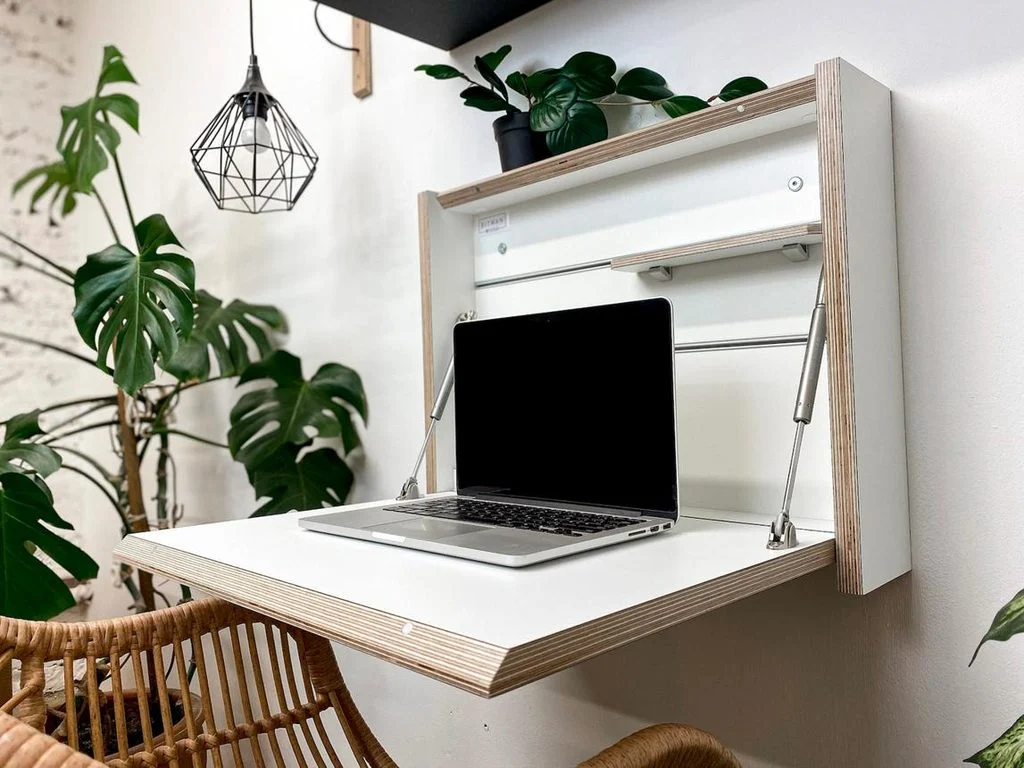
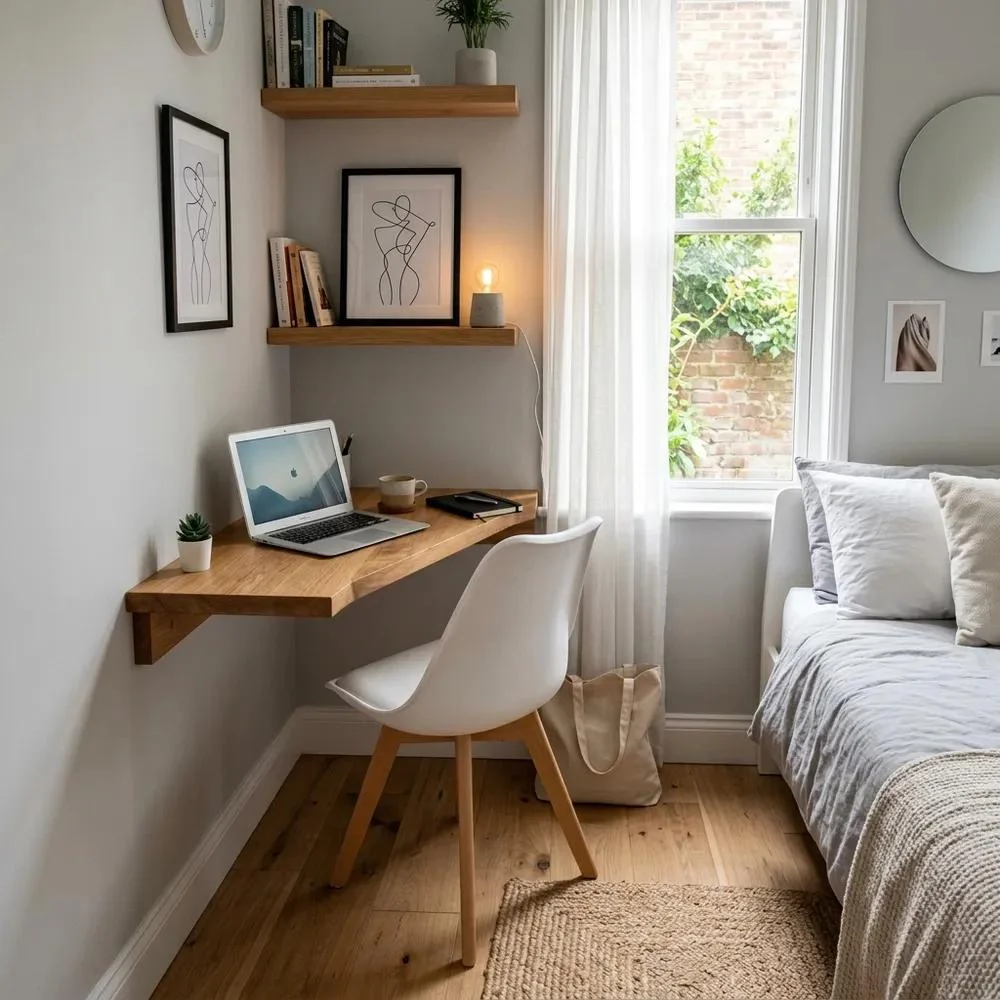
Try these ideas:
Use a floating desk: A wall-mounted desk takes up less floor space and can create a neat workstation.
Choose multifunctional furniture: A desk with built-in drawers or shelving reduces the need for additional storage units.
Use vertical space: Install shelves above the workstation instead of adding bulky furniture.
Create visual separation: A rug, open bookshelf or slim partition can distinguish the office area from the living space.
Keep the palette simple: Lighter colours and minimal decoration can help a compact room feel more open.
The best small-space solutions focus on using every available area effectively rather than adding unnecessary furniture.
7. Add Plants and Personal Decorative Elements
A workspace should be functional, but it should also feel comfortable and personal. Decorative elements can make the office more inviting and help it reflect your individual style.
Indoor plants are a simple way to introduce natural colour and texture. You can place a small plant on the desk, use a floor planter beside the workstation or add greenery to an open shelf.
Other decorative ideas include:
- Framed artwork or architectural illustrations.
- A minimal desk clock.
- Personal photographs.
- Decorative table lamps.
- Books and design magazines.
- A simple pinboard for notes and inspiration.
Try to maintain a balance between decoration and functionality. Too many accessories can make the desk feel crowded.
8. Create a Professional Background for Video Calls
Video meetings have become a regular part of working from home. This makes the background behind your desk another important design consideration.
A well-arranged background can make the workspace look organised without appearing overly decorated.
Consider adding a bookshelf, a textured wall, framed artwork or a few carefully selected decorative objects.
Avoid placing too many items directly behind your chair. A simple background with balanced lighting often looks more professional than an overcrowded display.
You should also check the camera angle and lighting before finalising the layout.
9. Bring Technology Into Your Home Office Design
Modern workspaces depend on technology, so it is important to plan for devices, charging points and internet connectivity during the design stage.
A good workstation should have convenient access to electrical sockets, charging facilities and suitable cable management.
You can consider:
- Wireless keyboards and mice to reduce desk clutter.
- Monitor stands to improve screen positioning.
- Under-desk cable trays.
- Dedicated charging stations.
- Smart lighting for adjustable illumination.
- Video-call equipment such as webcams and microphones.
Technology should support the design rather than dominate it. Keeping wires and equipment organised helps maintain a cleaner interior.
10. Design a Workspace That Helps You Switch Off
One often-overlooked aspect of working from home is the separation between professional and personal life.
When the office is part of the bedroom or living room, it can become difficult to mentally disconnect from work.
You can address this through thoughtful interior planning.
For example, use a sliding partition, folding desk or closed storage cabinet to visually separate the workspace when the working day ends.
If you have a dedicated room, a door can provide additional privacy. In shared spaces, a rug or bookshelf can help establish a clear boundary.
A successful home office design should support not only working hours but also the time you spend relaxing at home.
Conclusion
A well-designed home workspace is about more than selecting an attractive desk and chair. It involves understanding how you work, using available space effectively and combining comfort with thoughtful interior design.
From choosing the right location and furniture to improving lighting, storage and decoration, every decision contributes to the overall experience.
Whether you are designing a separate office or transforming a small corner of your apartment, the right home office design can help create a space that feels organised, comfortable and connected to your home’s overall style.
The best workspace is not necessarily the biggest or most expensive one. It is the one that works naturally with your everyday needs.




Join the discussion