
As climate change, rising energy costs, and increasing environmental concerns reshape the construction industry, homeowners and architects are searching for smarter ways to build. Traditional homes consume enormous amounts of electricity, water, and construction materials, making them expensive to maintain and harmful to the environment. This growing challenge has placed Earthship homes at the center of discussions around off-grid construction, sustainable architecture, and climate-responsive living.
Earthship homes are more than eco-friendly buildings. They are fully integrated living systems designed to generate their own electricity, harvest rainwater, recycle wastewater, regulate indoor temperatures naturally, and produce food. Unlike conventional buildings that rely heavily on municipal infrastructure, Earthship homes operate independently while maintaining comfort throughout the year. This innovative approach to green building, energy-efficient construction, and self-sufficient housing is changing how architects think about residential design.
As countries worldwide move toward net-zero buildings, renewable energy solutions, and climate-resilient infrastructure, Earthship homes demonstrate that sustainable living is not just possible but practical. Their unique design combines recycled materials, passive solar architecture, thermal mass construction, and renewable energy systems into one highly efficient home.
What Are Earthship Homes? Understanding the Concept
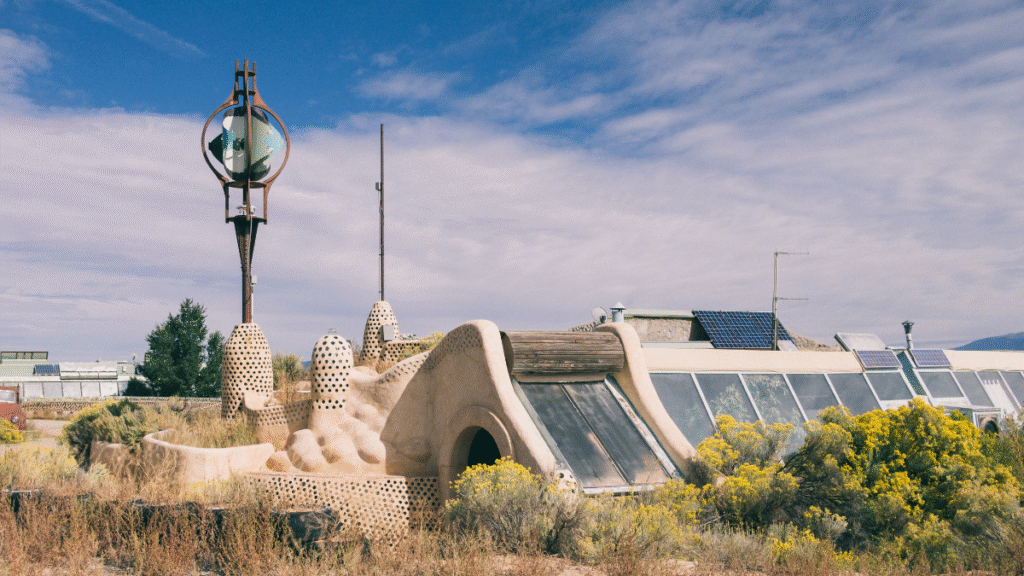
Earthship homes are autonomous buildings specifically designed to function independently from public utilities. Developed by architect Michael Reynolds during the 1970s, the concept focuses on creating houses that minimize environmental impact while maximizing resource efficiency.
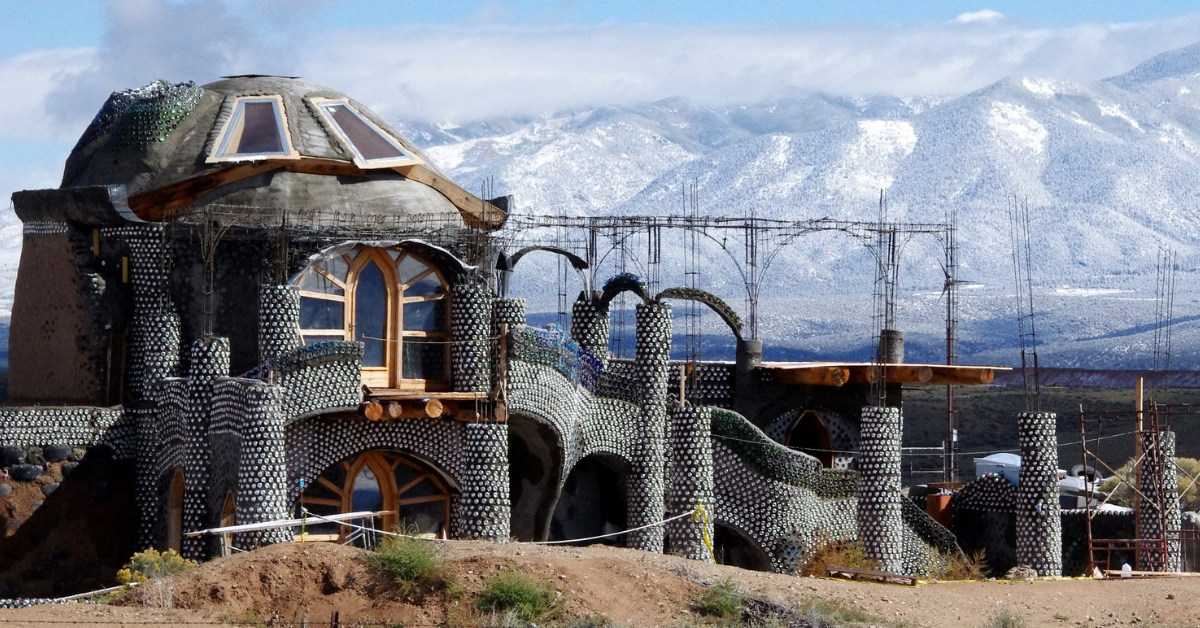
Unlike traditional construction methods that rely on concrete, steel, and energy-intensive materials, Earthship construction primarily uses recycled tires, glass bottles, aluminum cans, reclaimed wood, and locally available earth. These materials create thick insulating walls capable of maintaining stable indoor temperatures regardless of external weather conditions.
The primary objective of Earthship architecture is to reduce dependence on external resources. Every component of the house works together to provide heating, cooling, electricity, water supply, food production, and waste management. This integrated design philosophy has made Earthship homes one of the most recognized examples of off-grid housing, eco-friendly construction, and sustainable residential architecture.
The Science Behind Off-Grid Construction
The success of Earthship homes lies in their intelligent use of natural systems rather than mechanical equipment. Instead of depending on air conditioners, furnaces, or large utility networks, these homes harness natural energy available from the environment.
Passive solar design plays a major role in maintaining indoor comfort. Large south-facing windows allow sunlight to enter during winter, naturally heating the thick thermal walls. These walls absorb solar energy throughout the day and slowly release heat during cooler nights, creating a stable indoor climate.
During warmer months, strategically placed ventilation openings allow cool air to enter while warm air escapes through roof vents. This natural airflow significantly reduces the need for air conditioning. The combination of passive cooling, passive heating, and thermal mass construction makes Earthship homes remarkably energy efficient.
Also read – The Remarkable Story of Auroville Matrimandir: Inside India’s Golden Spiritual Landmark
Recycled Materials That Transform Waste into Homes
One of the defining features of Earthship construction is the extensive use of recycled materials. Instead of sending waste to landfills, Earthship builders transform discarded products into durable structural elements.
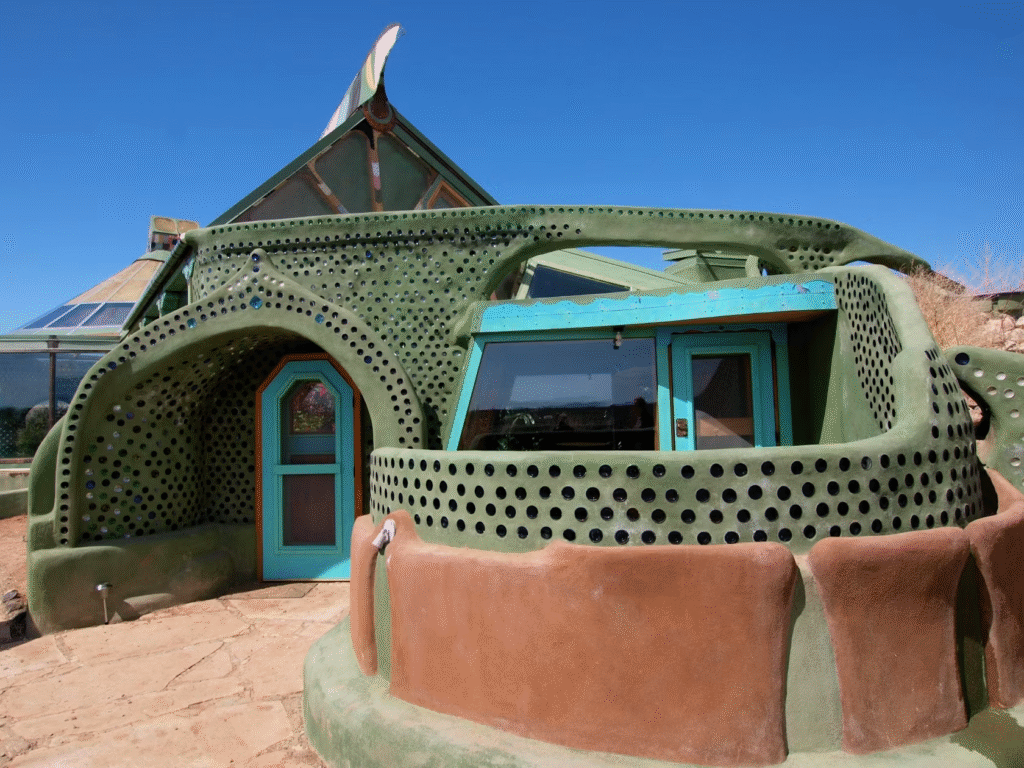
Used automobile tires filled with compacted earth form the main load-bearing walls. Glass bottles and aluminum cans are creatively incorporated into interior partitions, allowing natural light to pass through while adding artistic character. Reclaimed timber, recycled metal, and salvaged construction materials further reduce the environmental footprint.
Using recycled resources not only lowers construction costs but also reduces carbon emissions associated with manufacturing new building materials. This circular approach aligns perfectly with modern principles of green construction, circular economy, and sustainable building design.
Climate-Responsive Living Through Smart Architectural Design
Climate-responsive architecture focuses on designing buildings that adapt naturally to local environmental conditions. Earthship homes are among the finest examples of this design philosophy.
The orientation of the building is carefully planned to maximize solar gain during winter while minimizing overheating during summer. Thick earthen walls stabilize indoor temperatures, while insulated roofs reduce heat transfer. Natural ventilation systems ensure continuous airflow without relying on mechanical cooling.
This climate-responsive design enables Earthship homes to remain comfortable in deserts, mountains, cold regions, and temperate climates. Rather than fighting nature, these homes work alongside it, demonstrating how intelligent architectural planning can significantly improve energy efficiency.
Renewable Energy Systems That Power Earthship Homes
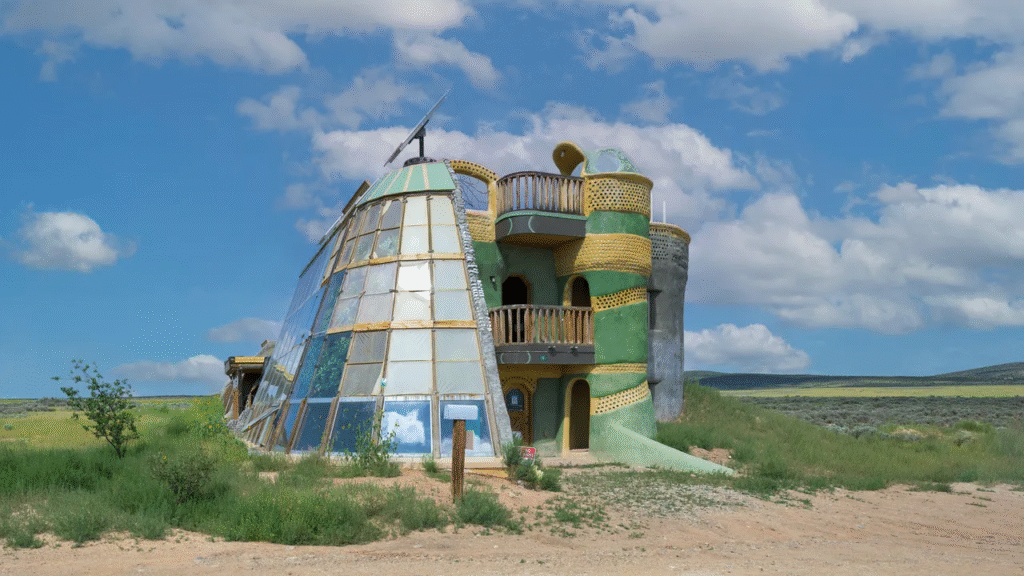
Electricity in Earthship homes typically comes from renewable energy sources. Solar photovoltaic panels generate electricity during the day, while battery storage systems provide power during nighttime or cloudy weather.
In areas with consistent wind conditions, small wind turbines may supplement solar energy production. Since Earthship homes are designed to consume less electricity through energy-efficient appliances and passive systems, their renewable energy requirements remain relatively modest.
This reliance on solar power, renewable energy, off-grid electricity, and energy independence makes Earthship homes resilient against rising utility costs and power outages.
Water Harvesting and Sustainable Water Management
Water conservation is one of the most impressive aspects of Earthship living. Instead of depending solely on municipal water supplies, Earthship homes collect rainwater directly from their roofs.
The harvested rainwater is filtered and stored in underground cisterns before being used for drinking, cooking, bathing, and cleaning. After household use, greywater is redirected to indoor botanical cells where plants naturally help purify it.
The treated water can then be reused for toilet flushing or outdoor irrigation. Even blackwater receives biological treatment before safely returning to the environment. This multi-stage system dramatically reduces water consumption while supporting sustainable water management, rainwater harvesting, and water recycling.
Indoor Food Production Creates Greater Self-Sufficiency
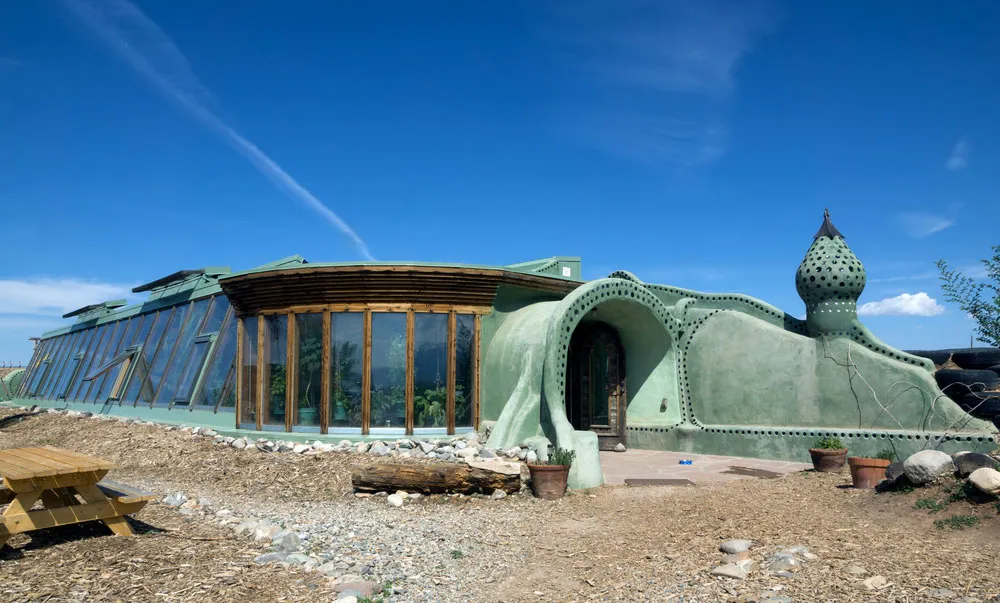
Many Earthship homes include indoor greenhouses positioned along the sun-facing side of the building. These greenhouse spaces receive abundant natural sunlight throughout the year, making them ideal for growing vegetables, herbs, and fruits.
Besides producing fresh food, indoor plants improve indoor air quality, regulate humidity, and create healthier living environments. Homeowners can enjoy year-round gardening without relying entirely on external food supply chains.
This integration of architecture and agriculture supports the growing movement toward self-sufficient homes, urban farming, food security, and sustainable lifestyles.
Why Earthship Homes Are Highly Energy Efficient
Traditional homes lose substantial amounts of energy through walls, roofs, and poorly insulated windows. Earthship homes overcome these challenges through thermal mass, insulation, passive solar heating, and natural ventilation.
Because indoor temperatures remain relatively stable throughout the year, heating and cooling systems become almost unnecessary. Lower energy consumption translates directly into reduced operating costs and significantly lower carbon emissions.
As governments worldwide introduce stricter green building standards, energy-efficient building codes, and net-zero energy goals, Earthship homes offer an effective blueprint for future residential construction.
Environmental Benefits Beyond Carbon Reduction
The environmental impact of Earthship homes extends far beyond energy savings. Every aspect of their construction contributes to reducing waste, conserving natural resources, and lowering greenhouse gas emissions.
Recycled building materials decrease landfill waste while reducing demand for newly manufactured products. Rainwater harvesting lessens pressure on municipal water systems. Renewable energy reduces fossil fuel dependence, while indoor food production minimizes transportation emissions associated with grocery supply chains.
Together, these features position Earthship homes as one of the most environmentally responsible forms of sustainable housing, eco-conscious construction, and low-carbon architecture.
Can Earthship Homes Work in Urban Areas?
Although Earthship homes are often associated with remote desert landscapes, many of their design principles can also be applied in urban environments. Dense cities may present limitations regarding land availability and building regulations, but concepts such as passive solar orientation, rainwater harvesting, rooftop solar panels, thermal insulation, and greywater recycling are increasingly being integrated into modern residential developments.
Architects are now adapting Earthship-inspired technologies for apartment buildings, eco-townships, and mixed-use developments. These hybrid approaches combine urban convenience with sustainable building practices, expanding the reach of climate-responsive architecture.
Challenges of Earthship Construction
Despite their many advantages, Earthship homes also face practical challenges. Building codes in certain regions may not recognize alternative construction techniques, making approvals more complicated. Skilled builders familiar with Earthship construction are also less common than conventional contractors.
Initial planning requires careful consideration of climate, site orientation, water storage, and renewable energy systems. While construction costs can vary depending on location and material availability, some specialized components such as solar panels, batteries, and water filtration systems may increase upfront investment.
However, many homeowners recover these costs over time through lower utility bills, reduced maintenance, and long-term energy savings.
Earthship Homes and the Future of Climate-Resilient Construction
The future of architecture increasingly revolves around resilience, sustainability, and resource efficiency. Climate change is forcing the construction industry to rethink conventional building methods, making Earthship principles more relevant than ever.
Governments, architects, and developers are exploring new ways to integrate passive design, renewable energy, recycled materials, and water conservation into mainstream construction. Earthship homes provide a real-world example of how buildings can become active contributors to environmental sustainability rather than passive consumers of resources.
As technology advances and sustainable construction becomes more accessible, Earthship-inspired housing could play a major role in addressing global housing shortages while reducing environmental impact.
Earthship Homes Represent the Next Evolution of Sustainable Living
Earthship homes are transforming the conversation around off-grid construction, climate-responsive architecture, and sustainable living. By combining passive solar design, renewable energy, recycled materials, rainwater harvesting, thermal mass construction, and indoor food production, these innovative homes demonstrate that comfortable modern living can coexist with environmental responsibility.
As more people seek energy independence, lower utility costs, and eco-friendly lifestyles, Earthship homes continue to gain global attention as one of the most practical examples of sustainable residential design. Their ability to reduce waste, conserve natural resources, generate clean energy, and adapt to changing climates makes them a powerful model for the future of housing.
Whether inspiring fully autonomous homes or influencing mainstream green building practices, Earthship architecture proves that the future of construction is not only about building stronger structures but also about creating smarter, healthier, and more resilient places to live.



Join the discussion