


Share This Article
Casa Luis Barragán is one of the most influential examples of emotional modernism, where colour, light, silence, and space come together to create architecture that is deeply personal. Located in Mexico City and completed in 1948, the house of Pritzker Prize-winning architect Luis Barragán is far more than a private residence, it is a manifesto of how architecture can evoke memory, emotion, and contemplation. Recognized as a UNESCO World Heritage Site, Casa Luis Barragán continues to inspire architects across the world by proving that modernism can be warm, spiritual, and profoundly human.
What Makes a House Feel Like a Sanctuary?
Modern architecture is often associated with clean lines, glass facades, and minimal ornamentation. While these characteristics have shaped countless iconic buildings, they sometimes leave little room for emotion.
Luis Barragán believed architecture could do much more.
For him, a house wasn’t simply a machine for living, it was a place for reflection, intimacy, and peace.
Casa Luis Barragán embodies this philosophy in every corner. From its vibrant pink walls and carefully framed gardens to its quiet courtyards and filtered daylight, the house creates an atmosphere that invites visitors to slow down and experience architecture with all their senses.
Decades after it was built, it remains one of the world’s most celebrated residences because it reminds us that great architecture is often felt before it is understood.
Who Was Luis Barragán?
Luis Barragán (1902-1988) is widely regarded as one of the greatest architects of the twentieth century.
Unlike many of his modernist contemporaries, Barragán rejected architecture that felt cold or purely functional. Instead, he combined modern design principles with the colours, traditions, and landscapes of Mexico.
His work is characterized by:
- Bold use of colour
- Simple geometric forms
- Natural light
- Landscaped gardens
- Water elements
- Quiet, contemplative spaces
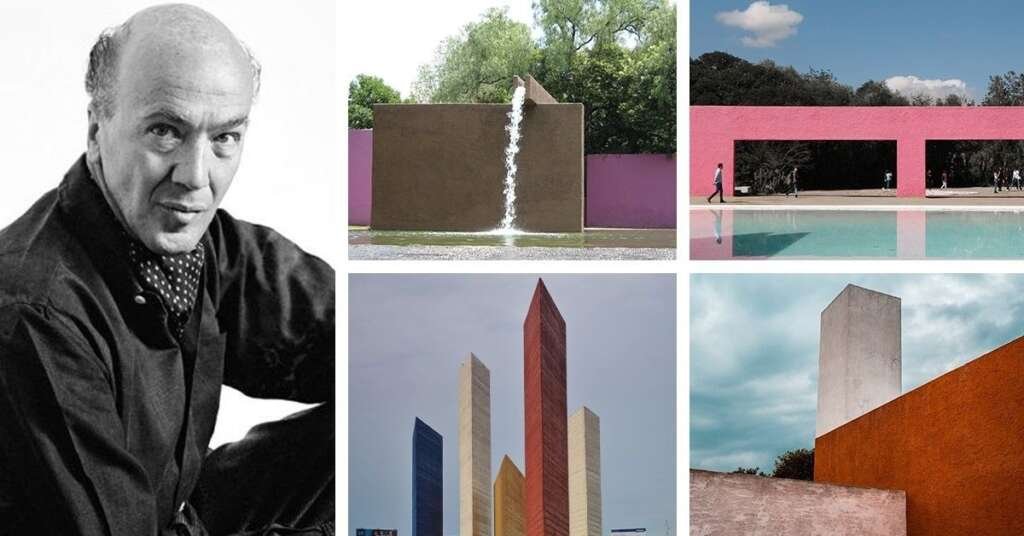
Portrait of Luis Barragán alongside archival photographs of his work.
Credits: https://mymodernmet.com/luis-barragan-mexican-modernist-architect/
In 1980, he became the second architect ever to receive the Pritzker Architecture Prize, recognized for creating architecture that celebrated beauty, emotion, and serenity.
A Quiet Exterior That Hides a Remarkable Interior
One of the most surprising aspects of Casa Luis Barragán is its street presence.
From outside, the house appears almost anonymous.
Its plain facade gives little indication of the extraordinary interiors waiting behind its walls.
This deliberate contrast reflects Barragán’s belief that architecture should reveal itself gradually.
Rather than impressing through monumental form, the house rewards curiosity and exploration.
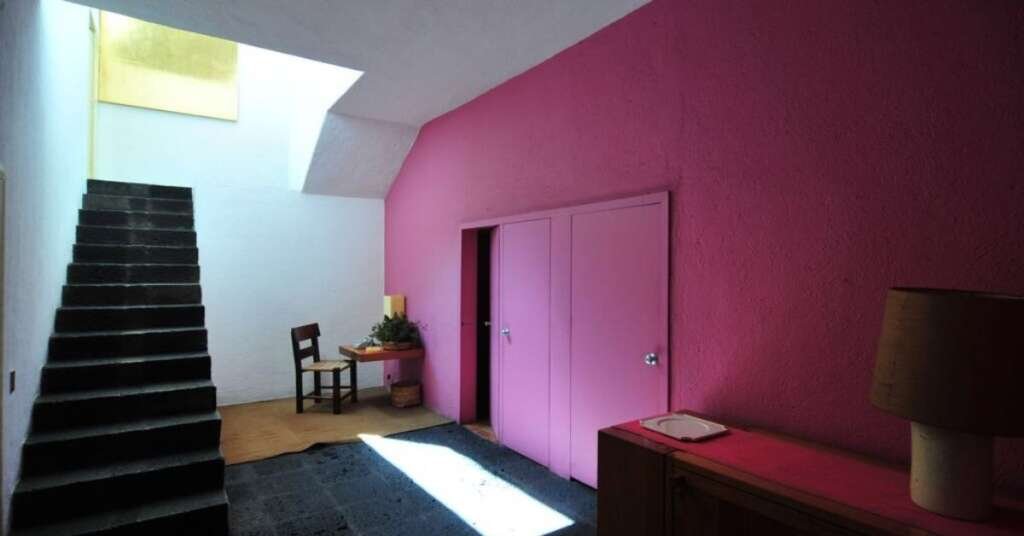
Interior showcasing vibrant pink walls, natural light, and carefully composed spaces.
Crossing the entrance feels less like entering a building and more like stepping into an entirely different world.
Colour as an Architectural Material
Perhaps no architect has used colour as masterfully as Luis Barragán. At Casa Barragán, colour isn’t decoration, it becomes architecture itself. Brilliant shades of:
- Pink
- Ochre
- Yellow
- Purple
- White
interact constantly with changing daylight.
As sunlight moves throughout the day, the walls appear to transform, creating shifting moods and unexpected moments of beauty.
Rather than overwhelming the senses, these colours create warmth, intimacy, and emotional depth.
Barragán understood that colour could shape experience just as powerfully as walls and ceilings.
The Art of Designing With Light
Natural light plays an equally important role.
Instead of flooding interiors with daylight, Barragán carefully controlled how light entered each room.
Windows are positioned not simply for views but for atmosphere.
Soft light washes across textured walls. Shadows become part of the composition.
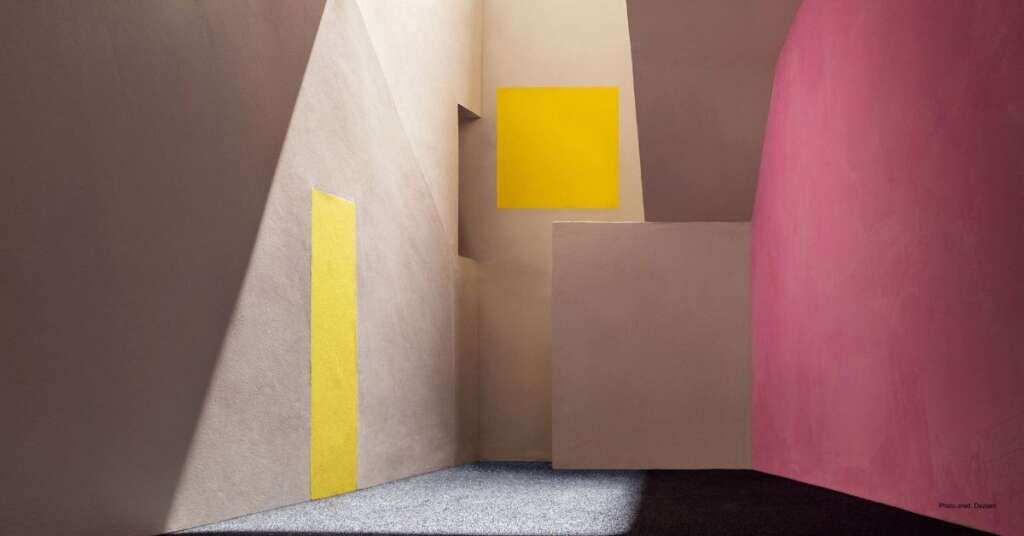
Architectural image emphasizing dramatic light, shadow, and colourful walls reminiscent of Barragán’s design philosophy.
Credits: https://blog.bolon.com/blog/iconic-style-mexican-modernism
Certain spaces remain intentionally dim, encouraging calm and contemplation.
This careful orchestration creates an environment that changes constantly without ever feeling dramatic.
The house reminds us that light is one of architecture’s most powerful materials.
Silence as a Design Principle
One of Barragán’s most remarkable achievements was designing spaces that feel quiet.
Not merely acoustically quiet but emotionally quiet.
Every room encourages stillness.
The carefully proportioned spaces, restrained detailing, and absence of visual clutter create a rare sense of calm.
Barragán often spoke about architecture’s ability to inspire serenity.
Casa Barragán demonstrates exactly what he meant.
In today’s fast-paced world, its peaceful atmosphere feels more relevant than ever.
Gardens That Feel Like Living Rooms
For Barragán, landscape was never separate from architecture. At Casa Barragán, gardens become extensions of interior spaces.
Trees frame views through carefully positioned windows. Courtyards introduce nature into everyday life.
Walls define outdoor rooms just as they define indoor ones.
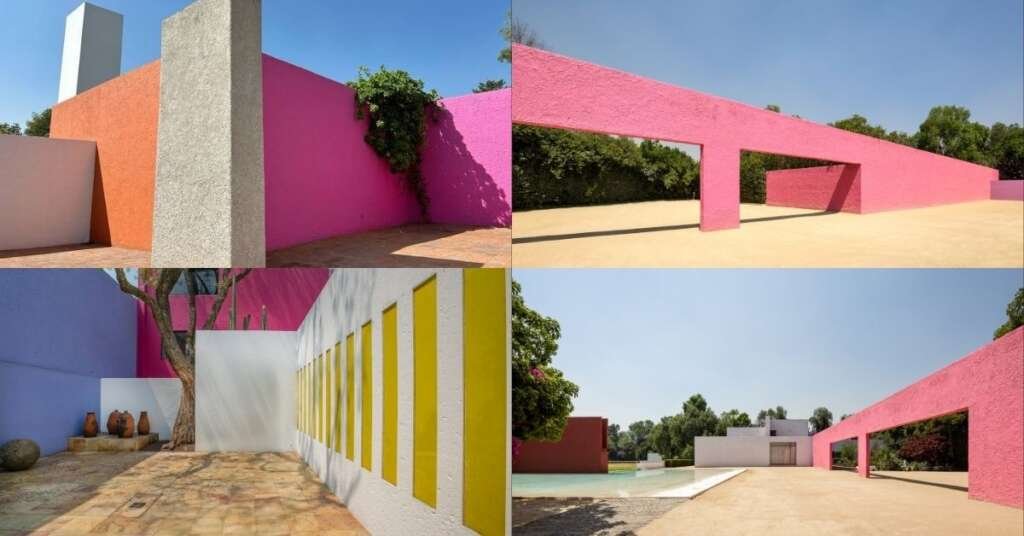
Courtyard and garden illustrating the seamless relationship between architecture and landscape.
Rather than creating decorative landscapes, Barragán designed environments where architecture and nature coexist seamlessly.
The result is a house where every room feels connected to the landscape.
Minimalism With Emotion
Casa Barragán is often described as minimalist.
Yet it feels very different from the stark minimalism associated with many modern buildings.
The interiors are simple, but never empty. Furniture is carefully selected.
Artwork is thoughtfully placed. Every object contributes to the atmosphere.
Nothing feels excessive. Nothing feels cold.
Barragán showed that minimalism could be deeply emotional when combined with light, texture, colour, and proportion.
The Importance of Sequence
One reason Casa Barragán remains so memorable is the way visitors experience it.
Rather than revealing everything immediately, the house unfolds gradually.
Small entry spaces lead into larger rooms.
Dark corridors open into sunlit courtyards.
Low ceilings suddenly give way to taller volumes.
Every transition creates anticipation.
This carefully choreographed sequence transforms walking through the house into an emotional journey.
Lessons in Human Scale
Although Casa Barragán has become one of architecture’s most iconic homes, it never feels intimidating.
Every room is designed around everyday life.
The proportions feel comfortable.
The spaces encourage conversation, reading, reflection, and rest.
Barragán understood that architecture succeeds not through size but through experience.
This focus on human scale continues to influence residential architecture worldwide.
Modernism Rooted in Mexican Identity
While many twentieth-century architects pursued an international style, Barragán remained deeply connected to his cultural roots.
Traditional Mexican architecture inspired many aspects of the house:
- Thick masonry walls
- Vibrant colours
- Enclosed courtyards
- Textured surfaces
- Gardens as living spaces
Rather than copying history, Barragán reinterpreted these traditions through a modern architectural language.
The result feels timeless rather than nostalgic.
What Architects Can Learn From Casa Barragán
Casa Luis Barragán offers valuable lessons that extend far beyond residential design.
| Design Principle | Architectural Lesson |
| Colour | Create emotional atmosphere rather than decoration. |
| Natural light | Shape mood through controlled daylight. |
| Gardens | Blur boundaries between indoors and outdoors. |
| Simplicity | Remove excess while enriching experience. |
| Human scale | Prioritize comfort over monumentality. |
| Spatial sequence | Design journeys instead of isolated rooms. |
These principles continue to inspire architects working across homes, museums, hotels, and cultural buildings.
A UNESCO World Heritage Site
In 2004, Casa Luis Barragán was designated a UNESCO World Heritage Site.
The recognition celebrated more than architectural beauty.
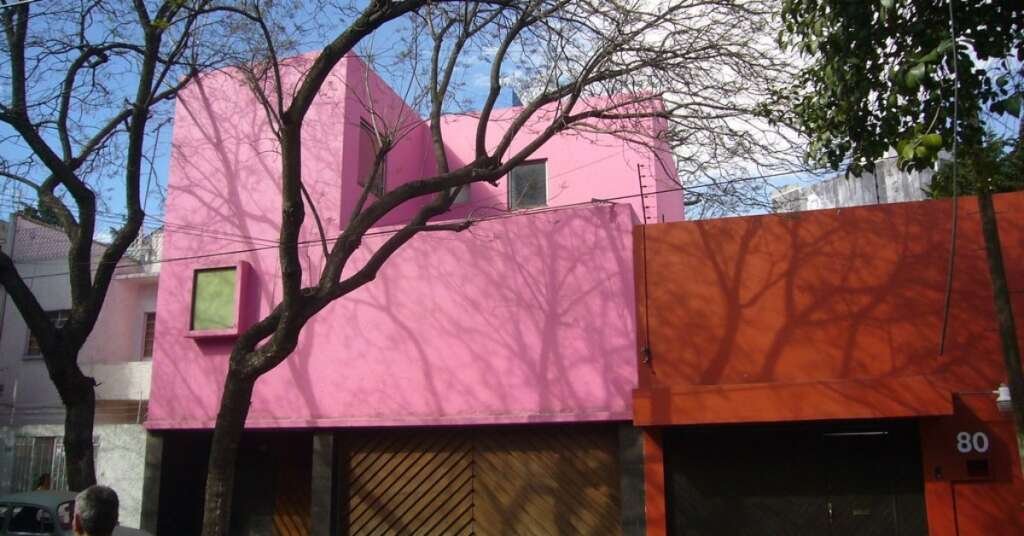
Exterior showcasing vibrant pink walls, and carefully composed spaces.
UNESCO described the house as a masterpiece that integrates modern architecture with traditional artistic and vernacular values.
It remains one of the few individual twentieth-century residences to receive this distinction, underscoring its global significance.
Its Lasting Influence on Contemporary Architecture
Today, the influence of Casa Barragán can be seen across the world. Architects increasingly embrace:
- Colour as spatial experience
- Courtyard living
- Landscape integration
- Emotional minimalism
- Quiet interiors
- Climate-responsive design
Many contemporary residential projects borrow these ideas, adapting them to new contexts while preserving Barragán’s emphasis on atmosphere.
The house continues to demonstrate that meaningful architecture isn’t defined by complexity but by intention.
Also Read: The Ultimate Guide to Design-Build Delivery: Faster, Smarter, and Better Construction Projects
Why Casa Luis Barragán Still Matters
Architecture often celebrates innovation through technology, height, or spectacle.
Casa Luis Barragán reminds us that another path exists.
A path built on emotion.
On memory. On silence. On carefully filtered light. On colours that transform throughout the day.
On spaces that encourage reflection rather than distraction.
Its influence extends far beyond Mexico because these qualities are universal.
Every architect can learn from the way Barragán designed not just buildings, but feelings.
Conclusion: A Masterpiece That Speaks Through Silence
Casa Luis Barragán remains one of the most poetic works of modern architecture ever created. Through colour, natural light, gardens, and carefully choreographed spaces, Luis Barragán demonstrated that architecture has the power to nurture the human spirit as much as it provides shelter. Rather than chasing spectacle, the house celebrates stillness, intimacy, and emotional connection qualities that continue to resonate with architects and designers across generations.