

Share This Article
The architecture, engineering, and construction industry has undergone a remarkable transformation over the last decade. Rising construction costs, tighter project schedules, evolving sustainability goals, and increasing client expectations have forced professionals to rethink traditional project delivery methods. One approach that has rapidly gained momentum is Design-Build Delivery, a project delivery model that combines architectural design and construction services under one unified contract.
Unlike conventional methods where architects and contractors work independently, design-build delivery encourages collaboration from day one. Architects, engineers, contractors, consultants, and project owners become part of one integrated team, making communication smoother and project execution significantly faster.
Today, design-build construction is becoming the preferred choice for commercial buildings, residential developments, healthcare facilities, educational campuses, industrial projects, infrastructure developments, and hospitality architecture because it simplifies workflows while improving project quality.
As technology continues to reshape construction management, the design-build process is proving that collaboration is far more powerful than separation.
Understanding the Design-Build Delivery Model
Design-build delivery is a project delivery method where one organization takes complete responsibility for both the architectural design and the construction of a project. Instead of signing separate contracts with architects and contractors, the project owner works with a single entity throughout the project lifecycle.
This integrated construction model creates better alignment between design intent, engineering decisions, budgeting, procurement, scheduling, and construction execution. Because every stakeholder works toward a common objective, potential issues are identified earlier, reducing delays and unnecessary design revisions.
The design-build project delivery system has become increasingly popular because it eliminates many of the communication gaps that often occur in traditional construction contracts.
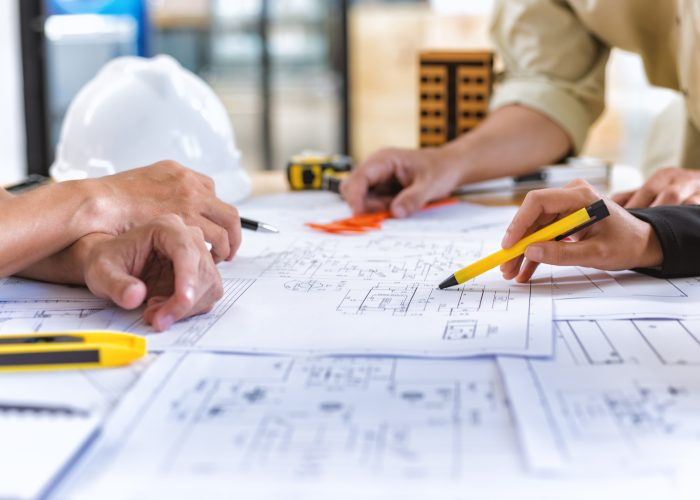
Breaking Down the Traditional Workflow Challenges
For decades, the Design-Bid-Build method dominated the construction industry. Under this system, architects complete the design before contractors are invited to bid on the project. Although this approach has worked for many years, it often creates several workflow challenges.
Construction teams usually join after the design is finalized, leaving little room to improve constructability or optimize costs. If unforeseen site conditions or budget constraints arise, architects may need to redesign significant portions of the project, leading to delays and increased expenses.
Communication also becomes fragmented because architects, contractors, consultants, and project owners operate under separate contracts with different priorities. Misunderstandings can lead to disputes, change orders, scheduling conflicts, and rising project costs.
These inefficiencies are exactly why many organizations are shifting toward design-build project delivery.
Also read – How Great City Squares Transform Cities: Timeless Lessons from Famous Plazas
Why Collaboration Is the Biggest Advantage of Design-Build
One of the greatest strengths of design-build construction is collaboration. Instead of working in isolation, architects and construction professionals contribute their expertise simultaneously.
Contractors provide valuable insights during the design phase regarding construction feasibility, material availability, labor requirements, and cost estimation. Architects, in turn, can refine their designs based on real-world construction knowledge without compromising creativity.
This continuous exchange of ideas improves project coordination while reducing design conflicts.
Better collaboration also creates stronger relationships among project stakeholders. Everyone works toward the same project goals rather than protecting individual contractual interests, making decision-making much faster and more efficient.
Faster Project Delivery Through Parallel Workflows
Time has become one of the most valuable resources in modern construction. Developers, investors, and institutions all want projects completed quickly without sacrificing quality.
The design-build delivery method allows design and construction activities to overlap instead of happening one after another.
For example, while architects finalize later phases of the building design, contractors can already begin foundation work, procurement of structural materials, and site preparation. This parallel workflow significantly shortens the overall construction schedule.
Many large infrastructure projects, hospitals, airports, corporate campuses, and industrial facilities now rely on design-build delivery because faster completion means earlier occupancy, quicker revenue generation, and improved return on investment.

Cost Control Becomes Easier Throughout the Project
Budget overruns remain one of the biggest concerns in architecture and construction. Traditional delivery methods often reveal cost problems only after design completion, forcing expensive redesigns.
With design-build project management, budgeting becomes a continuous process.
Construction experts participate in cost planning from the beginning, helping architects make informed material selections, optimize structural systems, and improve construction efficiency without compromising performance or aesthetics.
Real-time cost feedback allows project owners to make better financial decisions throughout the project rather than reacting to unexpected expenses later.
This proactive budgeting approach reduces change orders while improving cost certainty.
Early Contractor Involvement Improves Buildability
Architectural creativity must eventually become physical reality. Some innovative design concepts can be difficult or expensive to construct if contractors are involved too late.
Early contractor participation is one of the defining characteristics of design-build delivery.
Construction professionals evaluate structural systems, sequencing strategies, equipment access, safety requirements, and construction logistics before final drawings are completed. Their expertise helps identify potential challenges before they become expensive field problems.
This collaboration creates buildings that are not only visually impressive but also practical, efficient, and easier to construct.
Technology Is Powering Modern Design-Build Workflows
Digital transformation has accelerated the success of design-build construction. Today’s integrated project teams rely heavily on advanced technologies that improve coordination and decision-making.
Building Information Modeling (BIM) allows architects, structural engineers, MEP consultants, and contractors to work on a shared digital model. Design conflicts can be detected virtually before construction begins, reducing costly on-site modifications.
Cloud collaboration platforms, drone surveys, laser scanning, digital twins, AI-assisted scheduling, and project management software further streamline communication across multidisciplinary teams.
These technologies support the collaborative nature of design-build delivery while improving accuracy, transparency, and project efficiency.
Better Risk Management Across Every Stage
Construction projects involve numerous uncertainties, including labor shortages, fluctuating material prices, regulatory changes, weather disruptions, and supply chain delays.
In traditional contracts, responsibility for these risks is often divided among multiple parties, leading to disputes over accountability.
With design-build delivery, responsibilities are consolidated under one contract. Because design and construction teams work together, problems are identified earlier and resolved collaboratively instead of becoming contractual conflicts.
This integrated responsibility reduces litigation risks while creating greater confidence for project owners.
Sustainability Starts Earlier in the Design Process
Sustainable architecture depends on early planning. Decisions regarding orientation, building envelope performance, renewable energy systems, structural materials, and water efficiency have the greatest impact during the design phase.
The design-build approach enables sustainability experts, architects, engineers, and contractors to collaborate from the beginning, allowing environmental strategies to be integrated into every design decision.
Energy-efficient HVAC systems, low-carbon materials, prefabrication techniques, passive design strategies, daylight optimization, and construction waste reduction become easier to implement when every discipline contributes from the start.
As governments continue introducing green building regulations, integrated project delivery models like design-build will play a significant role in achieving sustainability goals.
Prefabrication and Modular Construction Work Seamlessly with Design-Build
Modern construction increasingly relies on prefabrication and modular building systems to improve quality while reducing construction time.
The design-build delivery model naturally complements these methods because architects and contractors coordinate manufacturing requirements during the early design stages.
Structural components, bathroom pods, façade panels, mechanical systems, and modular rooms can be designed for off-site production before on-site construction begins.
This synchronization reduces material waste, improves quality control, minimizes labor requirements, and accelerates project completion.
Improved Client Experience Through Single-Point Responsibility
For project owners, managing multiple contracts can become overwhelming. Communication often flows through several consultants, making it difficult to identify who is responsible for delays or design changes.
The design-build delivery method simplifies this experience by providing one point of accountability.
Clients communicate with a single project team responsible for design, engineering, construction, budgeting, and scheduling. This streamlined approach reduces confusion while allowing faster approvals and quicker responses to project changes.
Greater transparency also helps clients stay informed throughout the project lifecycle.
How Design-Build Encourages Innovation
Innovation thrives when professionals from different disciplines collaborate openly.
Architects contribute creative spatial ideas, engineers improve structural efficiency, contractors suggest innovative construction methods, and material suppliers introduce new technologies.
This collaborative environment often leads to smarter design solutions that balance aesthetics, performance, constructability, sustainability, and long-term maintenance.
Rather than solving problems individually, integrated teams develop comprehensive solutions that improve the entire project.
Industries Driving the Growth of Design-Build Delivery
Several sectors have rapidly embraced design-build construction due to its ability to accelerate delivery while improving efficiency.
Healthcare facilities require fast project completion without interrupting essential medical services. Educational institutions benefit from predictable construction schedules aligned with academic calendars. Industrial facilities demand rapid expansion to meet production needs, while commercial developers seek quicker occupancy to maximize investment returns.
Government infrastructure projects, airports, transportation hubs, hospitality developments, mixed-use complexes, and residential communities are also increasingly adopting design-build delivery because it reduces complexity while improving project outcomes.
The Future of Architecture and Construction Is Integrated
The future of architecture is becoming increasingly collaborative. As artificial intelligence, digital construction, robotics, Building Information Modeling, and smart building technologies continue evolving, project delivery methods must also evolve.
Design-build delivery aligns perfectly with these advancements because it encourages continuous communication, digital collaboration, integrated workflows, and shared responsibility.
Rather than separating design and construction into isolated phases, future projects will rely on multidisciplinary teams working together from concept through completion.
This integrated approach supports faster innovation, improved sustainability, higher construction quality, and better client satisfaction.
Conclusion
The rise of design-build delivery represents far more than a change in contractual arrangements, it signals a fundamental shift in how architecture and construction projects are conceived, designed, and delivered. By bringing architects, engineers, contractors, consultants, and owners together under a unified workflow, the design-build model eliminates communication barriers, reduces costly delays, strengthens cost control, and encourages innovation at every stage.
As digital technologies, sustainable building practices, prefabrication, and collaborative project management continue to shape the future of the built environment, design-build construction is becoming the preferred delivery method for organizations seeking speed, efficiency, quality, and long-term value.
In an industry where time, budget, and performance are more critical than ever, design-build delivery is proving that the strongest buildings begin with the strongest collaboration. For architects, builders, developers, and clients alike, this integrated approach is not just changing workflows, it is redefining the future of construction itself.