
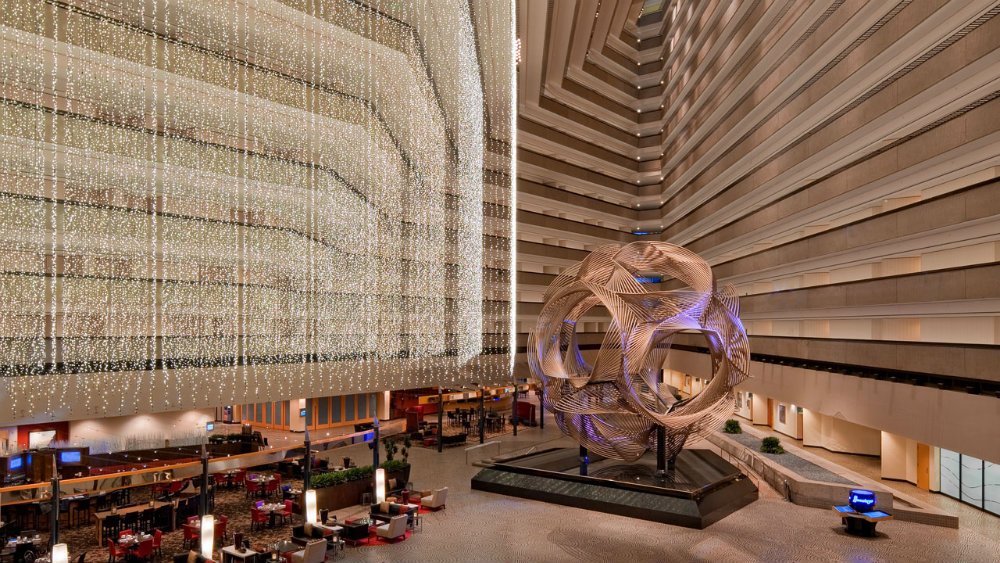
What if hotels let you step into a city’s memory, another universe, or made you forget the world outside?
Contrary to their role in previous centuries, hotels are no longer pit stops or stopovers on a journey. They have become destinations in themselves. Credit the pandemic for bringing in the unsettling wave of staycations and making their identity as destinations even more concrete.
Beyond offering comfort and higher standards of luxury, some of the most iconic hotels around the world are distinguished by their architectural design. Transcending conventional hospitality and comfort expectations, they create immersive experiences that reflect a philosophy of design and its enduring impact.
Bold experiments in form, vocabularies that embody both global innovation and cultural narratives, and elements that treat design and user interaction as a performance are building experiences that await guests.
Masterpieces are not destined for admiration but inhabitation. From Frank Gehry’s sculptural forms in Spain to Peter Zumthor’s stone-quiet sanctuary in the Swiss Alps, these hotels invite travelers to experience architecture as characters in a larger narrative and not observers (especially of napkins shaped as swans).

European elegance and radical experiments
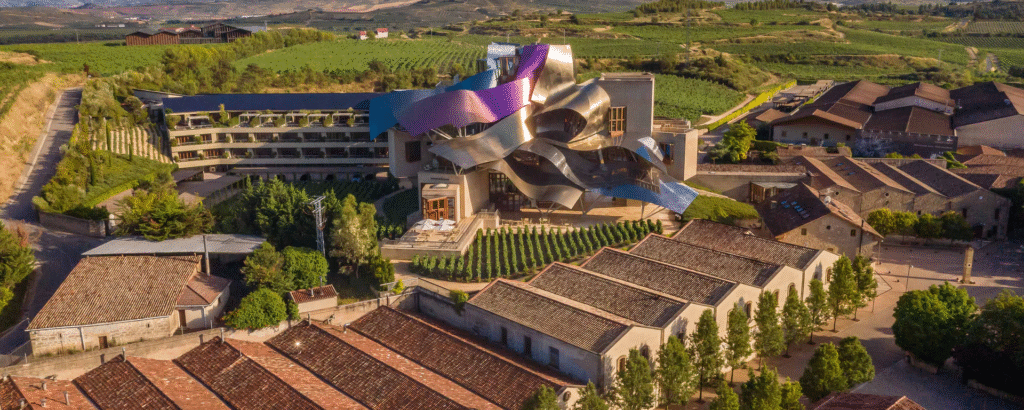
Hotel Marqués de Riscal, Spain, designed by Frank Gehry
Set amidst rolling vineyards, Hotel Marqués de Riscal is a striking example of Frank Gehry’s architectural language and experiments. Known for the Guggenheim Museum in Bilbao, Gehry brought his signature titanium curves and bold geometries to this luxury retreat, too.
Gehry creates buildings that appear to live, breathe, and move, challenging conventional notions of static architecture. The hotel appears to be draped by titanium ribbons cascading over the structure like flowing wine, paying homage to the vineyard setting.
Inside, the spatial experience honours Gehry’s defiance of the obvious. Unpredictable forms continue in dynamic volumes, flowing surfaces, and angled windows frame the surrounding horizon.
Despite all this and more, the hotel is not only about spectacle. It’s a constant dialogue between tradition and modernity and stands as an avant-garde structure rooted in a historic wine estate. Staying there feels like inhabiting a piece of sculpture, one that constantly changes with light and perspective.
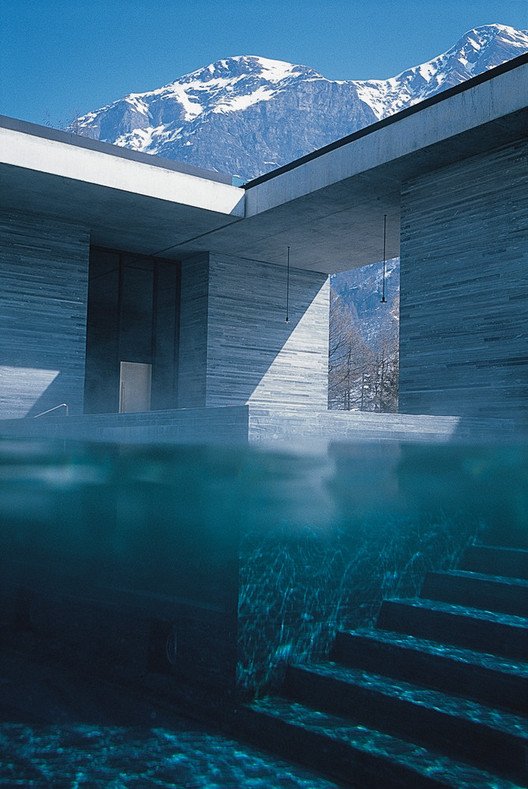
Therme Vals, Switzerland, designed by Peter Zumthor
Peter Zumthor’s Therme Vals is a classic example of how restraint in architecture can also lead to exceptional design. Built into the mountainside of the Swiss Alps and crafted from local stone, this hotel is like an extension of its surrounding landscape.
Dim chambers guide visitors through silence, shadow, and reflection. The rhythm of stone walls and the tactility of water combine to heighten awareness of the senses. Zumthor once described the project as ‘a cave-like world of stone, water, and light, and indeed, staying here feels like being enveloped in nature’s embrace.
Asia Interpretations and Inclination to Nature
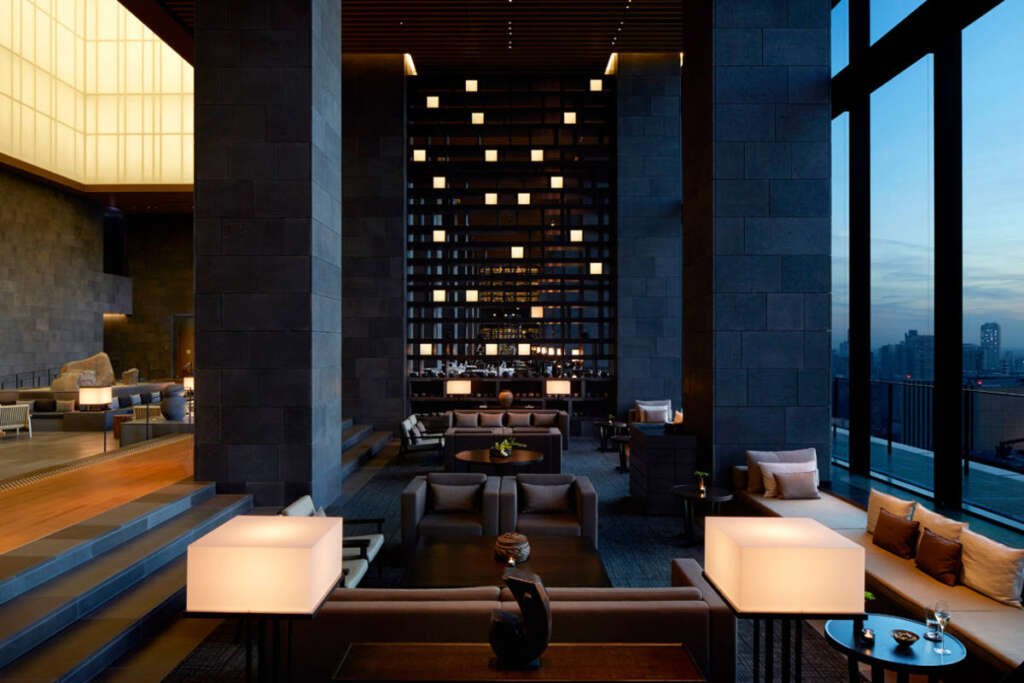
Aman Tokyo, Japan, designed by Kerry Hill
Kerry Hill creates spaces that celebrate emptiness as much as form, and Aman Tokyo stands as a benchmark following this approach as well. His approach to this hotel draws from traditional Japanese aesthetics while incorporating contemporary materials and concepts.
Hill’s signature use of natural materials, particularly stone and wood, creates a sense of permanence and tranquility. His attention to proportion and ability to frame views of the city create contemplative moments throughout.
The Opposite House, Beijing, designed by Kengo Kuma
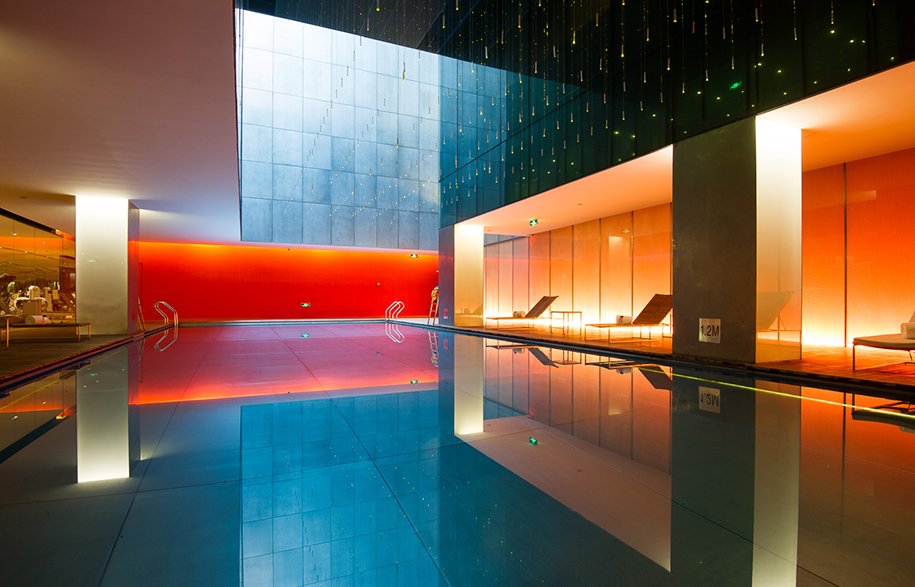
The Opposite House in Beijing by Kengo Kuma is another Asian masterpiece.
Known for his harmonious designs and fascination with materials and light, Kuma brings his philosophy of transparency to this project as well.
The facade, a lattice of green glass panels, filters natural light like bamboo screens. It creates a sense of openness, while still offering privacy. Inside, wood dominates, staircases float, and elements create an interplay of shadows evoking Kengo Kuma’s signature ‘anti-monumental’ style.
Americas sculptural statements
Tierra Patagonia, Chile, designed by Cazú Zegers
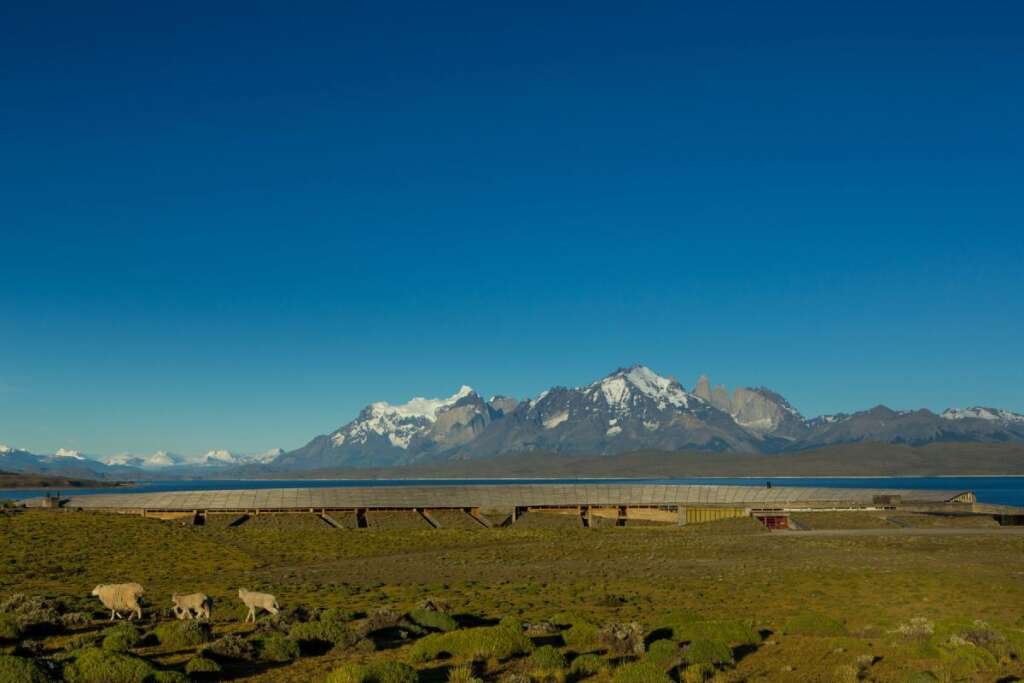
Set against the vast wilderness of Patagonia, Tierra Patagonia, designed by Cazú Zegers, camouflages its environment. The hotel curves like a piece of driftwood along the steppe, mimicking the windswept landscape.
Its interiors are a continuation of the ongoing dialogue with nature. Warm wood lines walls and ceilings, creating a cocoon-like shelter. Vast floor-to-ceiling windows frame the Torres del Paine mountains as though they’re artworks hung on a wall.
The design lets nature be the protagonist while offering comfort and familiarity.
Also Read – 12 Architects Who Redefined the World and Changed the Course of Architectural History
Rosewood São Paulo, Brazil, designed by Jean Nouvel & Philippe Starck
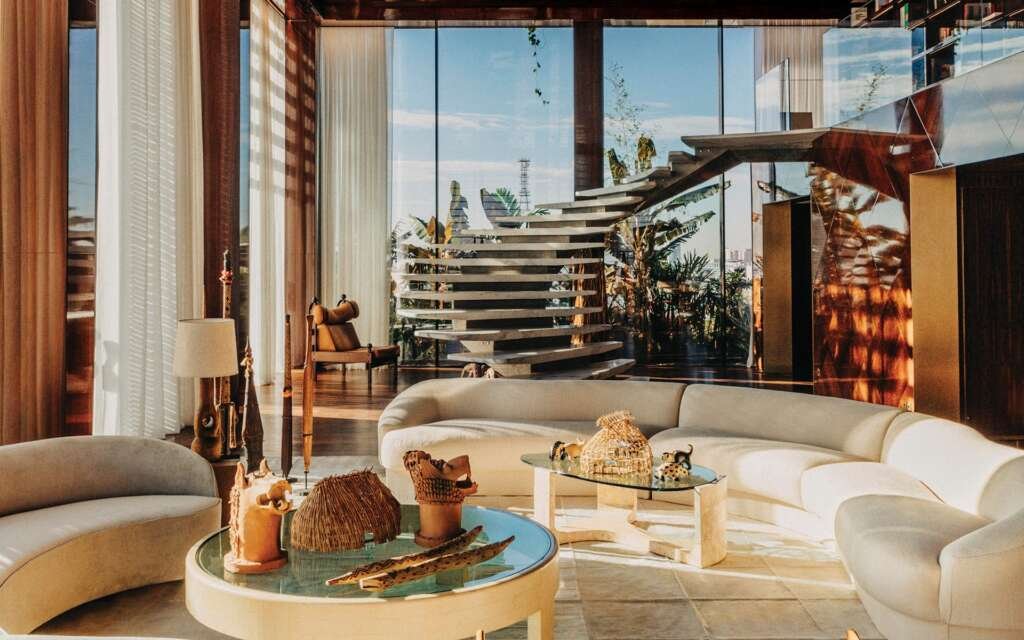
In São Paulo, Jean Nouvel and Philippe Starck collaborated to design the Rosewood Hotel, a project that unites historic preservation with bold contemporary design. Nouvel designed the vertical garden tower, alive with vegetation, that rises beside a restored early-20th-century building, bridging heritage and modernity.
Starck’s interiors, on the other hand, bring the project to life. Each space feels like it’s a theatrical set layered with Brazilian identity: tropical woods, patterned tiles, exuberant art, and rich textiles echoing the city’s cultural vibrancy. Public areas pulse with eclectic energy, murals, sculptural furniture, and curated lighting. Guest rooms, in contrast, offer a calmer retreat, with soft palettes and tactile details that embrace with acceptance. The interiors mirror São Paulo itself: energetic, layered, and constantly shifting between the historic and the contemporary.
Reimagination in physical form
These hotels prove that accommodation can also be art, and that sleeping in a building can be as memorable as visiting a museum. These examples remind us that great design has the power to move us, challenge us, and change how we see the world.
Experiencing these hotels is to witness how architecture can shape memory as much as it shapes spaces. Long after checking out, what lingers is not just the comfort of a bed or the view from a window, but the feeling of living someone’s vision.
So why merely visit a destination when you can inhabit a work of art?





Join the discussion