

Share This Article
Organic Modern Architecture is redefining how people want homes and spaces to feel today. In a world filled with visual clutter, fast trends, and overstimulating environments, people are slowly moving toward spaces that feel calmer, softer, and more connected to nature.
For years, modern architecture was heavily associated with sharp lines, cold minimalism and ultra-polished spaces. While visually striking, many of those environments often felt too sterile to actually live in comfortably.
Organic modernism changes that completely.
It blends clean contemporary architecture with warmth, texture, natural materials and emotional comfort. The result is a style that feels sophisticated without being intimidating and minimal without feeling empty.
And that balance is exactly why organic modern architecture is quietly becoming one of the biggest design movements globally.
So, What Exactly Is Organic Modern Architecture?
At its core, organic modern architecture combines:
- Modern minimalism
- Natural materials
- Soft architectural forms
- Earth inspired palettes
- Human centered living
Think contemporary spaces, but softened through nature. Instead of overly polished interiors and rigid geometry, organic modern spaces embrace:
- Warm woods
- Stone textures
- Curved forms
- Neutral tones
- Natural light
- Indoor-outdoor connection
The focus isn’t just visual beauty.It’s an emotional experience.
Why Organic Modern Design Feels So Relevant Right Now
Modern life has become noisy.
Cities are denser. Screens dominate daily routines. People spend more time indoors than ever before. And because of that, homes are no longer just places to stay.
They’ve become spaces for:
- Mental rest
- Wellness
- Emotional comfort
- Slower living
- Balance
Organic modern architecture responds directly to that need. Instead of creating homes that feel like showrooms, the style creates environments that feel restorative. That emotional quality is what people are craving most today.
The Shift From “Perfect” Spaces to Human Spaces
One reason organic modernism is becoming so popular is because people are moving away from hyper-perfect interiors.
The overly curated minimalist aesthetic is slowly evolving into something softer and more authentic.
Today, people want homes that feel warm, textured, natural, personal and comfortable.
That’s why organic modern spaces often embrace imperfections:
- Handmade materials
- Raw textures
- Natural stone variation
- Matte finishes
- Organic shapes
Nothing feels too polished or overly staged. That’s exactly what makes the spaces feel emotionally grounding.
The Materials Defining Organic Modern Architecture
One of the biggest signatures of this design style is materiality. Instead of synthetic finishes and glossy surfaces, organic modern spaces prioritize tactile, natural materials that age beautifully over time.
| Material | Why It Works |
| Wood | Adds warmth and softness |
| Natural Stone | Creates texture and authenticity |
| Lime Plaster | Gives walls depth and imperfection |
| Linen & Cotton | Adds breathable softness |
| Concrete | Balances warmth with minimalism |
| Clay & Ceramics | Bring handcrafted character |
The beauty of organic modern architecture is that materials are allowed to feel real. Nothing is overly processed or artificial.
Natural Light Becomes the Main Design Feature
One thing you’ll notice in most organic modern homes is how much emphasis is placed on light.
Large openings, oversized windows, skylights and open layouts are all designed to maximize natural daylight.
But unlike traditional modernism, the goal here isn’t dramatic sharpness.
It’s softness.
Morning shadows, warm sunlight, and changing natural light become part of the architecture itself. This is what gives organic modern spaces their calming atmosphere.
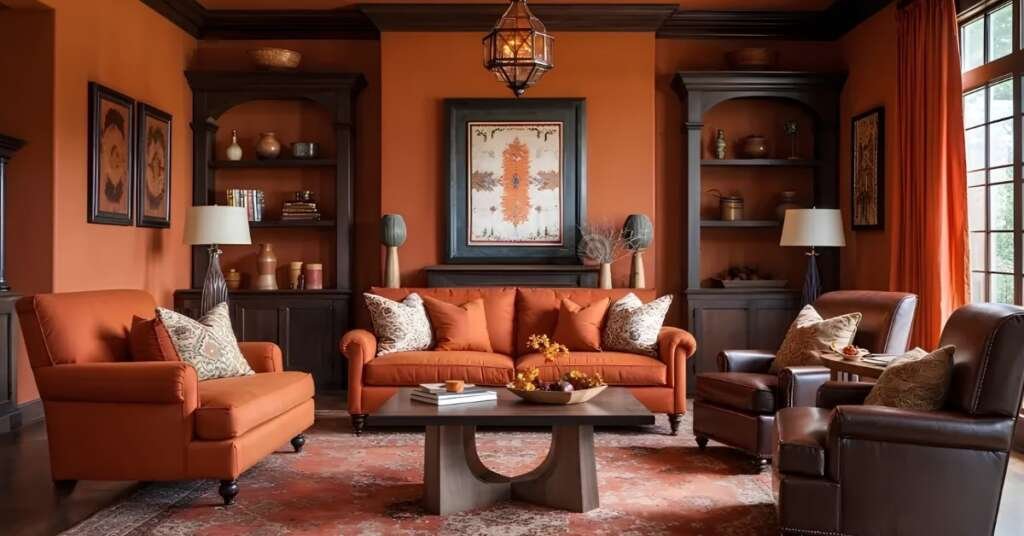
Earthy-toned organic modern interior with warm terracotta hues, rich wooden finishes and comfortable contemporary furniture that blends luxury with natural warmth.
Credits: https://in.pinterest.com/pin/1084171310315550123/
Curves Are Quietly Replacing Harsh Geometry
For years, contemporary architecture focused heavily on rigid straight lines and sharp forms. But organic modernism introduces softness back into architecture. That’s why we’re seeing more:
- Curved walls
- Rounded furniture
- Arched openings
- Soft edged decor
- Fluid spatial layouts
These subtle curves make interiors feel:
- More welcoming
- Less intimidating
- More human centered
Psychologically, softer forms often create a stronger sense of comfort compared to harsh geometry.
Organic Modernism Is Deeply Connected to Wellness
One reason this style is becoming globally dominant is because it aligns perfectly with wellness-focused living. Organic modern architecture supports wellbeing through:
- Natural ventilation
- Daylight optimization
- Minimal visual clutter
- Calming color palettes
- Indoor greenery
- Natural materials
It’s architecture designed not just for aesthetics, but for how spaces emotionally affect people. That’s one of the biggest reasons the movement feels timeless rather than trend-driven.
The Color Palette Is Intentionally Quiet
Organic modern spaces rarely use loud or highly contrasting colors.
Instead, the palette is inspired by nature:
- Warm whites
- Beige
- Sand
- Taupe
- Clay
- Olive green
- Stone grey
- Soft browns
These muted tones allow textures and light to become the focus. The result feels calm, layered and incredibly relaxing.

Earthy rusty tone organic modern bedroom.
Credits: https://in.pinterest.com/pin/559431584986404319/
Indoor-Outdoor Living Plays a Huge Role
Another defining characteristic of organic modern architecture is the strong connection between interior and exterior spaces. Homes are increasingly designed to blur the line between indoors and outdoors through:
- Courtyards
- Open terraces
- Sliding glass walls
- Landscape integration
- Outdoor lounges
- Green pockets inside the home
Nature isn’t treated as decoration.
It becomes part of the architectural experience itself.
And honestly, this indoor-outdoor relationship is one of the reasons organic modern homes feel so peaceful.
Why Luxury Homes Are Embracing Organic Modernism
Interestingly, some of the world’s most luxurious homes today are moving toward quieter aesthetics. Instead of excessive ornamentation, luxury is now being defined through:
- Space
- Light
- Material quality
- Craftsmanship
- Emotional comfort
Organic modern architecture aligns perfectly with this shift.
The style feels premium because it focuses on restraint rather than excess. Understated spaces often feel far more timeless than trend-heavy interiors.
Also Read: The Ultimate Guide to Luxury Interior Design and Premium Interiors
Organic Modern Architecture Works Beautifully in Indian Homes Too
One reason this movement works especially well in India is because many traditional Indian architectural principles already align naturally with organic modern thinking. Concepts like:
- Courtyards
- Natural ventilation
- Earth materials
- Climate responsive spaces
- Indoor-outdoor living
have existed in Indian architecture for centuries.
Today, architects are reinterpreting these ideas through a more contemporary lens. This creates homes that feel modern while still remaining deeply connected to climate, culture and nature.
The Biggest Mistake People Make With Organic Modern Design
A lot of people confuse organic modernism with simply “minimal beige interiors.” But true organic modern architecture is much more layered than that.
Without texture, warmth, and material contrast, the spaces can quickly feel flat. The style works best when there’s balance between:
- Simplicity and softness
- Minimalism and warmth
- Modernity and nature
That emotional balance is what gives the style its depth.
Why Organic Modernism Isn’t Just a Trend
The biggest reason organic modern architecture is growing globally is because it responds to how people want to live today. People are increasingly prioritizing:
- Mental wellbeing
- Calm environments
- Sustainability
- Simplicity
- Authenticity
- Connection with nature
Those values are unlikely to disappear anytime soon. Which is why organic modernism feels less like a passing aesthetic trend and more like a long-term lifestyle shift.
Final Thoughts
Organic Modern Architecture proves that minimalism doesn’t have to feel cold or impersonal. By combining contemporary design with natural materials, soft forms, and emotional warmth, the style creates spaces that feel calm, timeless and deeply human.
It’s not about perfection.
It’s about balance.
In a world that constantly feels louder, faster, and more overwhelming, that quiet sense of balance may be exactly why natural minimalism is taking over design today.