
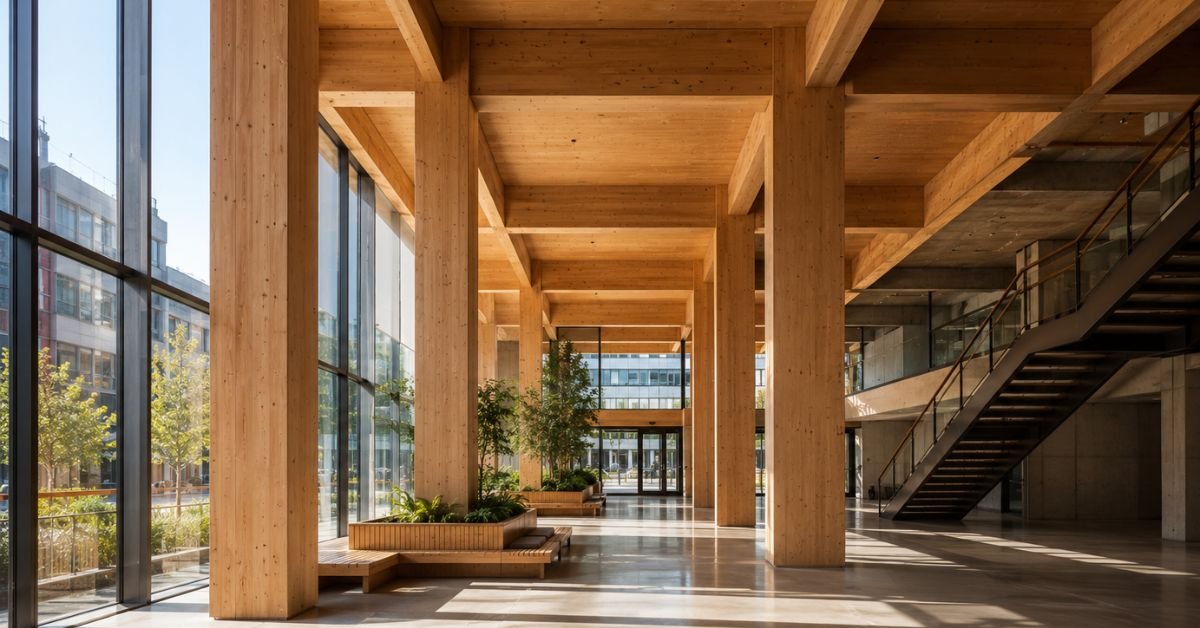
Mass Timber Construction is rapidly changing the conversation around modern architecture, sustainability and the future of urban development. For decades, concrete and steel dominated skylines across the world, becoming the default materials for everything from homes and offices to skyscrapers and public buildings.
But today, architects, developers and city planners are increasingly looking back to one of humanity’s oldest building materials that is wood.
The difference is that this isn’t traditional timber construction. Modern engineered wood technologies have transformed timber into a high-performance structural material capable of supporting large-scale buildings while offering significant environmental benefits.
As cities search for greener building solutions and the construction industry faces growing pressure to reduce its carbon footprint, mass timber is emerging as one of the most exciting innovations in contemporary architecture.
What Is Mass Timber Construction?
Mass timber refers to a category of engineered wood products designed for structural applications. Unlike conventional wood framing, mass timber uses layers of wood bonded together to create large, strong panels and beams that can compete with concrete and steel in many building types.
Some of the most common mass timber products include:
| Type | Description |
| Cross-Laminated Timber (CLT) | Layers of wood stacked in alternating directions for strength |
| Glulam | Laminated timber beams used for long spans |
| Nail-Laminated Timber (NLT) | Wood layers mechanically fastened together |
| Dowel-Laminated Timber (DLT) | Timber panels connected using wooden dowels |
| Laminated Veneer Lumber (LVL) | Engineered wood designed for structural performance |
These systems allow architects to design larger and taller buildings using wood while meeting modern safety and performance standards.
Why Is Timber Making a Comeback?
At first glance, it may seem surprising that architects are returning to wood after decades of concrete and steel dominance.
The answer lies in a combination of sustainability, technology and human experience.
Modern construction is facing challenges such as:
- Rising carbon emissions
- Resource intensive materials
- Environmental regulations
- Demand for healthier buildings
- Faster construction timelines
Mass timber addresses many of these concerns while introducing new design possibilities as it offers something many contemporary buildings lack i.e. warmth.
The Sustainability Advantage
One of the biggest reasons mass timber construction is gaining attention is its environmental impact.
Traditional building materials carry significant carbon footprints. Concrete production contributes heavily to global carbon emissions, while steel manufacturing requires enormous amounts of energy.
Timber, on the other hand, acts differently. Trees absorb carbon dioxide as they grow, storing carbon within the wood fibers. When sustainably harvested timber is used in buildings, much of that carbon remains locked away for decades.
This creates the possibility of buildings functioning as long-term carbon storage systems.
As governments and developers pursue net-zero goals, mass timber has become an attractive alternative.
Material Comparison
| Material | Carbon Impact |
| Concrete | High embodied carbon |
| Steel | Energy-intensive production |
| Mass Timber | Renewable and carbon-storing |
This doesn’t mean timber completely replaces other materials, but it significantly reduces a project’s environmental footprint when used strategically.
The Human Side of Timber Architecture
Architecture isn’t only about engineering. It’s also about how spaces make people feel.
That’s exactly where timber has a unique advantage. Walk into a mass timber building and you immediately notice something different.
The exposed wood surfaces create:
- Warmth
- Texture
- Comfort
- Natural character
- Visual softness
Numerous studies have suggested that natural materials can positively influence wellbeing, helping occupants feel more relaxed and connected to their surroundings.
In a world increasingly dominated by screens and artificial environments, that connection matters.
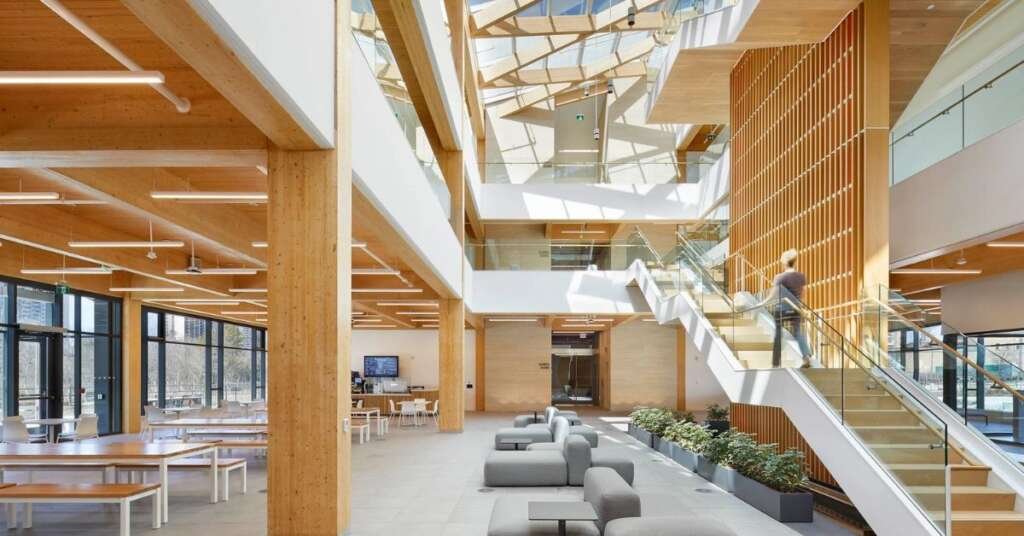
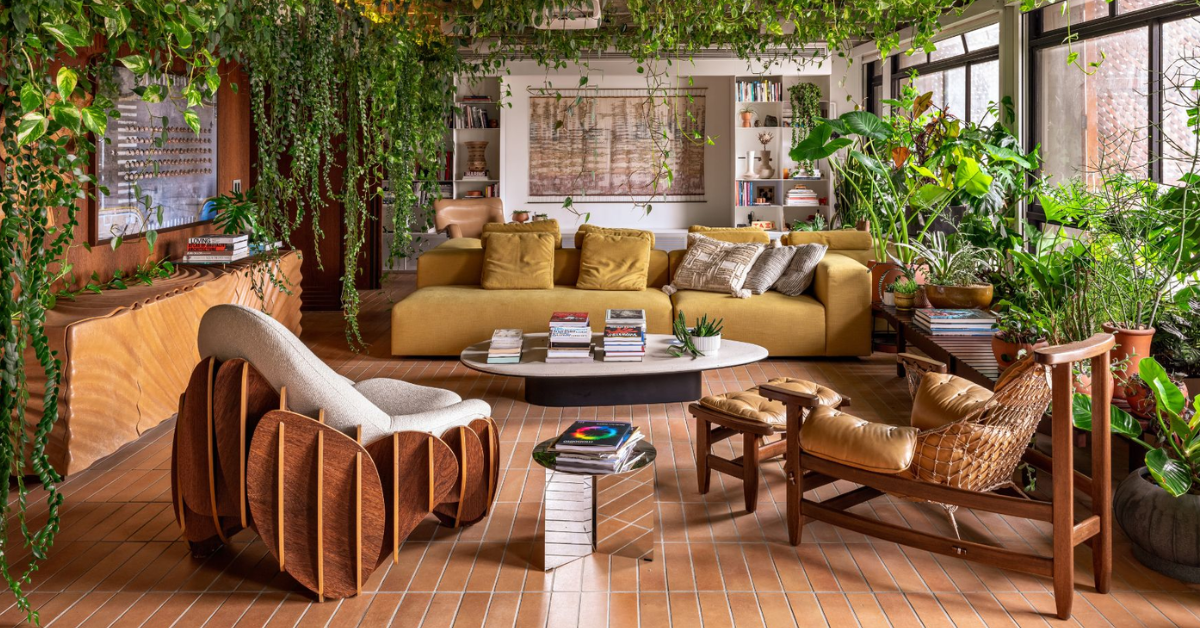
Contemporary mass timber office interior featuring exposed wood beams, natural daylight, and warm architectural detailing.
Can Wood Really Replace Concrete and Steel?
This is probably the most common question people ask.
The answer is not entirely. But it can replace them in many situations.
Modern mass timber systems are incredibly strong. Cross-laminated timber panels can support significant structural loads while maintaining dimensional stability.
In many mid-rise projects, timber can serve as the primary structural system.
Architects are now using mass timber for:
- Office buildings
- Educational campuses
- Residential towers
- Airports
- Cultural institutions
- Hospitality projects
The result is a growing category of high-performance timber architecture that was almost impossible just a few decades ago.
What About Fire Safety?
This is often the biggest concern surrounding timber construction. Interestingly, mass timber behaves very differently from conventional wood.
Large engineered timber members develop a protective char layer when exposed to fire. This char slows combustion and helps preserve the structural core for a longer period. Because of this predictable behavior, many mass timber buildings are designed to meet stringent fire safety regulations.
In fact, some engineered timber assemblies can achieve fire-resistance ratings comparable to conventional building systems. Modern timber architecture is not about ignoring safety rather it’s about engineering it differently.
Faster Construction, Less Waste
Another reason developers are embracing mass timber is efficiency. Many timber components are manufactured off-site using precision fabrication techniques.
This allows
- Faster installation
- Reduced labor requirements
- Better quality control
- Less construction waste
- Shorter project schedules
For urban projects where time and disruption matter, these advantages can be significant. As faster construction often translates into substantial cost savings as well.
Global Projects Leading the Timber Revolution
Around the world, several projects are demonstrating what mass timber can achieve.
Mjøstårnet, Norway
Standing over 85 meters tall, Mjøstårnet is one of the tallest timber buildings in the world and showcases the structural capabilities of engineered wood.
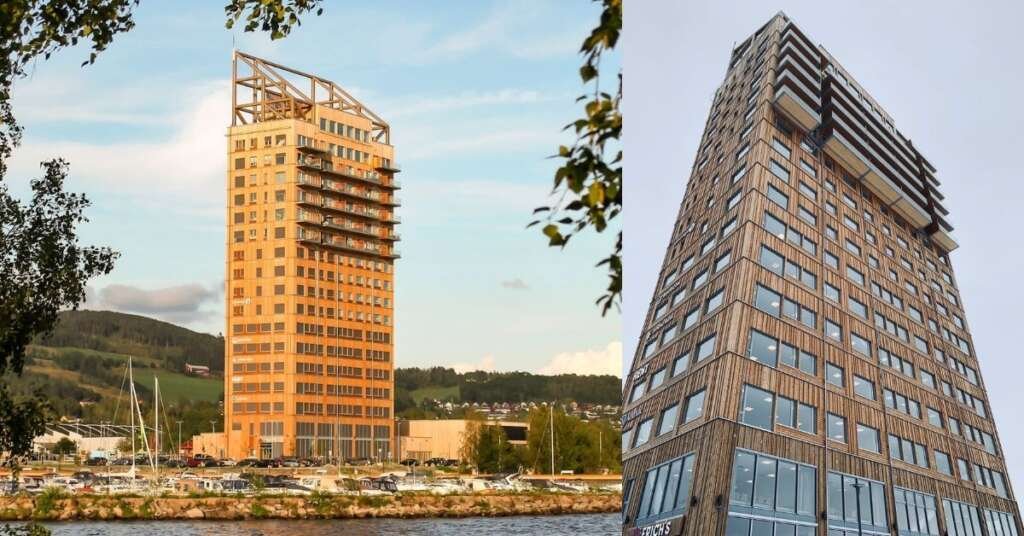
Credits: https://www.webuildvalue.com/en/global-economy-sustainability/mjostarnet-wooden-skyscrapers.html
Ascent Tower, USA
Located in Milwaukee, this residential tower pushed the boundaries of timber high-rise construction and highlighted the growing confidence in engineered wood systems.
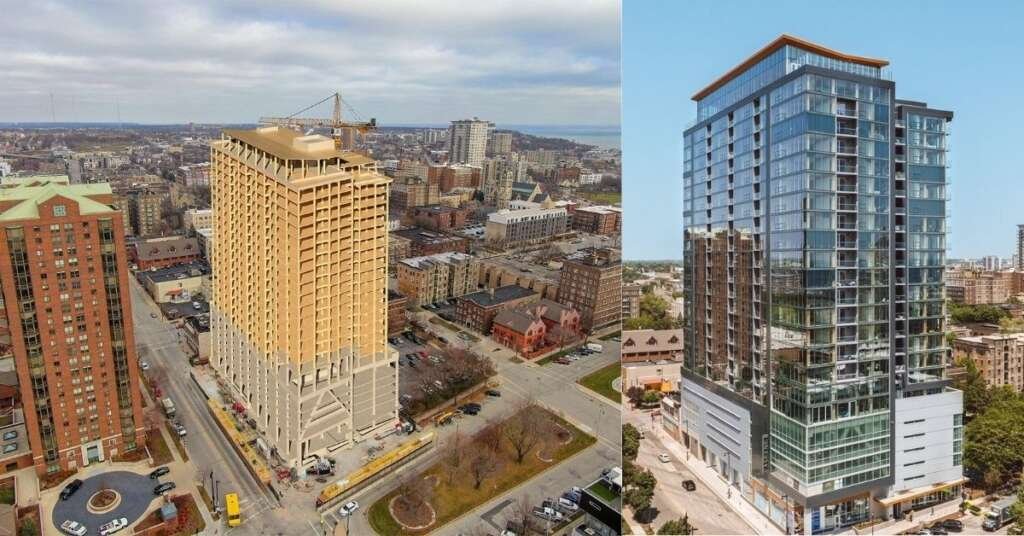
Credits: https://www.thorntontomasetti.com/project/ascent
Sara Cultural Centre, Sweden
A remarkable example of large-scale public architecture built almost entirely from mass timber, combining sustainability with contemporary design.
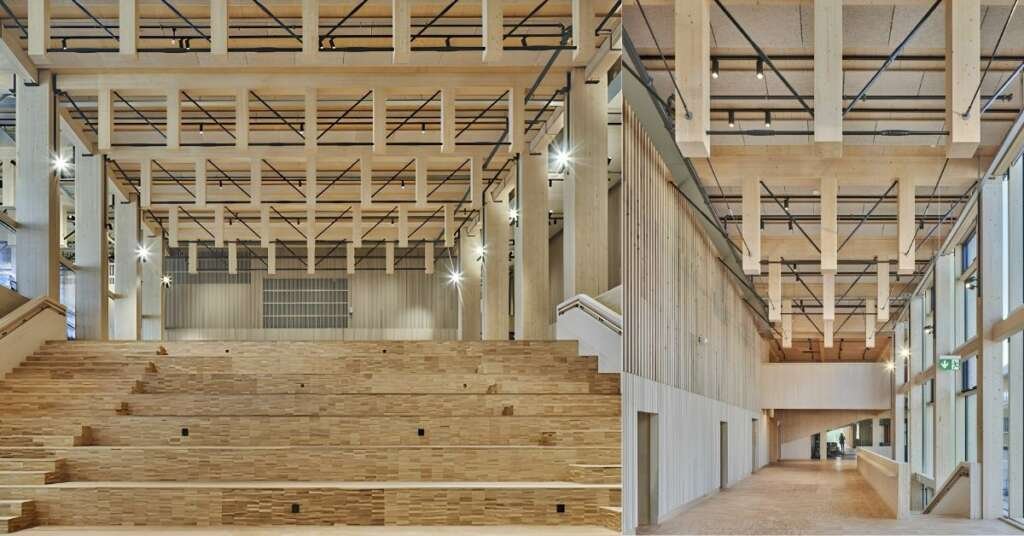
Credits: https://www.archdaily.com/967019/sara-kulturhus-center-white-arkitekter
These projects are helping reshape perceptions about what wood can accomplish.
What About India?
Mass timber construction is still at an early stage in India, but interest is steadily growing as the industry looks for more sustainable building solutions.
Institutions such as IIT Jodhpur have been researching engineered wood and mass timber technologies, helping build awareness around timber’s potential in climate-responsive and low-carbon construction. In the hospitality sector, projects like Amaya by Aarna Living, Goa showcase how timber and natural materials can create warm, environmentally conscious spaces.
While challenges around regulations, supply chains and material availability remain, these early initiatives indicate that timber could play a much larger role in India’s architectural future.
This growing interest reflects a broader shift toward sustainable, resource-efficient construction across the country.
Also Read: Organic Modern Architecture: Why Natural Minimalism Is Taking Over Design
Why Architects Love Designing With Timber
Beyond sustainability and performance, timber offers incredible design flexibility. It allows architects to create spaces that feel both contemporary and timeless.
Timber works beautifully alongside:
- Glass
- Concrete
- Stone
- Steel
- Natural landscapes
The material introduces warmth without sacrificing modern aesthetics. That versatility explains why many of today’s most innovative architects are exploring timber-based design solutions.
The Future of Mass Timber Construction
The future of architecture will likely involve a mix of materials rather than a single solution. Concrete, steel and timber will each continue to play important roles.
However, mass timber is increasingly becoming part of that conversation because it addresses several challenges at once:
- Sustainability
- Carbon reduction
- Construction efficiency
- Occupant wellbeing
- Design quality
As technology continues to advance, timber buildings may become even taller, smarter and more widely adopted and that’s exciting, because the return of wood isn’t simply about revisiting the past.
It’s about using one of humanity’s oldest materials in entirely new ways.
Final Thoughts
Mass Timber Construction is proving that innovation doesn’t always mean inventing something completely new. Sometimes it means reimagining a traditional material through modern technology.
By combining sustainability, structural performance, construction efficiency and human-centered design, mass timber is creating new possibilities for architects and developers around the world.
As cities continue searching for greener and more resilient building solutions, wood is no longer viewed as a material of the past.
It is becoming an essential part of the future of architecture.
Join the discussion