

Introduction
The film Kalki 2898 AD takes viewers into a fascinating world where Indian mythology meets futuristic science fiction. Beyond its storyline and visual effects, one of the film’s biggest attractions is its imaginative production design.
Led by production designer Nitin Zihani Chaudhary, the film brings extraordinary environments to life through detailed sets, futuristic structures, fictional vehicles and carefully designed props.
From the transformed city of Kashi to the hidden world of Shambhala and the technologically advanced Complex, every setting helps build the film’s distinctive atmosphere.
But what makes these cinematic environments so convincing? The answer lies in the creative process of movie set design, where architecture, storytelling, materials and technology come together.
What Is Set Design in Film Production?
Set design is the process of creating the physical environments in which a film’s scenes take place. These environments can range from simple interior rooms to large-scale outdoor structures and entirely fictional cities.
A film set provides more than just a background. It helps establish the story’s location, period, atmosphere and visual identity.
Designers consider several elements while developing a set:
- Architecture: The shape, scale and style of buildings.
- Materials: Wood, metal, fibre, glass and other construction materials.
- Colour and texture: Visual details that communicate mood and character.
- Lighting: The atmosphere and depth of each scene.
- Technology: CGI, visual effects and virtual production.
In a film like Kalki 2898 AD, these elements are essential because the story moves between mythological references and a futuristic world.
The Creative Vision Behind Kalki 2898 AD
The production design of Kalki 2898 AD draws inspiration from Indian mythology, historical architecture and dystopian science fiction.
The film imagines a future where ancient beliefs and advanced technologies exist together. This contrast influenced the visual language of its locations, buildings, weapons and vehicles.
Instead of creating ordinary futuristic buildings, the design team developed environments that communicate power, survival, inequality and hope.
The result is a cinematic world where architecture becomes an important part of storytelling.
Three Distinct Worlds Behind the Film
One of the most interesting aspects of Kalki 2898 AD is its three contrasting environments. Each world has its own architectural language, materials and atmosphere.
1. Kashi – A City of Survival
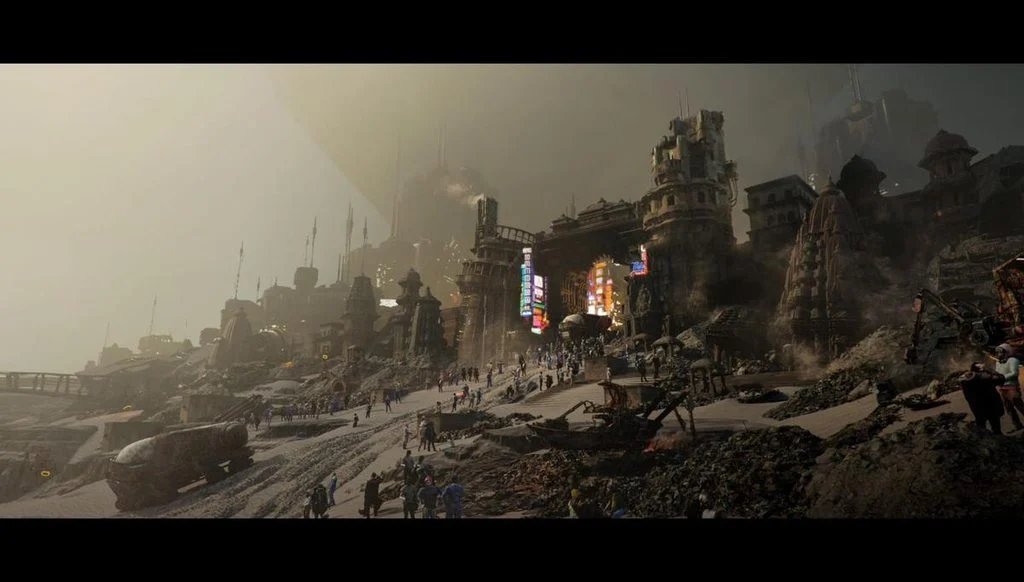

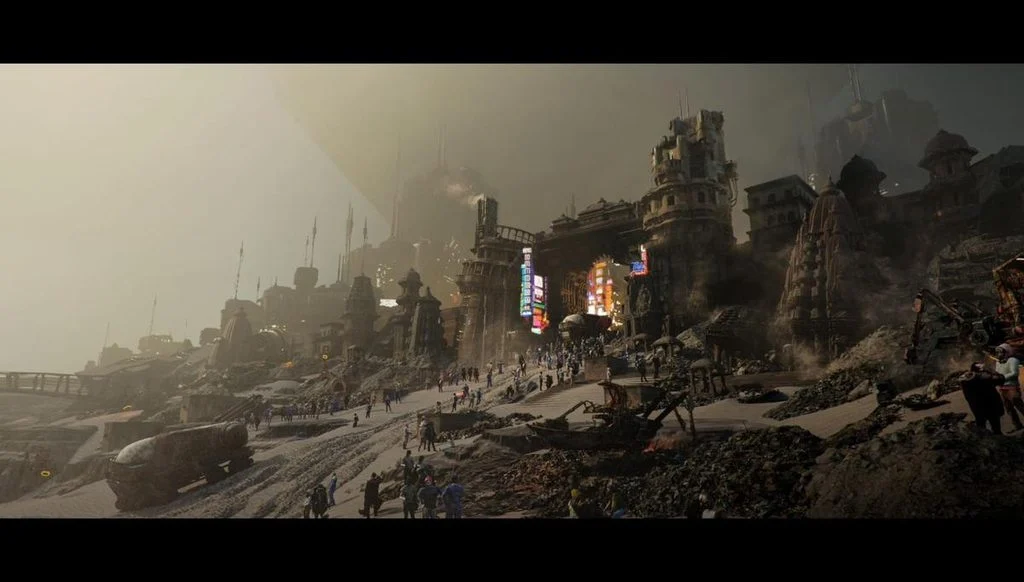
Kashi is presented as a future version of Varanasi, where resources are scarce and people struggle to survive.
The production design uses crowded streets, weathered surfaces, industrial materials and layered structures to create a dystopian atmosphere. The environment feels worn and crowded, reflecting the difficult lives of its residents.
2. The Complex – A World of Power and Technology
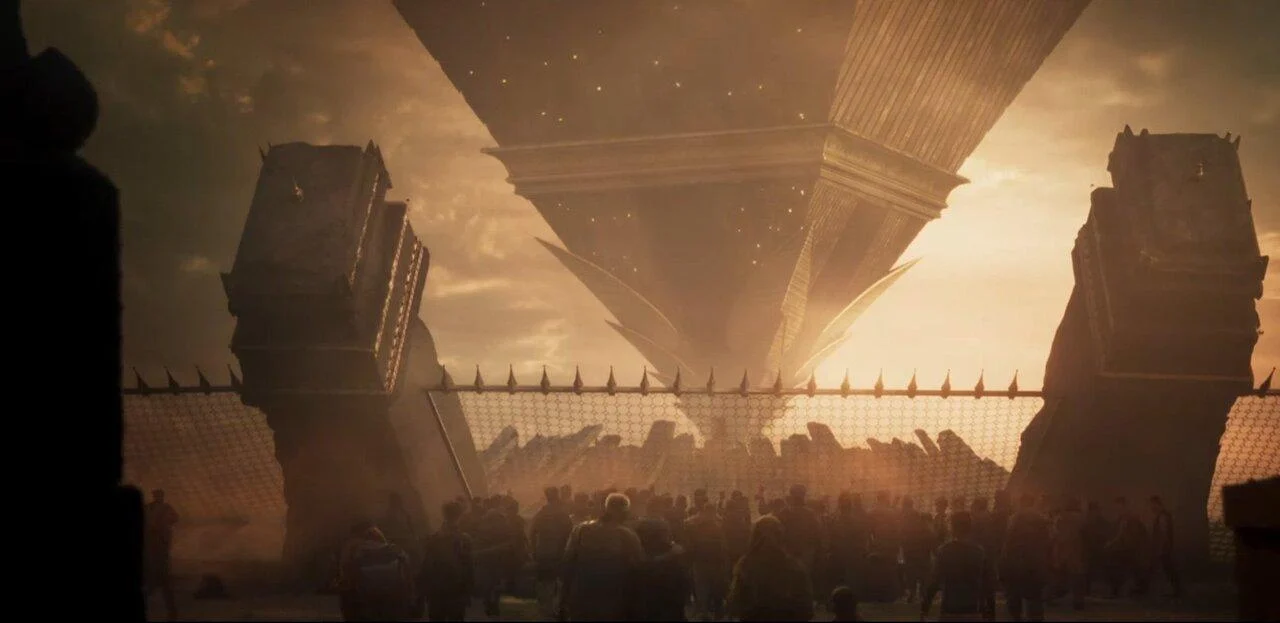
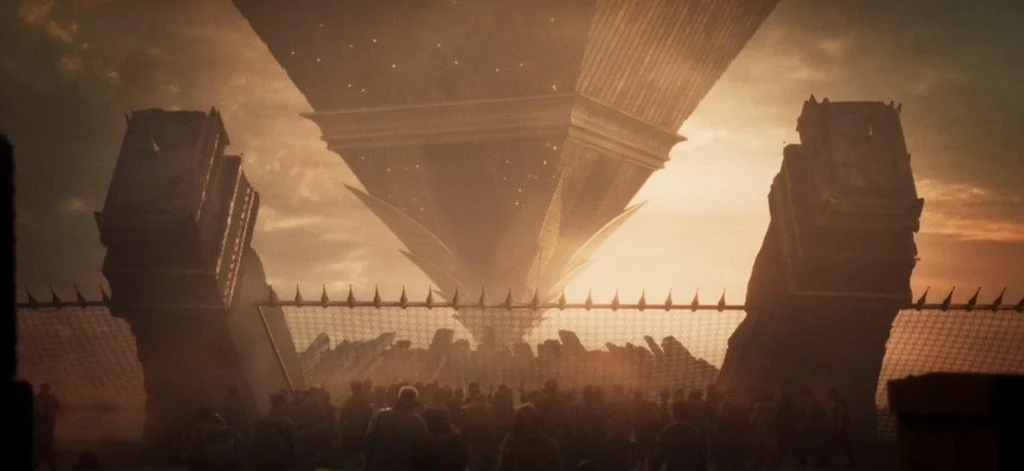
The Complex represents wealth, control and technological advancement. Its most striking feature is the enormous inverted pyramid structure.
Its clean surfaces, futuristic interiors and dramatic scale create a strong contrast with the struggling streets of Kashi. The structure also represents the concentration of resources and power in the film’s fictional society. Hindustan Times+1
3. Shambhala – A Hidden World of Hope
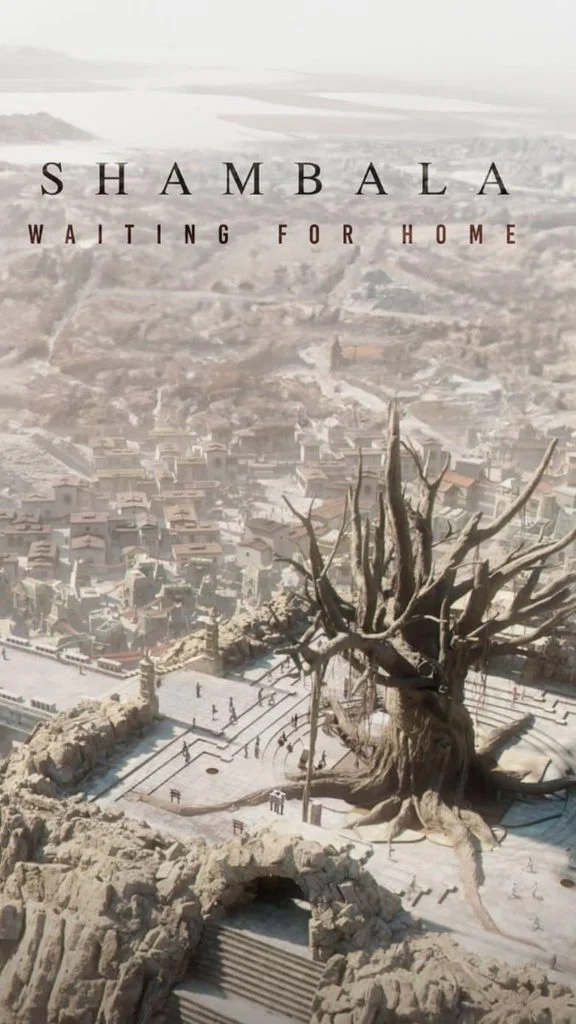
Shambhala is portrayed as a hidden refuge surrounded by natural landscapes. Unlike the industrial appearance of Kashi and the technological dominance of the Complex, this world feels connected to nature and community.
Its pathways, large tree structures and open spaces create an atmosphere of hope and belonging.
Key Design Elements That Make Kalki Special
Architecture and Material Selection
Different materials, textures and structural forms help establish the identity of each fictional world. Industrial-looking surfaces communicate survival, while refined futuristic structures represent technological power.
Props, Weapons and Vehicles
The film’s futuristic objects were designed to feel connected to their environments. Bujji, the AI-powered vehicle, is a notable example of combining creative design with real engineering. IndulgExpress
Visual Effects and Physical Sets
The film combines physical sets with digital visual effects to create environments that feel larger and more immersive. Real structures give actors tangible spaces to interact with, while VFX expands the scale of the fictional world. Bollywood Hungama+1
Lighting and Colour
Lighting and colour help distinguish the three environments. Darker, weathered visuals establish Kashi’s harsh conditions, while the Complex uses a more controlled futuristic appearance. Shambhala creates a contrasting sense of refuge.
What Architects and Designers Can Learn from Kalki 2898 AD
The film offers valuable lessons beyond cinema:
- Storytelling through architecture: Buildings can communicate history, power and social conditions.
- Creative material use: Textures and materials help establish the identity of a space.
- World-building: A consistent design language makes fictional environments believable.
- Technology integration: Physical construction and digital tools can work together.
- Attention to detail: Even small props and background elements contribute to the overall experience.
Conclusion
Kalki 2898 AD demonstrates how production design can transform imagination into visually convincing environments. Its three distinct worlds, futuristic structures, detailed props and combination of physical sets and visual effects create a memorable cinematic experience.
For architects, interior designers and film enthusiasts, the film is an inspiring example of how architecture can move beyond conventional boundaries and become an essential part of storytelling.
Frequently Asked Questions
1. Who was the production designer of Kalki 2898 AD?
Nitin Zihani Choudary led the film’s production design.
2. What are the three main worlds in Kalki 2898 AD?
Kashi, the Complex and Shambhala.
3. What inspired the architecture of Kalki 2898 AD?
The design combines Indian mythological references, futuristic science fiction and dystopian architectural ideas.
4. How were the futuristic environments created?
The production team combined physical sets, props, detailed construction and digital visual effects.
5. What makes the Complex unique?
Its enormous inverted pyramid structure represents technological dominance and control over resources.
Join the discussion