
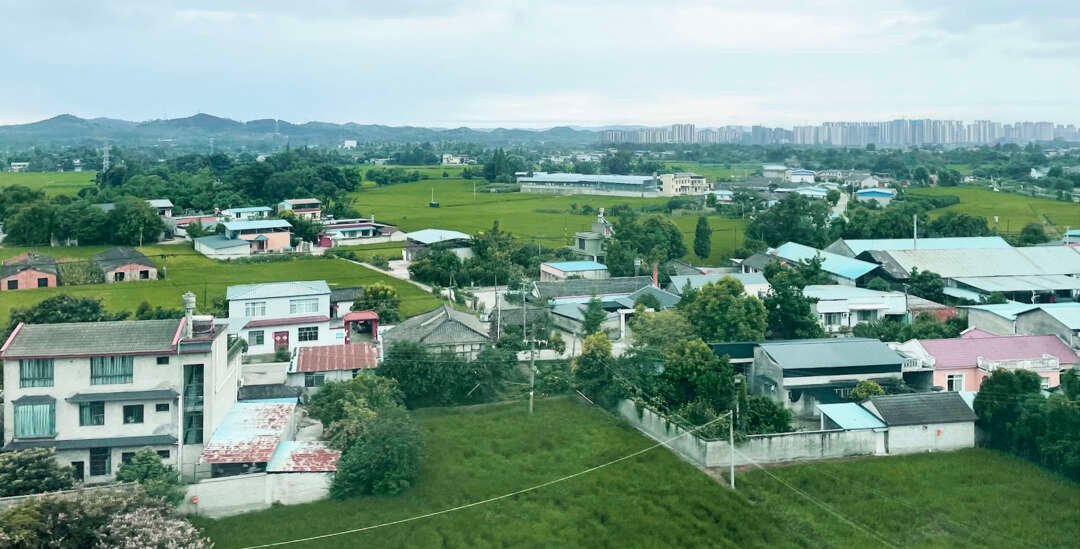
In a world that races for the tallest skylines and sprawling suburbs, it’s easy to forget where the story of civilization truly began, in the heart of the rural areas. Field, river, and quiet towns have always carried the pulse of sustenance, yet modern urban planning often treats them as the “other side” of development. What if the future doesn’t lie in expanding cities, but in rebalancing our gaze? What if the next leap forward in sustainable urban planning begins by turning back to the soil, the seasons, and the slower rhythms of the countryside? Here, the agropolitan theory steps in, not just as a nostalgic return to the past, but as a bold reimagining of our urban-rural future.
The Agropolitan Theory: A Framework for Urban-Rural Synergy
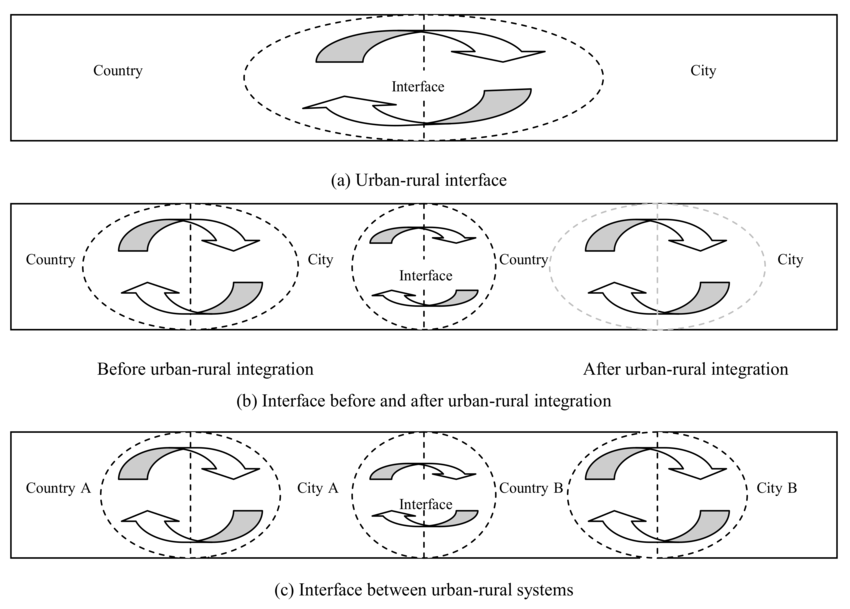
The agropolitan theory emerged from a discontent with urban-centric development, which overlooked the vitality, agency, and potential of rural regions. Claude Bourguignon coined the term in the 1970s, and it was then developed by Terry McGee. The agropolitan future is where rural and urban systems are not in opposition but in synergy (McGee, 1971). The theory calls for planning that does not extend cities outward but integrates rural strengths inward. It is neither rural romanticism nor urban rejection. In contrast to classic models, which assumed that rural areas must feed labour into the urban machine, agropolitan is strengthening rural conditions, ensuring that people do not migrate due to a lack of necessities like healthcare, education, or employment. It focuses on urban-rural balance by investing in rural areas.
The theory is based on the idea of self-reliant regional development, locally anchored and globally aware, including decentralized governance, rural infrastructure development, and building capacities in small and medium-sized towns that act as a bridge between villages and cities. Agropolitan planning acknowledges culture, ecology, and economy in rural areas. The theory provides planners, policymakers, and communities with a framework for coexistence between a city and the countryside.
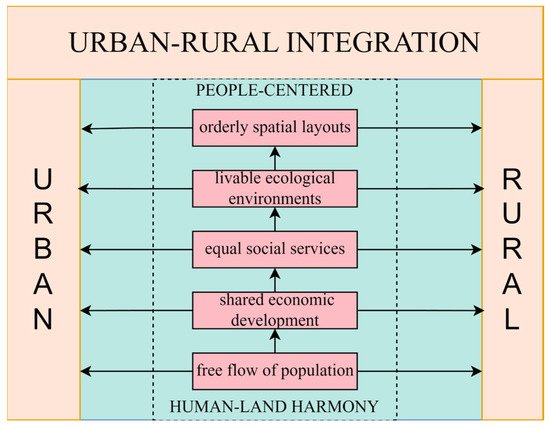
The Agropolitan Principles
The principles form a framework not just for urban planners, but for anyone reimagining the built environment with equity and ecology in mind.
- Self-Reliant Local Economics
Rooted in regional strength, not dependent on the urban cores (Friedmann & Douglass, 1975).
- Small and Intermediate Town Development
Supporting hubs that have decentralized services and opportunities (Tacoli, 1998).
- Ecological Integration
Aligning land use with the natural systems, water cycles, and climate (Shiva, 2005).
- Participatory Governance
Planning with, not for, communities (UN-Habitat, 2020).
- Low Energy and Appropriate Technologies
Using tools that are sustainable, scalable, and locally adaptable (Illich, 1973).
- Land Use Integration
Integrating housing, agriculture, commerce, and infrastructure seamlessly (Robinson, 2019).
- Rural-Urban Mobility
Enabling circular migration, exchange of knowledge, and cultural continuity (Bryant, 1989).
- Cultural Rootedness
Grounding development in the local identity, memory, and ways of living (Escobar, 2018).
From Idea to Reality: Agropolitan Theory in Practice
In India, the agropolitan values live in the holes of the systems, for instance, in organic framing movements, panchayat-led rural innovations, and projects like Rurban Missions attempt to blend urban-rural integration (Government of India, 2016). In places like Kerala, strong local governance and rural planning frameworks have shown that village economies can be resilient, green, and dignified.
In countries like Australia, as climate disasters increase, planners are slowly recognising the limits of metropolitan sprawl. Some projects in peri-urban New South Wales and climate-resilient planning Victoria reflect a pivot for re-valuing rural systems not for food and water, but as a base for a model for rural sustainability design (Davoudi et al., 2021).
“What connects these geographies is a shared truth: the future of cities cannot be secured with the future of rural areas.”
What should Planners and Designers do?
The agropolitan future is not just high-tech solutions in the rural landscape; it’s more of urban planners working together to redesign systems that support rural sustainability and urban resilience. The first can be of aligning with the agropolitan values, smallness is not a limitation but a strength. Rural Planners should prioritize micro-scale infrastructure, community agro-markets, solar-powered learning hubs, and mobile health units, embedded in the rural fabric, not as design elements but as tools for rural infrastructure development, which is rooted in local autonomy.
Designers should integrate rural knowledge into formal planning systems. Traditional methods of water harvesting in India, or seasonal fire management by Indigenous Australians, are not obsolete; they are climate-smart, place-sensitive strategies over centuries. With these practices in the sustainable planning framework, rural systems can be elevated.
With this, data matters too. GIS, census data, and satellite imagery are useful; they should be grounded in rural appraisal and local storytelling. Climate resilience planning cannot succeed without the voices of those who reside in climate-fragile zones. Mobility, another shift, encourages rural-urban migration, making planners think of circular mobility, a flow where people can move from rural to urban and vice versa.
Lastly, layering infrastructure, schools, connectivity, and framing cooperatives within a single footprint ensures space is widely used and equitably. Layering is co-locating services, leading to maximized efficiency. The agropolitan future is not a utopia; it is a practical, scalable design horizon, rooted in dignity, ecology, and community life.
Also Read: Is Instagram Aesthetic Hijacking Architectural Spaces?
The Story that We Are Writing of the Agropolitan Future
Agropolitanism challenges the traditional urban-centric narrative by positioning rural areas as vital components of a nation’s development. This view resonates with the people who crave meaningful engagement in shaping the environment. As in the Indian State of Odisha, community-led watershed management projects have revitalized degraded lands, improving agricultural productivity and livelihood. These initiatives demonstrated how some local participation can drive sustainable development.
In Australia, the “Our Say” platform enables citizens to contribute ideas for regional development projects, ensuring that planning reflects community aspirations and such platforms exemplify how digital tools can democratize the planning processes. On top of that, some platforms like the Agropolis Foundation in the Philippines engage citizens in research and innovation for sustainable agriculture, which bridges the gap between science and society. Also, for individuals interested in contributing to agropolitan futures,

- Engaging with locals
Participating in community planning meetings or local development projects.
- Educating Yourself
Learning about agropolitan principles and how they are applied to a particular region.
- Advocating
Supporting policies that promote some rural-urban integration and sustainable development.
By embracing agropolitan planning, citizens can play an active role in shaping inclusive, resilient, and sustainable communities, honouring both urban and rural strengths.
References
https://www.sciencedirect.com/science/article/abs/pii/074301679500020N
https://www.dukeupress.edu/designs-for-the-pluriverse
https://www.scienceopen.com/book?vid=9adaa127-2df6-4e64-be62-9fc68d2206ef
https://www.india.gov.in/spotlight/shyama-prasad-mukherji-rurban-mission
https://www.researchgate.net/publication/326792286_Ivan_Illich’s_Tools_for_Conviviality
https://archive.org/details/urbanizationproc00mcge
https://journals.sagepub.com/doi/abs/10.1177/095624789801000105




Join the discussion