


Share This Article
What Makes a Public Library Great? It’s a question that goes far beyond bookshelves, reading rooms or architectural beauty.
The world’s most successful public libraries are not simply buildings that store knowledge. They are civic landmarks, cultural anchors, community hubs, and increasingly, some of the most thoughtfully designed public spaces in modern cities.
In an age where information is available on smartphones within seconds, one might assume libraries have become less relevant. Surprisingly, the opposite is true.
Around the world, architects are designing libraries that attract millions of visitors each year not because people need access to books, but because they need access to something far more valuable: spaces for learning, gathering, thinking, and connecting.
The best libraries understand a simple truth. People may come for information. But they stay because of the experience.
A Great Library Starts With a Great Public Space
One of the biggest misconceptions about libraries is that they are primarily about collections. The most celebrated libraries today are designed around people first and books second. They function much like public squares, parks, and community centers. Visitors use libraries to:
- Study
- Meet friends
- Attend events
- Work remotely
- Explore exhibitions
- Participate in workshops
- Spend quiet time away from urban noise
This shift has fundamentally changed how architects approach library design. Instead of creating buildings filled only with stacks, designers now create environments that encourage interaction and discovery.
The result is architecture that feels welcoming rather than institutional.
Libraries Succeed When They Feel Accessible
The best public libraries never feel intimidating. They invite people in.
This may sound simple, but accessibility is one of the most important design lessons modern libraries teach us.
| Traditional Library Thinking | Contemporary Library Thinking |
| Protect collections | Welcome communities |
| Quiet only | Multiple activity zones |
| Formal spaces | Flexible spaces |
| Restricted access | Open accessibility |
| Information storage | Knowledge sharing |
Great libraries remove barriers. Their entrances feel inviting. Their circulation feels intuitive. Their spaces accommodate people from different ages, backgrounds and interests.
Architecture becomes a tool for inclusion.
Large contemporary public library atrium filled with natural light and open circulation.
Natural Light Changes Everything
Walk into almost any iconic modern library and the one thing you’ll notice immediately is light, Lots of it.
Natural light has become one of the defining features of contemporary library architecture because it dramatically improves the user experience. It makes spaces feel:
- More welcoming
- More comfortable
- More spacious
- More connected to the outside world
Architects increasingly use skylights, atriums, glass facades and carefully oriented openings to bring daylight deep into library interiors.
This approach reduces reliance on artificial lighting while creating healthier environments for visitors.
The World’s Best Libraries Feel Like Living Rooms
Perhaps the biggest evolution in library design is the move away from rigid institutional environments.
Modern libraries feel softer. More relaxed. More human.
Instead of endless rows of identical desks, visitors often encounter:
- Lounge seating
- Informal reading corners
- Collaborative workspaces
- Café environments
- Flexible furniture
The goal is simple to make people want to stay.
When libraries become comfortable, they naturally become more active and more relevant to contemporary life.
Case Study: Oodi Library, Helsinki
One of the most celebrated examples of modern library design is the Oodi Central Library. Completed in 2018, Oodi redefined what a public library could be. The building includes:
- Reading spaces
- Recording studios
- Event venues
- Maker spaces
- Workshops
- Community areas
Interestingly, only a portion of the building is dedicated to books. The majority supports community activities and public engagement.
Oodi demonstrates that modern libraries are increasingly becoming platforms for creativity rather than simply repositories of information.
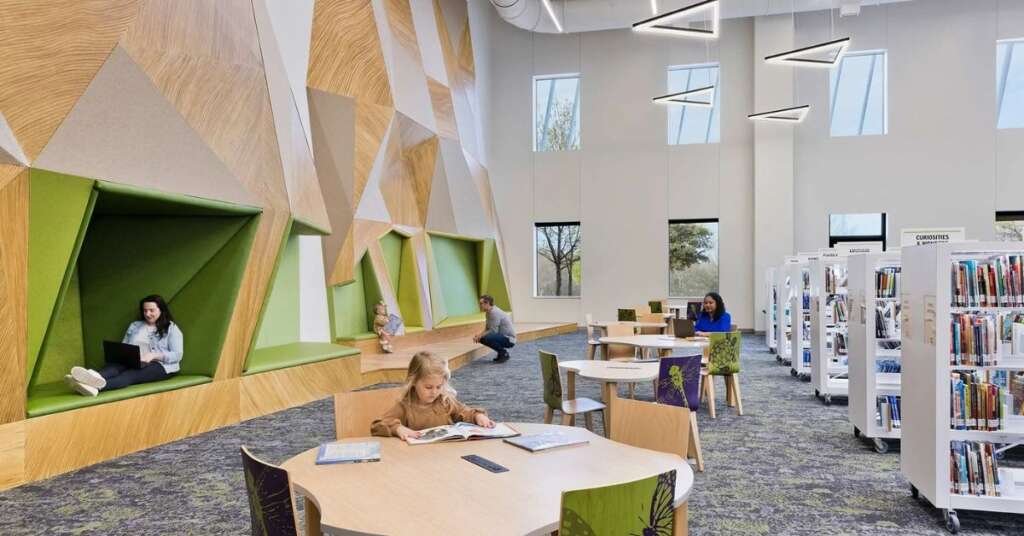
Modern library interior featuring open public spaces, collaborative seating, and extensive natural daylight.
Flexibility Is Becoming Essential
The way people use libraries today is constantly changing. As a result, flexibility has become one of the most important design principles. Architects now create spaces that can adapt to:
- Public lectures
- Workshops
- Exhibitions
- Study sessions
- Community events
- Digital learning
Movable furniture, modular layouts and adaptable infrastructure allow libraries to evolve without major renovations.
This flexibility helps future-proof the building while maximizing its usefulness.
Libraries Are Becoming Cultural Landmarks
Many contemporary libraries are designed not only as functional buildings but also as civic symbols. Consider famous examples such as:
Seattle Central Library
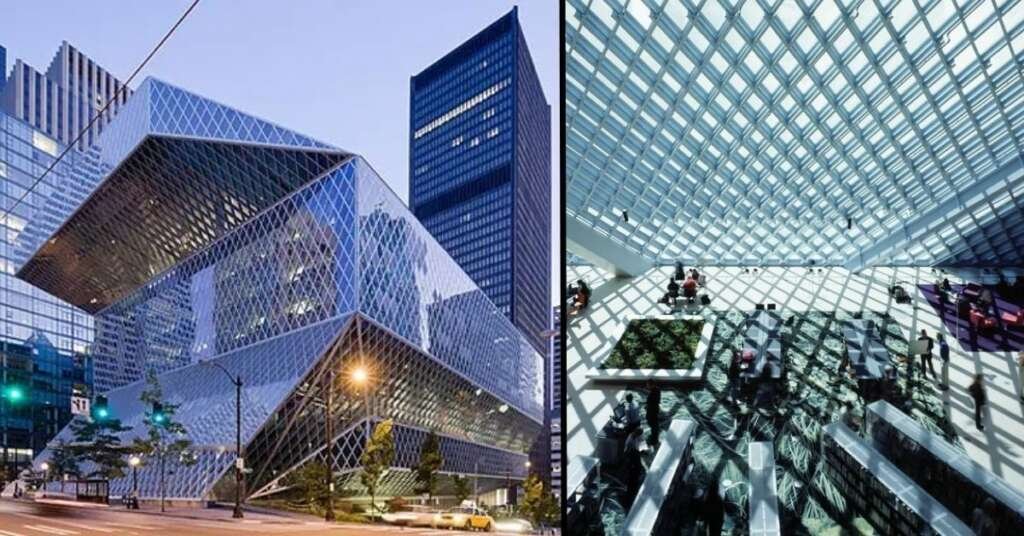
Credits: https://www.archdaily.com/11651/seattle-central-library-oma-lmn
Designed by Rem Koolhaas and OMA, the building transformed the image of what a library could look like through its bold geometric form.
Tianjin Binhai Library
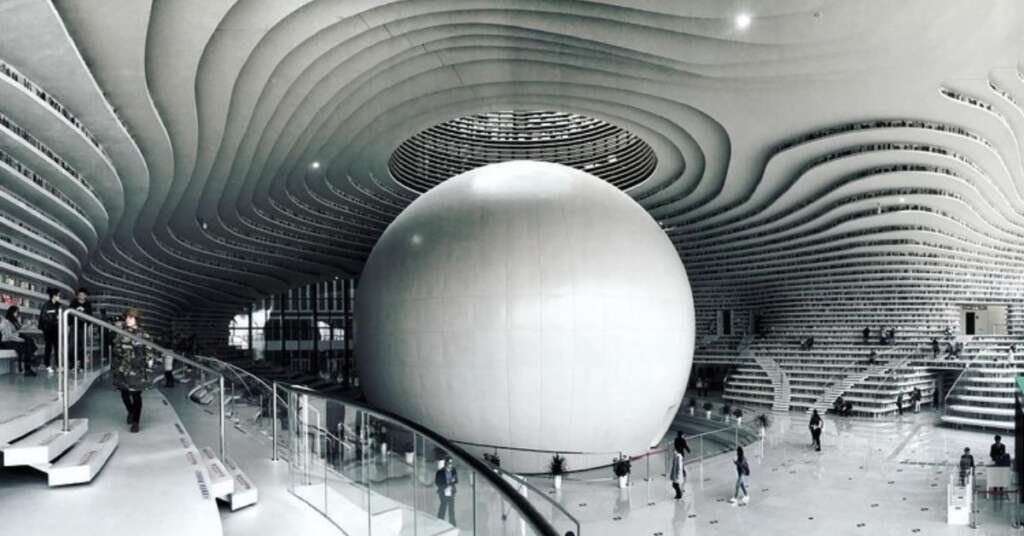
Credits: https://www.archdaily.com/882704/a-first-glimpse-into-mvrdvs-mind-boggling-tianjin-binhai-library
Designed by Winy Maas and MVRDV, its dramatic terraced interiors became a global architectural phenomenon.
Library of Birmingham
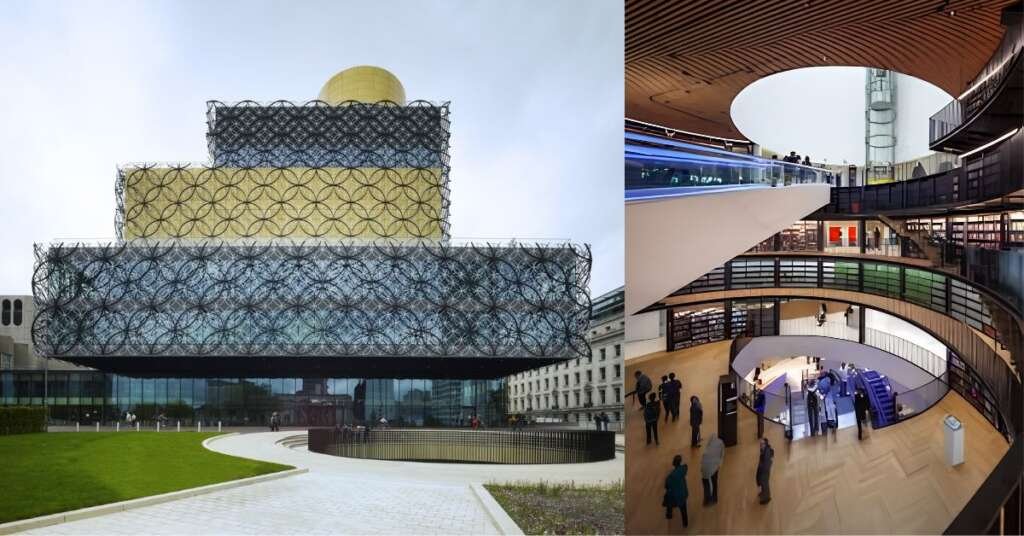
Credits: https://www.archdaily.com/421970/library-of-birmingham-mecanoo
Designed by Francine Houben, it combines cultural programming with striking architectural identity.
These projects prove that libraries can become destination architecture while still serving public needs.
India’s Libraries Offer Valuable Lessons Too
While global examples often dominate discussions, India has its own remarkable library environments.
Connemara Public Library
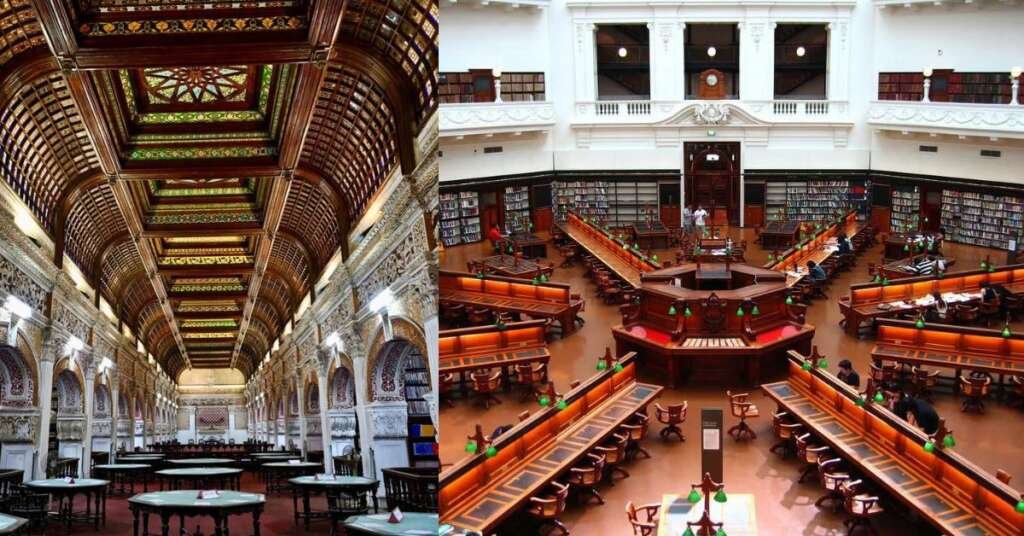
Credits: https://www.avathi.com/place/connemara_public_library/2826
One of India’s National Depository Libraries, known for its historic architecture and enduring public role.
State Central Library
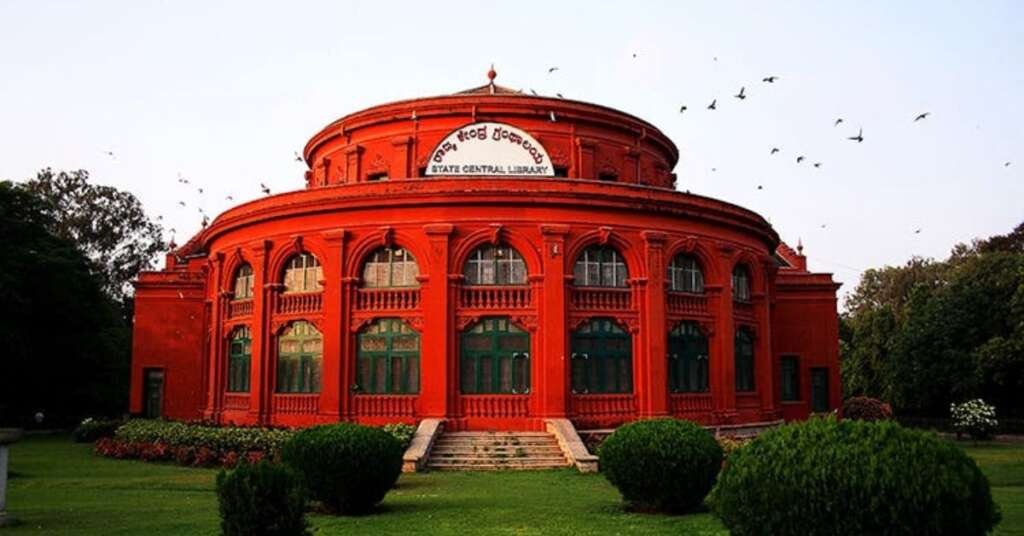
Credits: https://lbb.in/bangalore/state-central-library/
Popularly known as the Red Building, this landmark demonstrates how civic architecture can become part of a city’s cultural identity.
Delhi Public Library
An example of how public institutions can support education and community engagement across generations.
These libraries remind us that successful public spaces are not always defined by scale or spectacle.
Sometimes their value lies in accessibility and long-term civic impact.
Designing for Quiet in Noisy Cities
Modern cities are becoming increasingly crowded, fast-paced, and digitally saturated. Libraries provide something many urban environments struggle to offer silence, reflection and focus.
Architects carefully design libraries to create acoustic comfort through:
- Material selection
- Spatial zoning
- Sound absorption
- Visual separation
These environments allow visitors to disconnect from urban noise and reconnect with concentration.
In many ways, quiet has become one of the most valuable amenities a public building can provide.
Also Read: Brutalist Architecture Is Back: Why Concrete Buildings Feel Modern Again
Technology Has Changed Libraries but Not Their Purpose
Digital tools have transformed how libraries operate. Visitors now access:
- Digital archives
- Online databases
- E-books
- Multimedia resources
- Virtual learning platforms
Yet technology has not diminished the importance of physical space. Instead, it has amplified it. As information becomes increasingly digital, the role of the library shifts toward community, collaboration, and experience.
Architecture becomes more important, not less. Because people still need places to learn together.
What Architects Can Learn From Great Libraries
The world’s best libraries offer lessons that extend far beyond library design. They demonstrate the importance of:
| Design Principle | Broader Application |
| Accessibility | Inclusive public spaces |
| Flexibility | Future-ready buildings |
| Natural Light | Human-centered design |
| Community Focus | Civic engagement |
| Spatial Comfort | Better user experiences |
| Adaptability | Long-term relevance |
Whether designing schools, offices, museums, or cultural centers, these principles remain universally valuable.
Final Thoughts
What Makes a Public Library Great? The answer has surprisingly little to do with the number of books on its shelves.
Great libraries succeed because they understand people.
They create welcoming environments, encourage learning, support communities, and provide spaces where individuals can think, connect, and grow.
From Helsinki’s Oodi Library to historic institutions across India, the most successful libraries demonstrate that architecture is at its best when it serves society.
In an increasingly digital world, these buildings remind us that physical spaces still matter.
Not because they store information but because they create experiences. Perhaps that’s the greatest design lesson libraries have to offer.