

Share This Article
Few buildings in the world have transformed the identity of an entire city the way Marina Bay Sands Architecture has transformed Singapore. More than just a luxury hotel, Marina Bay Sands represents the perfect combination of architectural innovation, structural engineering, tourism development, and strategic city branding. Since its completion in 2010, the iconic three-tower structure topped with the breathtaking SkyPark has become one of the most recognizable buildings on Earth.
Whenever people think about Singapore, images of Marina Bay Sands immediately come to mind. The building has become synonymous with the country’s ambition, innovation, and modern urban development. It is not simply a destination for tourists but also a symbol of how architecture can redefine a city’s global reputation while generating billions in tourism revenue.
The story of Marina Bay Sands Architecture is one of bold ideas, engineering excellence, and visionary urban planning that continues to inspire architects, engineers, developers, and travelers worldwide.
The Vision Behind Marina Bay Sands Architecture
Every iconic building begins with an ambitious vision, and Marina Bay Sands is no exception. Singapore wanted to position itself as one of Asia’s leading tourism destinations while creating a vibrant waterfront district that could compete with cities like Dubai, Hong Kong, and Las Vegas.
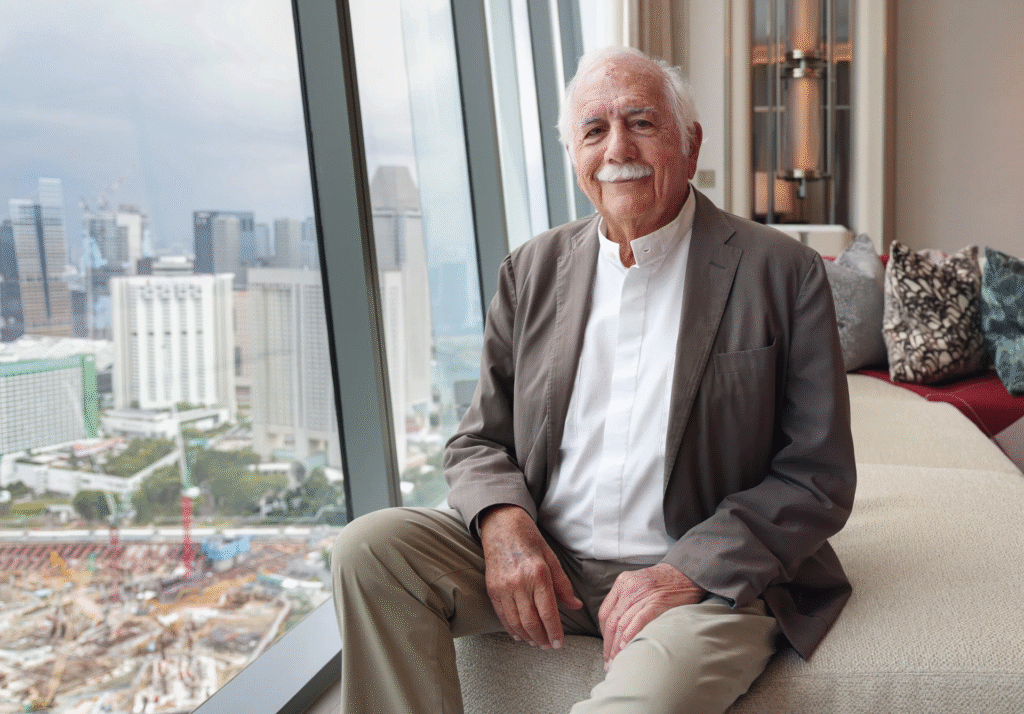
The government envisioned a landmark that would become the centerpiece of Marina Bay, attracting international visitors while supporting business tourism, luxury hospitality, entertainment, retail, and cultural events. The project was awarded to renowned architect Moshe Safdie, whose innovative design challenged conventional skyscraper architecture.
Instead of designing a single tall tower, Safdie imagined three elegant hotel towers connected by an extraordinary SkyPark stretching across their rooftops. This unique concept instantly distinguished Marina Bay Sands from every other hotel in the world, making Marina Bay Sands Architecture a global icon even before construction was completed.
A Design That Defies Traditional Architecture
One of the most fascinating aspects of Marina Bay Sands Architecture is its unconventional design language. Rather than relying on excessive ornamentation, the building celebrates clean lines, sweeping curves, and a sculptural form inspired by a deck of cards.
The three towers appear to lean gently toward one another while maintaining independent structural systems. At the top rests the famous SkyPark, resembling a massive ship floating above the skyline. This dramatic visual composition creates one of the most photographed architectural silhouettes in modern history.
The design achieves a rare balance between aesthetics and functionality. Every curve, angle, and proportion contributes not only to visual appeal but also to structural performance and user experience.
The Extraordinary Engineering Behind the SkyPark
Perhaps the greatest engineering achievement of Marina Bay Sands Architecture is the SkyPark. Spanning approximately 340 meters across the three towers, the platform houses restaurants, observation decks, gardens, and the world’s most famous rooftop infinity pool.
Supporting such an enormous structure required advanced structural engineering techniques. The SkyPark weighs thousands of tons, yet it appears to float effortlessly above the skyline. Engineers developed sophisticated steel frameworks capable of accommodating building movement caused by wind, temperature changes, and natural settlement.
Because each tower moves independently, expansion joints and specially designed connections allow the SkyPark to flex without compromising safety. This remarkable engineering solution demonstrates how innovation can transform seemingly impossible architectural ideas into reality.
Engineering Challenges That Pushed Construction Limits
Constructing Marina Bay Sands was far from straightforward. The project involved building on reclaimed land near Singapore’s waterfront, requiring extensive foundation engineering and soil stabilization.
Each tower features slightly different geometries, meaning no two floor plates are exactly alike. This added significant complexity during construction, requiring customized structural components and precise coordination between architects, engineers, and contractors.
The SkyPark itself was assembled using massive prefabricated steel sections lifted hundreds of feet into the air with specialized cranes. Every installation had to be executed with incredible precision because even minor misalignments could have affected the overall structural integrity.
These engineering achievements have made Marina Bay Sands Architecture a case study in construction management, structural innovation, and complex project execution.
Also read – How Famous Architects Use Courtyards to Create Better Buildings
Why Marina Bay Sands Became an Architectural Icon
Many skyscrapers are tall. Many luxury hotels are beautiful. Very few become international architectural symbols.
The success of Marina Bay Sands Architecture lies in its instantly recognizable identity. Whether viewed from the air, across the waterfront, or at street level, the building creates a powerful visual impression that remains unforgettable.
The SkyPark has become one of the world’s most recognizable rooftop structures, while the infinity pool overlooking Singapore’s skyline has become an aspiration for millions of travelers. These distinctive features transformed the building from a luxury development into a global architectural landmark.
Architecture succeeds when people remember it instantly, and Marina Bay Sands has achieved exactly that.

The Role of Marina Bay Sands in Singapore Tourism
Tourism is one of Singapore’s most important economic sectors, and Marina Bay Sands has played a significant role in strengthening its global appeal.
Every year, millions of international visitors travel specifically to experience the integrated resort. Beyond accommodation, the destination offers luxury shopping, world-class restaurants, entertainment venues, exhibitions, convention facilities, museums, observation decks, and cultural experiences within a single development.
This integrated approach encourages tourists to spend more time exploring the city while contributing significantly to local businesses and the hospitality industry. Marina Bay Sands has become far more than a hotel, it serves as a gateway to Singapore’s broader tourism ecosystem.
Its international visibility has also generated enormous digital exposure, with countless travel blogs, documentaries, social media posts, and architectural publications showcasing the development as one of the world’s must-visit destinations.
How Architecture Became Singapore’s Strongest Brand Ambassador
City branding is no longer driven only by marketing campaigns. Today, architecture plays an equally powerful role in shaping global perception.
Just as the Eiffel Tower defines Paris and the Sydney Opera House represents Australia, Marina Bay Sands Architecture has become Singapore’s most recognizable symbol. The building communicates innovation, luxury, efficiency, sustainability, and economic success—all values closely associated with modern Singapore.
International business events, tourism campaigns, global conferences, and sporting events frequently feature Marina Bay Sands as their visual backdrop. This repeated exposure strengthens Singapore’s identity as a progressive global city.
The building demonstrates how architecture can function as a branding tool that communicates national ambition without saying a single word.
Luxury Hospitality Meets Urban Planning
Unlike traditional luxury hotels, Marina Bay Sands was designed as a fully integrated urban destination. Every component contributes to a carefully planned visitor experience.
Guests can move seamlessly between hotel rooms, rooftop attractions, shopping malls, restaurants, convention centers, theatres, museums, waterfront promenades, and entertainment spaces without leaving the complex.
This integration reflects modern urban planning principles where mixed-use developments create vibrant, walkable environments instead of isolated buildings. Marina Bay Sands proves that successful architecture extends beyond aesthetics to create complete urban experiences.
Sustainability and Smart Design Features
Although Marina Bay Sands is primarily celebrated for its visual impact, sustainability also played an important role during its design and operation.
Large glass façades maximize natural daylight while carefully engineered shading systems help reduce solar heat gain. Efficient building management systems optimize lighting, cooling, and energy consumption throughout the complex.
Water conservation measures, intelligent environmental controls, and landscape integration contribute to improved operational efficiency. These sustainable design strategies demonstrate that iconic architecture can also embrace responsible environmental practices without compromising luxury or user comfort.
As sustainable architecture becomes increasingly important worldwide, Marina Bay Sands continues to show how environmental responsibility and landmark design can successfully coexist.
The Infinity Pool That Changed Luxury Architecture
No discussion about Marina Bay Sands Architecture would be complete without mentioning its legendary infinity pool.
Located atop the SkyPark, the pool creates the illusion that water flows directly into the city skyline. This breathtaking visual experience has become one of the most photographed destinations on social media and remains a defining feature of the building.
Beyond its beauty, the infinity pool showcases sophisticated engineering. Advanced waterproofing systems, structural supports, and water management technologies ensure safety while delivering an unforgettable guest experience.
It has also inspired luxury hotels around the world to rethink rooftop amenities, proving that a single architectural feature can redefine global hospitality trends.
Lessons Architects and Cities Can Learn from Marina Bay Sands
The success of Marina Bay Sands offers valuable lessons for architects, developers, urban planners, and governments around the world.
The project proves that bold architecture can generate long-term economic value when combined with thoughtful urban planning and tourism strategies. Instead of treating architecture solely as construction, Singapore viewed Marina Bay Sands as an investment in national identity.
The development also highlights the importance of collaboration between architects, engineers, landscape designers, hospitality experts, and policymakers. Such multidisciplinary cooperation allowed a highly complex project to become one of the world’s greatest architectural achievements.
Perhaps the most important lesson is that iconic architecture should create experiences rather than simply occupy space. Marina Bay Sands succeeds because people remember how it feels as much as how it looks.
Why Marina Bay Sands Architecture Will Continue Inspiring the Future
More than a decade after its completion, Marina Bay Sands Architecture continues to influence contemporary architecture, structural engineering, hospitality design, and urban development across the globe.
Its groundbreaking engineering, unforgettable design, and contribution to Singapore’s tourism industry have elevated it beyond the status of a luxury hotel. It has become an enduring symbol of innovation, ambition, and forward-thinking city planning.
As cities compete to attract visitors, businesses, and investment, Marina Bay Sands demonstrates that architecture can become one of the most powerful tools for economic growth and international recognition. It proves that when visionary design meets engineering excellence and strategic urban planning, the result is far more than an iconic building, it becomes a global destination, a cultural landmark, and the face of an entire nation.
Today, Marina Bay Sands remains one of the finest examples of how architecture, engineering, tourism, luxury hospitality, urban planning, sustainable design, and city branding can come together to create a timeless masterpiece. Its influence extends far beyond Singapore’s skyline, inspiring architects and city leaders worldwide to think bigger, design smarter, and build places that shape the future.