

Share This Article
The Growing Popularity of Bamboo Construction
As the world faces increasing environmental challenges, the construction industry is searching for sustainable building materials that can reduce carbon emissions while maintaining strength and functionality. Among the many eco-friendly building materials available today, bamboo construction has emerged as one of the most promising solutions for modern architecture.
Bamboo architecture is no longer limited to traditional rural structures. Today, architects, designers, and engineers around the world are incorporating bamboo into contemporary buildings, resorts, cultural centers, pavilions, and even large-scale commercial projects. With its impressive strength, natural beauty, rapid growth rate, and sustainability benefits, bamboo construction is transforming the future of green architecture.
The growing demand for sustainable architecture has placed bamboo at the center of discussions about innovative construction materials. Its combination of structural performance, aesthetic appeal, and environmental responsibility makes it one of the most attractive building materials of the twenty-first century.
Understanding Bamboo as a Construction Material
Bamboo is technically a giant grass rather than a tree, yet it possesses remarkable structural properties that make it suitable for construction. Found primarily in Asia, South America, and parts of Africa, bamboo has been used for centuries in traditional architecture.
What makes bamboo construction unique is the material’s exceptional strength-to-weight ratio. Despite being lightweight, bamboo demonstrates impressive tensile strength, allowing it to withstand significant loads and stresses. Many engineers compare its tensile strength to steel, making it an effective material for structural applications.
Unlike conventional timber, bamboo reaches maturity within three to five years. This rapid growth cycle makes it one of the most renewable construction materials available today. As concerns about deforestation continue to grow, bamboo architecture presents a sustainable alternative to traditional wood-based construction.
The Exceptional Strength of Bamboo Construction
One of the primary reasons bamboo construction is gaining attention in modern architecture is its extraordinary strength. Bamboo fibers run longitudinally along the culm, creating a natural reinforcement system that contributes to its durability and flexibility.
The strength of bamboo allows it to perform well in areas prone to earthquakes and strong winds. Its natural flexibility enables structures to absorb and distribute forces more effectively than rigid construction materials. This characteristic has made bamboo architecture increasingly popular in regions susceptible to seismic activity.
Modern engineering techniques have further enhanced bamboo’s structural capabilities. Through treatments, laminations, and advanced joinery methods, architects can create bamboo buildings that meet contemporary safety and performance standards while maintaining aesthetic appeal.
As sustainable building practices become more important, the structural advantages of bamboo construction continue to attract architects seeking durable and environmentally responsible solutions.
Bamboo Architecture and Sustainable Design
Sustainability is one of the strongest arguments in favor of bamboo construction. Unlike concrete and steel, which require significant energy during manufacturing, bamboo grows naturally and requires minimal processing.
Bamboo absorbs large amounts of carbon dioxide throughout its growth cycle, helping reduce greenhouse gases in the atmosphere. Because it regenerates quickly after harvesting, bamboo plantations can provide a continuous supply of building material without causing environmental degradation.
The low embodied energy of bamboo construction contributes significantly to sustainable architecture. Buildings made with bamboo often have a smaller carbon footprint compared to conventional structures. As governments and organizations increasingly promote green building standards, bamboo architecture is becoming a preferred option for environmentally conscious projects.
The integration of bamboo into sustainable building design supports global efforts to combat climate change while encouraging responsible resource management.

The Natural Beauty of Bamboo Architecture
Beyond its environmental benefits and structural strength, bamboo is celebrated for its distinctive visual appeal. Bamboo architecture creates spaces that feel warm, organic, and closely connected to nature.
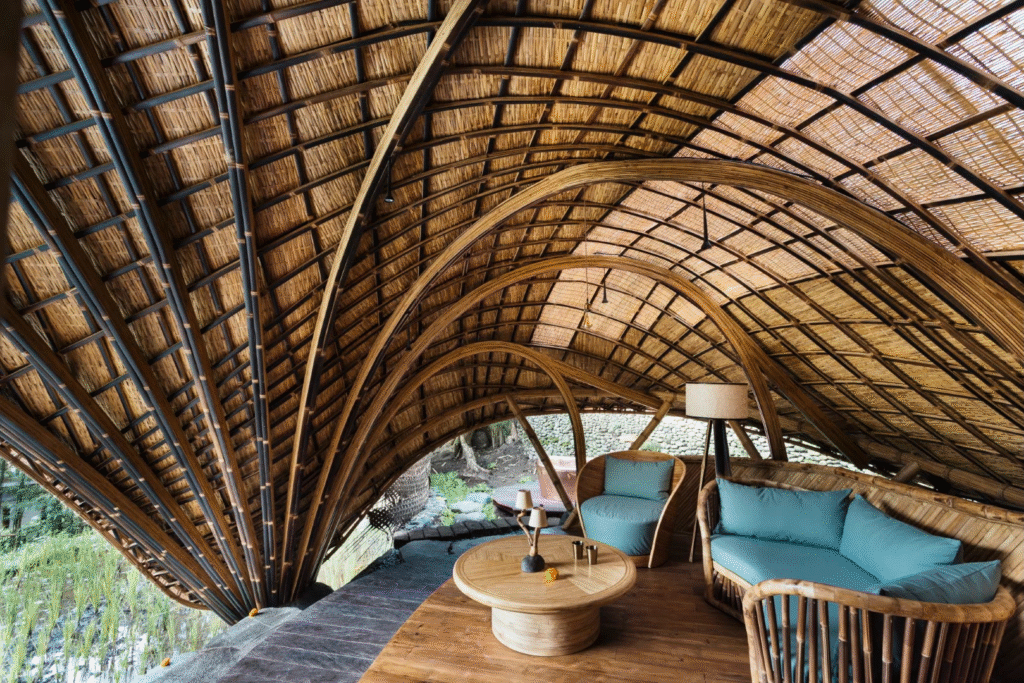
The natural texture, color variations, and elegant curves of bamboo allow architects to design visually striking buildings. Unlike industrial materials such as steel and concrete, bamboo introduces a sense of softness and harmony into architectural spaces.
Many modern bamboo buildings showcase dramatic roofs, curved forms, and open interiors that highlight the material’s flexibility. This ability to create unique architectural expressions has made bamboo construction popular in hospitality projects, eco-resorts, cultural centers, and luxury residences.
The beauty of bamboo architecture lies in its ability to blend traditional craftsmanship with contemporary design principles. As a result, bamboo structures often become iconic landmarks that attract attention for both their aesthetics and sustainability.
Also read – 5 Climate-Responsive Architecture in India: Smarter Buildings for Hotter Cities
Innovations Driving Modern Bamboo Construction
Technological advancements are playing a significant role in the evolution of bamboo construction. Architects and engineers are developing innovative techniques that expand the material’s applications beyond traditional uses.
Engineered bamboo products such as laminated bamboo lumber, bamboo panels, and bamboo composites offer enhanced strength, dimensional stability, and durability. These products allow bamboo to compete with conventional building materials in a wider range of architectural projects.
Digital design tools and advanced fabrication methods have also enabled architects to explore complex forms and structural systems using bamboo. Parametric design, computational modeling, and modern construction technologies are helping push the boundaries of bamboo architecture.
These innovations are proving that bamboo is not merely a traditional material but a sophisticated solution for contemporary sustainable architecture.
Bamboo Construction Around the World
Several groundbreaking projects have demonstrated the potential of bamboo construction in modern architecture. Across Asia, Europe, and Latin America, architects are using bamboo to create innovative buildings that challenge conventional construction methods.
Educational campuses, cultural pavilions, eco-tourism facilities, and community centers are increasingly utilizing bamboo as a primary structural material. These projects showcase how bamboo architecture can deliver both environmental benefits and exceptional design quality.
The success of these buildings has inspired architects worldwide to reconsider the role of natural materials in contemporary construction. As awareness grows, bamboo construction continues to gain recognition as a viable alternative to traditional building systems.
The global rise of bamboo architecture reflects a broader shift toward sustainable building practices and environmentally responsible design.
Challenges Facing Bamboo Construction
Despite its many advantages, bamboo construction still faces certain challenges. One common concern is durability. Untreated bamboo can be vulnerable to insects, moisture, and fungal attacks. However, modern preservation techniques significantly improve its lifespan and performance.
Building regulations and construction codes in many countries have not yet fully adapted to bamboo architecture. This can create barriers for architects and developers interested in large-scale bamboo projects.
There is also a need for greater awareness and education regarding bamboo’s engineering properties and construction potential. As research continues and successful projects demonstrate its capabilities, these challenges are gradually being addressed.
The future of bamboo construction depends on continued innovation, policy support, and increased acceptance within the global construction industry.
The Future of Bamboo in Modern Architecture
The future of bamboo construction appears exceptionally promising. As cities seek sustainable building solutions and architects prioritize environmental responsibility, bamboo is likely to play an increasingly important role in shaping the built environment.
Growing interest in carbon-neutral buildings, regenerative design, and green architecture aligns perfectly with the benefits offered by bamboo. Its rapid renewability, structural strength, and aesthetic versatility position it as one of the most important sustainable building materials for future generations.
Researchers continue to explore new applications for engineered bamboo products, while architects experiment with innovative forms and construction systems. These developments are expanding the possibilities of bamboo architecture beyond what was previously imagined.
As the construction industry moves toward a more sustainable future, bamboo is poised to become a key material in modern architectural practice.
Conclusion
Bamboo construction represents a powerful combination of strength, beauty, and sustainability. Its remarkable structural performance, rapid renewability, low environmental impact, and aesthetic appeal make it an ideal material for modern architecture.
As architects and designers search for greener alternatives to conventional construction materials, bamboo architecture offers a compelling solution that addresses both environmental and design challenges. With ongoing technological advancements and growing global acceptance, bamboo construction is no longer viewed as an alternative approach but as an essential part of the future of sustainable architecture.
The rise of bamboo construction demonstrates that innovative design and environmental responsibility can work together to create buildings that are not only beautiful and functional but also beneficial for the planet.