

Share This Article
Architecture is more than the art of constructing buildings. It is a record of how people lived, what societies valued, which technologies were available and how ideas about beauty changed over time. From the precisely proportioned temples of ancient Greece to the raw concrete buildings of Brutalism and the experimental forms of contemporary architecture, every period has created a distinct architectural language.
Understanding the most important architectural styles makes it easier to recognise why buildings look the way they do. Columns, arches, domes, ornament, exposed concrete, glass façades and irregular geometries are rarely random decisions. They often reveal the architectural movement, cultural context and design philosophy behind a building.
There are hundreds of regional traditions, architectural movements and styles around the world, so no single list can cover the complete history of architecture. However, these 17 famous architectural styles have had an especially significant influence on architectural design and continue to shape how architects think about buildings today.
What Is an Architectural Style?
An architectural style is a recognisable approach to designing buildings, usually identified through characteristics such as form, materials, construction techniques, proportions, ornamentation and spatial organisation.
Architectural styles often emerge because of larger changes in society. New technologies create new possibilities, cultural movements change ideas of beauty, and political or religious shifts influence the types of buildings societies construct. This is why understanding architecture styles is also a fascinating way of understanding history.
1. Classical Architecture: Where Architectural Order Began
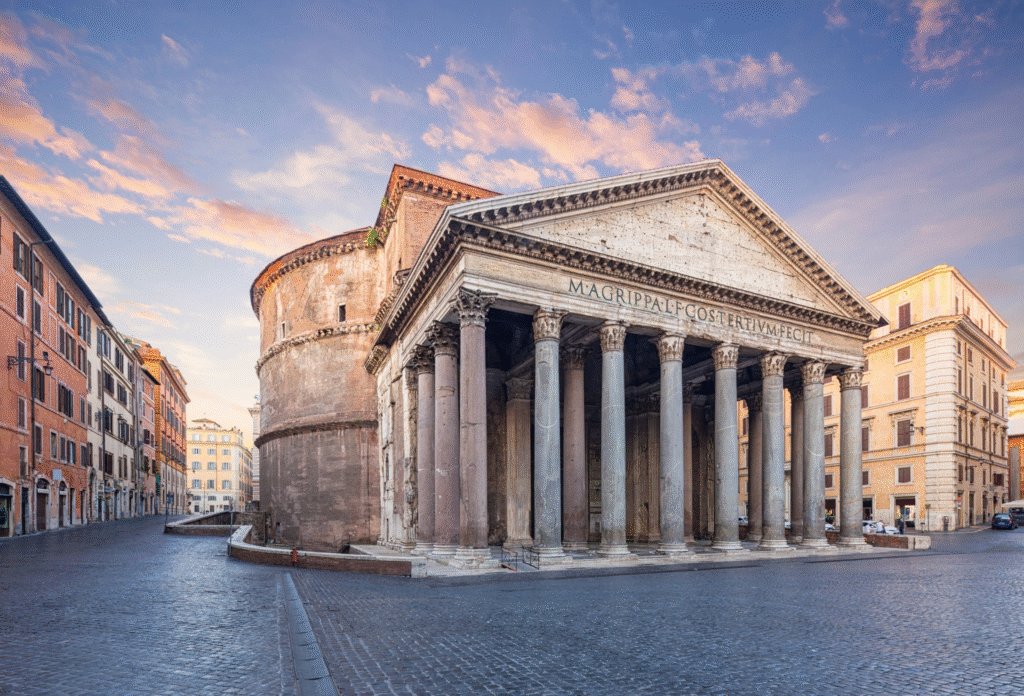
Classical architecture developed from ancient Greek and Roman building traditions and remains one of the most influential architectural styles in history. Its architecture is recognised for symmetry, carefully controlled proportions, columns, pediments and a strong sense of visual order.
The Greek Doric, Ionic and Corinthian orders became an architectural vocabulary that continued to influence buildings for more than two millennia. The Parthenon in Athens and the Pantheon in Rome remain defining examples of Classical architectural design.
Even today, government buildings, museums, universities and monuments regularly borrow elements from Classical architecture because symmetry, columns and monumental proportions communicate permanence and authority.
2. Romanesque Architecture: Massive, Strong and Monumental
Emerging across medieval Europe, Romanesque architecture is easily recognised by its thick masonry walls, rounded arches, sturdy columns, towers and relatively small windows. Churches and monasteries were among the most important Romanesque buildings.
Because stone vaults were extremely heavy, Romanesque structures needed substantial walls and supports. The result was an architecture that often feels powerful, grounded and fortress-like.
Romanesque architecture also created the foundation from which Gothic architecture would eventually develop, making it an important transition in the history of European architectural styles.
3. Gothic Architecture: Architecture Reaches for the Sky
Few architectural styles are as instantly recognisable as Gothic architecture. Developing in Europe during the Middle Ages, Gothic buildings used pointed arches, ribbed vaults, flying buttresses, tall spires and elaborate stained-glass windows.
These structural innovations allowed architects to create taller buildings with thinner walls and significantly larger windows. The emphasis on verticality made Gothic cathedrals feel as though they were physically reaching upward.
Notre-Dame de Paris, Chartres Cathedral and Milan Cathedral demonstrate how engineering, craftsmanship and symbolism combined to create some of history’s most extraordinary religious architecture.
Also read – Dubai Waterfront Architecture: The Incredible Rise of Towers, Marinas and a New Urban Identity.
4. Islamic Architecture: Geometry, Light and Extraordinary Craft
Rather than representing one uniform style, Islamic architecture includes diverse architectural traditions that developed across regions stretching from Spain and North Africa to the Middle East, Central Asia and South Asia.
Courtyards, domes, arches, minarets, intricate tilework, calligraphy and geometric patterns became important elements in many Islamic buildings. Mosques in particular developed around functional requirements such as prayer halls, courtyards, the qibla wall and mihrab, although their architectural expression changed dramatically between regions.
Complex features such as muqarnas, along with patterned surfaces and carefully controlled light, demonstrate the remarkable relationship between mathematics, craftsmanship and architectural decoration found across many Islamic traditions.
5. Renaissance Architecture: The Return of Proportion
Beginning in Italy during the 15th century, Renaissance architecture marked a renewed interest in the architectural principles of ancient Greece and Rome.
Architects rediscovered Classical ideas of symmetry, proportion, geometry, columns and domes while adapting them to churches, palaces and civic buildings. Instead of the dramatic verticality of Gothic architecture, Renaissance design often emphasised balance and mathematical harmony.
Filippo Brunelleschi, Leon Battista Alberti and Andrea Palladio became defining figures of the movement. Palladio’s interpretation of Roman architecture later influenced architectural design across Europe and beyond.

6. Baroque Architecture: When Architecture Became Theatre
Where Renaissance architecture valued balance, Baroque architecture pushed architecture toward drama, movement and emotional impact.
Emerging around the late 16th century, Baroque buildings frequently used monumental staircases, sweeping curves, richly decorated interiors, dramatic domes and carefully choreographed light. Churches and palaces became immersive architectural experiences rather than simply functional structures.
Architects such as Gian Lorenzo Bernini and Francesco Borromini helped transform Rome into one of the great centres of Baroque architectural design. The style later spread throughout Europe and many other regions.
7. Rococo Architecture: Lighter, Richer and More Playful
Rococo architecture and interior design evolved from the later Baroque tradition during the 18th century but replaced much of Baroque’s monumental seriousness with elegance, delicacy and visual playfulness.
Curving forms, pastel colours, gilded surfaces, floral motifs, mirrors and highly elaborate decorative interiors became characteristic features of Rococo design. Palaces and aristocratic residences became important settings for the style.
While Rococo architecture was relatively short-lived compared with some other architectural movements, its extraordinary decorative craftsmanship made it one of the most distinctive styles in architecture and interior design history.
8. Neoclassical Architecture: A Powerful Return to Simplicity
By the 18th century, architects began reacting against the elaborate decoration of Baroque and Rococo architecture. Neoclassical architecture returned to the perceived clarity and discipline of ancient Greek and Roman buildings.
Simple geometric forms, symmetrical façades, columns, pediments and carefully balanced proportions became defining characteristics. Archaeological interest in ancient sites such as Pompeii and renewed scholarship around Greek architecture strengthened the movement.
Neoclassical architectural style became particularly popular for courthouses, museums, government buildings and cultural institutions because its monumental character communicated stability and civic importance.
9. Arts and Crafts Architecture: Craftsmanship Fights Back
Industrialisation transformed construction, but it also created concerns about mass production and the loss of traditional craftsmanship. The Arts and Crafts movement emerged in the late 19th century as a response.
Designers such as William Morris promoted traditional materials, skilled workmanship, simplicity and buildings closely connected to their setting. Architecture was expected to reveal how things were made rather than hide construction behind unnecessary decoration.
Arts and Crafts architecture ultimately influenced residential design, furniture, interiors and later architectural movements that valued honest materials and thoughtful craftsmanship.
10. Art Nouveau Architecture: When Buildings Began to Flow
At the end of the 19th century, Art Nouveau architecture introduced a striking new visual language inspired by plants, flowers, vines and other organic forms.
Instead of simply repeating historical architecture styles, Art Nouveau designers experimented with flowing lines, curved ironwork, decorative glass and highly integrated interiors. Architecture, furniture, lighting and graphic design were often conceived as parts of one complete artistic composition.
Antoni Gaudí’s architecture in Barcelona and Victor Horta’s buildings in Brussels demonstrate just how imaginative this architectural style could become. Art Nouveau’s organic forms remain instantly recognisable today.
11. Art Deco Architecture: Glamour Meets Geometry
If Art Nouveau was flowing and organic, Art Deco architecture was sharp, geometric and confidently modern.
Rising to prominence during the 1920s and 1930s, Art Deco combined bold geometric patterns, streamlined forms, decorative surfaces and luxurious materials. It became closely associated with cinemas, hotels, skyscrapers, department stores, transportation buildings and the excitement of the machine age.
The Chrysler Building in New York remains one of the world’s most famous Art Deco buildings, while cities including Mumbai contain remarkable collections of Art Deco architecture.
12. Bauhaus Architecture: Design Stripped to Its Purpose
Few movements transformed modern design as significantly as the Bauhaus.
Founded by Walter Gropius in Germany in 1919, the Bauhaus attempted to bring architecture, art, craftsmanship and industrial production together. Buildings associated with Bauhaus design often feature simple geometry, functional planning, limited ornament and a strong relationship between design and manufacturing.
Its influence extended far beyond architecture. Furniture, typography, product design, interiors and architectural education were all changed by Bauhaus thinking, making it one of the most influential design movements of the 20th century.
13. Modernist Architecture: Form Follows a New World
Modernist architecture rejected much of the historical ornament that had dominated earlier building styles.
Instead, architects explored functional planning, open interiors, structural innovation and materials such as steel, reinforced concrete and glass. Flat roofs, clean lines, large windows, geometric volumes and minimal decoration became common characteristics of modern architecture.
Le Corbusier, Ludwig Mies van der Rohe and Walter Gropius became central figures. Through related ideas such as the International Style, Modernist architecture eventually transformed skylines, offices, houses and public buildings across the world.
14. Brutalist Architecture: The Beauty of Raw Structure
Perhaps no architectural style creates stronger opinions than Brutalism.
Emerging prominently during the 1950s and 1960s, Brutalist architecture emphasised structural expression, massive forms, exposed materials and especially raw concrete. Rather than hiding construction, buildings often made structure, texture and services visible.
Buildings such as London’s Barbican Estate demonstrate the monumental character associated with Brutalism. Once heavily criticised, Brutalist architecture has experienced renewed interest among younger architects, photographers and design enthusiasts.
15. Postmodern Architecture: Bringing Personality Back
By the 1970s, some architects felt that Modernism’s strict functionalism had become too repetitive and impersonal. Postmodern architecture challenged those rules.
Colour, symbolism, historical references, unexpected forms and even humour returned to architectural design. Buildings could borrow Classical elements while deliberately exaggerating or rearranging them.
Architects including Robert Venturi and Michael Graves helped establish this new architectural language. Postmodernism did not simply reject Modern architecture; it questioned whether architecture needed one universal visual solution at all.
16. Deconstructivist Architecture: Breaking the Expected Form
Where traditional architecture often searches for stability and order, Deconstructivist architecture deliberately challenges them.
Emerging as a prominent architectural movement during the late 20th century, Deconstructivism became associated with fragmented forms, tilted surfaces, unexpected angles, irregular geometry and compositions that seem to collide or break apart.
Architects such as Zaha Hadid, Frank Gehry, Daniel Libeskind and Peter Eisenman became closely associated with this experimental approach. Deconstructivist buildings often blur the boundaries between architecture, sculpture, engineering and digital design.
17. Contemporary Architecture: Designing Without One Rulebook
Unlike Gothic, Baroque or Art Deco architecture, contemporary architecture cannot be defined by one fixed appearance. It describes architecture being designed in the present and therefore includes many competing ideas.
Contemporary architects use advanced structural systems, computational design, adaptive façades, new materials, passive environmental strategies and increasingly sophisticated fabrication techniques. Some buildings are radically sculptural, while others intentionally pursue simplicity and local materials.
That diversity is precisely what makes contemporary architectural style interesting. Architects today can draw from thousands of years of architecture history while responding to completely new technological, social and environmental demands.
Why Understanding Architectural Styles Still Matters
Learning about different types of architecture is not simply about memorising dates and visual characteristics. Architectural styles reveal how societies respond to changing technology, religion, culture, economics and everyday life.
Look closely at a city and its history begins to appear through its buildings. A Gothic cathedral tells a different story from a Classical monument. An Art Deco cinema captures a different idea of progress from a Brutalist civic centre. A contemporary tower reflects possibilities that earlier construction technologies could never have supported.
Understanding famous architectural styles therefore gives architects, interior designers, students and design enthusiasts a richer vocabulary for reading the built environment.
How Architectural Styles Continue to Influence Modern Design
The most interesting aspect of architecture history is that architectural movements rarely disappear completely.
Contemporary architects continue to use Classical proportions, Gothic structural ideas, Islamic geometry, Arts and Crafts materiality, Art Deco patterns, Modernist planning and Brutalist concrete. Historic architecture styles constantly return in new combinations because design evolves through reinterpretation rather than complete replacement.
Even some of today’s most futuristic buildings contain ideas that can be traced back centuries. The technology may change, but questions about proportion, structure, light, material, beauty and human experience remain surprisingly familiar.
Which Architectural Style Is the Most Influential?
There is no single architectural style that can objectively be called the most important. Classical architecture created a design vocabulary that survived for thousands of years, Gothic architecture transformed structural possibilities, Renaissance architecture revived mathematical proportion, and Modernism fundamentally changed the architecture of the 20th century.
What matters more is understanding how these architecture styles connect. Each movement emerged from a particular moment, responded to what came before it and influenced what followed.
The Lasting Power of Architectural Styles
From Classical temples and Gothic cathedrals to Modernist houses and experimental contemporary landmarks, the history of architectural styles is ultimately the history of people continuously reconsidering how spaces should look, function and feel.
These 17 important architectural styles show that architecture never develops in a straight line. Some generations reject ornament while others rediscover it. Some pursue strict symmetry while others deliberately break it. New materials transform structures, while old ideas repeatedly return in unexpected forms.
That constant conversation between the past and the future is what makes architecture so compelling. Once you understand the defining characteristics of different architectural styles, buildings stop being simply buildings. They become evidence of ideas, ambitions, technologies and cultures written into stone, steel, glass, concrete and space.