

Share This Article
Scroll through interior design inspiration today and you will probably come across rooms filled with beige walls, timber furniture, handmade ceramics, soft linen and very little visual clutter. One room might be called Wabi-Sabi, another Japandi and a third Warm Minimalism.
At first glance, the difference can feel almost impossible to spot. That is exactly why Wabi-Sabi vs Japandi vs Warm Minimalism has become such an interesting conversation in contemporary interior design.
All three move away from excessive decoration. All three appreciate natural materials, calm colours and carefully selected objects. Yet the thinking behind each aesthetic is surprisingly different.
Understanding those differences can completely change the way you design a minimalist home.
The Biggest Difference Is Not the Colour Palette
The easiest mistake when comparing Wabi-Sabi vs Japandi vs Warm Minimalism is to look only at colours.
Yes, cream, beige, brown, muted grey and earthy tones appear frequently in all three. But an interior style is not simply a colour palette. It is also about why materials are selected, how furniture is arranged and what kind of atmosphere the space is supposed to create.
Wabi-Sabi finds beauty in imperfection and change. Japandi combines Japanese simplicity with Scandinavian functionality and comfort. Warm Minimalism takes the clean foundation of minimalism and softens it through warmth, texture and more inviting materials.
That subtle distinction is where the three styles begin moving in different directions.
Also read – Menara Mesiniaga: 9 Brilliant Bioclimatic Design Features That Changed Skyscraper Architecture
What Is Wabi-Sabi Interior Design?
Wabi-Sabi is much more than an Instagram aesthetic. Its roots lie in a Japanese worldview that appreciates imperfection, simplicity, impermanence and the beauty that comes with age.
In Wabi-Sabi interior design, a scratched wooden table does not necessarily need refinishing. An irregular handmade bowl can be more interesting than a perfectly symmetrical factory-made object. A weathered surface can tell a story instead of appearing unfinished.
This makes Wabi-Sabi perhaps the most philosophical of the three approaches in the Wabi-Sabi vs Japandi vs Warm Minimalism comparison.
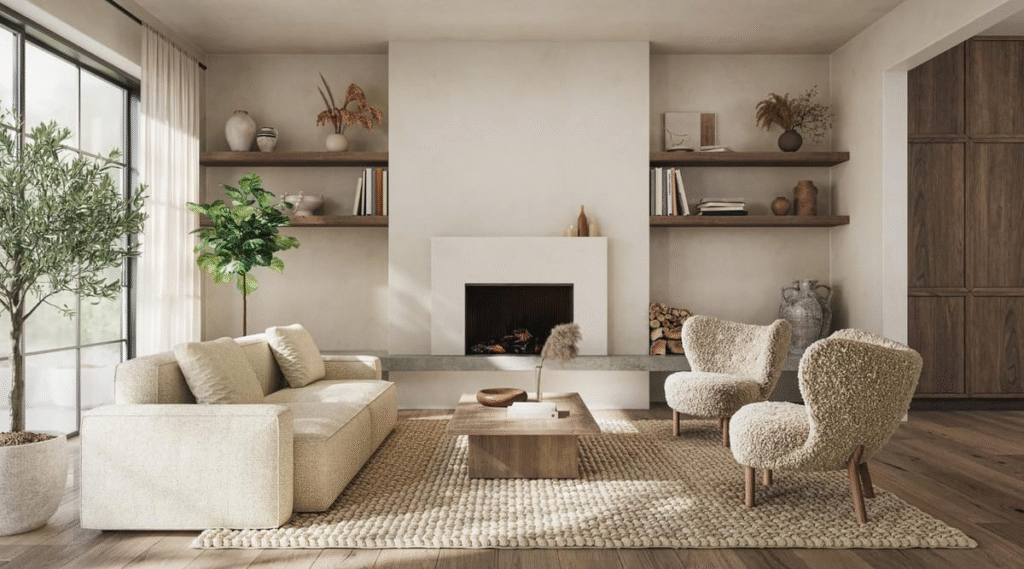
Wabi-Sabi Celebrates What Most Interiors Try to Hide
Modern interiors often chase perfection. Straight lines must remain straight, surfaces must remain spotless and materials are expected to look almost untouched.
Wabi-Sabi turns that thinking around.
Natural cracks, visible grain, handmade variation, uneven plaster, distressed timber and materials that develop character with time can become part of the beauty of a Wabi-Sabi home.
The goal is not to deliberately make everything look old or damaged. It is to allow materials to feel genuine rather than excessively polished.
The Wabi-Sabi Colour Palette Feels Like It Came From Nature
Colours in Wabi-Sabi interiors usually feel earthy, faded and grounded. Think clay, sand, stone, charcoal, mushroom, warm grey, muted green and dusty brown rather than bright white and sharp black.
There is often less contrast than you might find in other minimalist interior styles.
The room should feel quiet rather than visually dramatic. Colours tend to blend into one another, allowing texture, age and materiality to become more noticeable.
Wabi-Sabi Materials Are Supposed to Feel Real
Materiality is one of the clearest ways to identify Wabi-Sabi interior design.
Rough timber, lime plaster, clay, stone, linen, handmade ceramics and textured walls frequently appear because these materials naturally develop variation. Their surfaces do not need to look perfectly uniform.
Even when the interior is newly designed, Wabi-Sabi often avoids anything that feels excessively glossy, artificial or manufactured.
It is less about luxury through perfection and more about beauty through authenticity.
What Is Japandi Interior Design?
Japandi is a design approach that brings together influences associated with Japanese interiors and Scandinavian design.
Japanese design contributes restraint, simplicity, craftsmanship and connection with nature. Scandinavian interiors bring functionality, comfort and the idea of creating welcoming everyday environments.
The result is a home that feels minimal but never empty.
This is a crucial distinction when looking at Wabi-Sabi vs Japandi vs Warm Minimalism because Japandi is generally more structured and visually refined than Wabi-Sabi.

Japandi Is Minimalism With Discipline
A Japandi room often appears incredibly calm because almost everything has been considered carefully.
Furniture tends to have clean silhouettes. Storage is controlled. Decorative objects are limited. Materials feel natural and the overall palette remains restrained.
However, unlike extremely stark minimalism, Japandi still wants the room to feel comfortable.
A softly upholstered chair, timber dining table, textured rug or carefully placed ceramic object can introduce enough warmth without disturbing the sense of visual order.
Japandi Furniture Is Usually Cleaner and More Refined
Furniture provides one of the easiest clues when comparing Wabi-Sabi vs Japandi vs Warm Minimalism.
Japandi furniture often features simple geometry, quality craftsmanship and clean detailing. Low-profile furniture is common, especially pieces influenced by Japanese spatial traditions.
At the same time, Scandinavian influences may introduce pale woods, comfortable seating and functional furniture designed around everyday living.
The finished room feels intentional rather than accidental.
Japandi Is Selective Rather Than Empty
Minimalism is sometimes misunderstood as removing as many things as possible. Japandi takes a more thoughtful approach.
Instead of asking, “How little can this room contain?”, the better question is, “Which objects deserve to remain?”
A lamp, chair, vase or artwork can become more visually powerful because it is surrounded by less distraction.
That balance between functionality and restraint is one reason Japandi interior design has become such a popular reference for contemporary homes.
What Is Warm Minimalism?
Warm Minimalism is arguably the easiest of the three styles to adapt to different homes.
It takes the uncluttered layouts, clean lines and simplicity associated with minimalism and removes some of its colder qualities. Instead of brilliant white rooms, polished surfaces and sharp contrast, Warm Minimalism introduces softer colours, tactile fabrics and natural materials.
The result is contemporary minimalism that feels comfortable enough to actually live in.
When discussing Wabi-Sabi vs Japandi vs Warm Minimalism, Warm Minimalism is generally the broadest and least culturally specific of the three.
Warm Minimalism Makes Minimalist Homes Feel More Inviting
Traditional interpretations of minimalism could sometimes feel almost clinical. The architecture might be beautiful, but the room could feel more like a gallery than a home.
Warm Minimalism interior design solves this through texture and softness.
Cream upholstery, timber surfaces, warm lighting, textured rugs, curtains, comfortable sofas and tonal layers can make a simple space feel considerably more inviting without filling it with unnecessary objects.
The architecture stays clean. The atmosphere becomes softer.
Warm Minimalism Allows More Comfort and Layering
Compared with Japandi, Warm Minimalism can be a little more relaxed about furniture shapes and decorative layering.
You might see a large curved sofa, oversized artwork, sculptural lighting, a plush rug and a statement stone coffee table in the same space. These pieces can be visually strong while the overall room still feels minimal.
That makes Warm Minimalism particularly useful for modern urban homes where homeowners want simplicity without sacrificing comfort or personality.
Wabi-Sabi vs Japandi vs Warm Minimalism: The Philosophy Changes Everything
The clearest way to understand Wabi-Sabi vs Japandi vs Warm Minimalism is to stop looking at Pinterest images for a moment and look at the thinking behind the room.
Wabi-Sabi asks you to appreciate imperfection.
Japandi asks you to simplify thoughtfully while combining beauty with function.
Warm Minimalism asks you to create visual simplicity without making the home feel cold.
They can certainly overlap, but their starting points are different.
Wabi-Sabi Loves Imperfection. Japandi Loves Refinement.
Imagine three wooden dining tables.
The Wabi-Sabi table might have irregular edges, visible knots, variations in tone and signs of craftsmanship. Those imperfections make the object more interesting.
The Japandi table might use the same natural timber but feature beautifully controlled joinery, clean proportions and an elegant silhouette.
The Warm Minimalist table could be simpler and more contemporary, perhaps with softly rounded corners and a rich timber finish that adds warmth to an otherwise restrained room.
Same material. Completely different design intention.
The Difference Becomes Obvious When You Look at Texture
Texture is important in all three styles, but it behaves differently.
In Wabi-Sabi, texture can become the main visual feature. Rough walls, aged timber, stone surfaces and irregular ceramics often contribute much of the room’s personality.
Japandi uses texture in a more controlled way. Natural timber, woven textiles, paper, ceramics and soft fabrics introduce depth while maintaining a highly edited appearance.
Warm Minimalism often uses texture to create comfort. Bouclé, wool, linen, timber, brushed finishes, stone and soft furnishings prevent the minimalist interior from becoming visually flat.
Wabi-Sabi vs Japandi vs Warm Minimalism Colour Palettes
Another interesting difference in Wabi-Sabi vs Japandi vs Warm Minimalism appears when you examine colour more closely.
Wabi-Sabi colours often feel weathered and earthy. Brown, grey, clay, stone and muted natural shades dominate, creating a slightly raw atmosphere.
Japandi interiors frequently combine Scandinavian neutrals with darker Japanese-inspired tones. Warm white, beige and pale timber may sit beside walnut, charcoal or black accents.
Warm Minimalism tends to stay lighter and softer. Cream, oatmeal, caramel, taupe, tan and warm white commonly create the base, sometimes complemented by brown, rust, olive or muted terracotta.
Which Style Has More Decorative Objects?
None of these interior styles encourages excessive decoration, but their relationship with objects differs.
Wabi-Sabi values objects that feel personal, handmade, aged or meaningful. A single handmade pot may be more appropriate than a perfectly coordinated collection of decorative accessories.
Japandi is highly selective. Objects are often chosen for both their usefulness and beauty, which keeps the room calm and controlled.
Warm Minimalism allows slightly more decorative freedom. Books, artwork, sculptural objects, cushions and lighting may appear as long as the overall composition remains visually uncluttered.
Lighting Can Completely Change the Style
Lighting is an underrated difference when analysing Wabi-Sabi vs Japandi vs Warm Minimalism.
Wabi-Sabi generally works beautifully with soft, diffused and imperfect light. Shadows can enhance textured plaster, rough stone and handcrafted surfaces.
Japandi lighting tends to feel purposeful and understated. Paper-inspired lamps, simple pendants and carefully positioned ambient lighting can support the quiet architecture.
Warm Minimalism often uses lighting more generously to create atmosphere. Concealed lighting, warm lamps, sculptural pendants and layered illumination can make a minimal room feel much richer.
Which Style Feels the Most Rustic?
Of the three, Wabi-Sabi can feel the most raw, although calling it simply “rustic” misses much of its meaning.
It accepts surfaces and objects that reveal age, irregularity and human touch. Because of this, Wabi-Sabi rooms can occasionally feel older, quieter and more tactile than Japandi or Warm Minimalist spaces.
Japandi tends to look cleaner and more composed.
Warm Minimalism generally feels the most contemporary and polished while still avoiding the sterility associated with colder minimalist interiors.
Which Style Feels the Most Modern?
Warm Minimalism often translates most easily into highly contemporary apartments and villas because it can work comfortably with modern architecture, large furniture and sophisticated finishes.
Japandi also feels modern, but its character depends heavily on restraint, craftsmanship and its combination of Japanese and Scandinavian design influences.
Wabi-Sabi can certainly work in a modern home, but its focus on natural aging, imperfection and raw materials creates a very different atmosphere.
This distinction is important if you are choosing between Wabi-Sabi vs Japandi vs Warm Minimalism for a new interior.
Can You Combine Wabi-Sabi and Japandi?
Yes, and many interiors already do.
Wabi-Sabi can introduce imperfection and material richness into a Japandi space. A clean-lined timber room, for example, might include a rough plaster wall or handmade ceramic vessel that adds Wabi-Sabi character.
The key is understanding that the styles are not identical.
Japandi provides structure and refinement, while Wabi-Sabi can introduce softness, age and irregularity.
When combined carefully, the interior can feel calm without looking overly designed.
Can Japandi and Warm Minimalism Work Together?
Japandi and Warm Minimalism are perhaps the easiest pairing.
Both value calm spaces, natural materials, neutral colours and reduced visual clutter. Warm Minimalism can make a strict Japandi palette feel slightly softer and more comfortable.
The biggest challenge is preventing the space from becoming generic beige minimalism.
Distinctive timber, thoughtful craftsmanship, interesting lighting and a controlled contrast of materials can preserve character.
Can All Three Styles Exist in One Home?
Interestingly, yes.
A home could have the clean spatial planning of Japandi, the textured surfaces and imperfect ceramics associated with Wabi-Sabi, and the comfortable upholstery and tonal palette of Warm Minimalism.
The result does not need to fit neatly into one design label.
In fact, many of the most interesting homes borrow ideas from several design movements rather than reproducing one style perfectly.
Understanding Wabi-Sabi vs Japandi vs Warm Minimalism simply helps you make those combinations more intentional.
Which Style Works Best for Indian Homes?
There is no single answer because Indian homes differ enormously in climate, size, lifestyle and family structure.
However, all three ideas can translate well when adapted rather than copied directly from international reference images.
Warm Minimalism can work particularly naturally in contemporary apartments because it allows comfortable seating, functional storage and familiar materials while maintaining a calm visual language.
Japandi can suit homeowners who prefer organised spaces, quality furniture and fewer decorative elements. Wabi-Sabi can work beautifully where natural stone, handmade finishes, timber, pottery and locally crafted materials are already part of the design vocabulary.
The better approach is to borrow principles rather than chase a label.
Choose Wabi-Sabi If You Love Character Over Perfection
Wabi-Sabi may resonate with you if perfectly matching furniture and flawless surfaces feel slightly lifeless.
It creates rooms where materials can breathe, age and change. Handmade objects, textured finishes and natural variations do not need to be corrected.
There is a quiet confidence in letting a home look lived in.
Instead of constantly trying to keep everything looking new, Wabi-Sabi interior design allows time itself to contribute to the aesthetic.
Choose Japandi If You Love Calm, Order and Craftsmanship
Japandi is a strong direction for people who enjoy visually organised spaces where every piece seems carefully selected.
It offers minimalism without forcing a home to become uncomfortable or sterile.
Good proportions, functional furniture, natural materials and thoughtful storage become more important than decorative trends.
Among Wabi-Sabi vs Japandi vs Warm Minimalism, Japandi often sits comfortably between the rawness of Wabi-Sabi and the softer contemporary nature of Warm Minimalism.
Choose Warm Minimalism If You Want Simplicity Without Sacrificing Comfort
Warm Minimalism may be the easiest choice for someone who loves the look of minimal spaces but does not want their home to feel empty.
The approach allows large comfortable furniture, soft textiles, artwork and decorative lighting while keeping the overall palette controlled.
Instead of removing personality, Warm Minimalism interior design edits it.
The room can still feel luxurious, contemporary and welcoming without depending on excessive decoration.
The Common Mistake: Turning Everything Beige
One unfortunate side effect of the popularity of these styles is the idea that simply making everything beige automatically creates Wabi-Sabi, Japandi or Warm Minimalism.
It does not.
Without variation in material, proportion, craftsmanship and texture, a completely neutral room can quickly become flat rather than calming.
The strongest interiors usually contain subtle contrast.
Smooth surfaces might meet rough ones. Pale timber might sit beside dark accents. Soft textiles might balance stone. An imperfect handmade object might break the precision of clean architecture.
That tension gives minimalist interiors depth.
Wabi-Sabi vs Japandi vs Warm Minimalism Is Really About How You Want a Home to Feel
Rather than asking which aesthetic is currently more fashionable, think about the emotional experience you want from your space.
Do you want your home to feel grounded, imperfect and deeply connected with natural materials? Wabi-Sabi may provide the right direction.
Do you prefer an organised, beautifully crafted environment where functionality and quiet elegance work together? Japandi may feel more natural.
Do you want contemporary simplicity combined with softness, comfort and a sense of luxury? Warm Minimalism may suit you better.
That is the real difference in Wabi-Sabi vs Japandi vs Warm Minimalism.
Is Wabi-Sabi the Same as Japandi?
No. Wabi-Sabi and Japandi can look similar because both appreciate simplicity and natural materials, but their underlying ideas differ.
Wabi-Sabi focuses strongly on imperfection, impermanence and the beauty of natural ageing. Japandi is a contemporary design approach combining Japanese-inspired simplicity with Scandinavian functionality and comfort.
A Wabi-Sabi room can feel irregular and weathered, while Japandi usually appears cleaner and more carefully edited.
Is Japandi the Same as Warm Minimalism?
Not exactly.
Japandi has specific Japanese and Scandinavian design influences, whereas Warm Minimalism is a broader contemporary interpretation of minimalism.
Both may use timber, neutrals and simple furniture, but Japandi generally relies more heavily on disciplined composition and craftsmanship. Warm Minimalism often allows greater softness, curved furniture, plush textiles and decorative layering.
Is Wabi-Sabi More Expensive to Create?
Wabi-Sabi does not necessarily require expensive materials.
In fact, its philosophy can encourage appreciation for existing furniture, aged materials and handcrafted objects rather than constantly replacing things with perfectly new versions.
However, authentic natural materials and skilled handcrafted finishes can sometimes increase project costs.
The important difference is that Wabi-Sabi should not become an excuse to purchase artificially distressed objects simply because they appear imperfect.
Will Wabi-Sabi, Japandi and Warm Minimalism Go Out of Style?
Design labels will inevitably change, but the principles behind these interiors are broader than short-term trends.
Natural materials, comfortable spaces, simplicity, craftsmanship and thoughtful consumption have remained relevant across many periods of architecture and interior design.
That means a home inspired by Wabi-Sabi vs Japandi vs Warm Minimalism does not need to look like a temporary social-media trend.
The safest approach is to design around the space, lifestyle and materials rather than trying to recreate a reference image exactly.
Wabi-Sabi vs Japandi vs Warm Minimalism: The Final Difference
The easiest way to remember Wabi-Sabi vs Japandi vs Warm Minimalism is through intention.
Wabi-Sabi is about accepting imperfection. Japandi is about balancing simplicity, craftsmanship and function. Warm Minimalism is about making minimalism feel comfortable and inviting.
Their rooms may share neutral colours, timber, stone and uncluttered layouts, but those similarities exist on the surface.
Underneath, each approach tells a different story.
And once you understand the real difference between Wabi-Sabi vs Japandi vs Warm Minimalism, choosing materials, furniture, colours and finishes becomes much easier.
You may even discover that your ideal home does not belong entirely to one category.
It could carry the imperfection of Wabi-Sabi, the discipline of Japandi and the comfort of Warm Minimalism at the same time.
That combination may be far more interesting than following any single aesthetic perfectly.