

Share This Article
When we hear the words interior design, it is easy to imagine beautiful furniture, carefully selected colours, dramatic lighting and perfectly styled spaces. But professional interior design goes much further than how a room looks.
Interior designers consider how people use a space, how they move through it, what materials are appropriate, how lighting supports different activities and how an interior can remain functional, comfortable and safe. Professional bodies such as the Council for Interior Design Qualification describe interior design as a discipline involving specialised knowledge of interior environments, human experience, functionality, health, safety and welfare.
That becomes especially important when comparing residential vs commercial interior design.
A private home and a hotel lobby can both be visually stunning, but they are designed around very different users, priorities and day-to-day activities. Similarly, designing an apartment requires a different approach from planning a workplace, restaurant, retail store or healthcare environment.
So, what is the actual difference between residential and commercial interior design? Is commercial interior design more complicated? Does residential design offer more creativity? And which one is better as a career?
The answer is not simply about style. The biggest differences begin with the people using the space and what that space is expected to accomplish.
What Is Residential Interior Design?
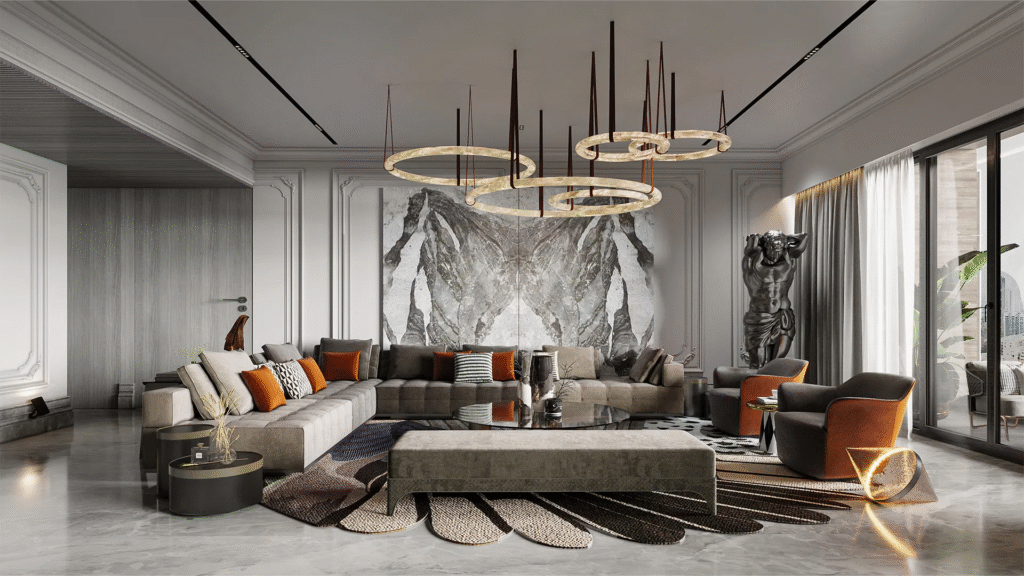
Residential interior design focuses on places where people live, including apartments, villas, independent houses, penthouses and other types of residential environments.
The goal is to create an interior that supports the daily life of the people occupying it. That can involve planning kitchens, living spaces, bedrooms, bathrooms, storage, home offices and other areas around a household’s practical requirements.
Residential interior design is also highly influenced by personal preference. One family may want an open home designed for entertaining, while another may prioritise privacy, storage and quiet spaces. A young couple, a family with children and an elderly homeowner may all use the same amount of space very differently.
That is why successful residential interior design is not simply about creating a fashionable home. It involves understanding how particular people live and translating those needs into a functional and visually coherent environment.
ASID similarly describes interior design as creating spaces that respond to client needs and, in residential contexts, reflect the lifestyle of the people who use them.
What Is Commercial Interior Design?
Commercial interior design broadly refers to interiors created for organisations, businesses and other non-residential uses. Workplace, hospitality, retail, healthcare and educational environments are among the many areas in which professional interior designers can specialise. The International Interior Design Association, for example, identifies workplace, education, healthcare and hospitality among major sectors within the interior design industry.
The needs of each commercial project can be dramatically different.
A workplace interior may need to support focused work, meetings and collaboration. A restaurant needs to consider the relationship between dining, service and operational areas. A hotel must respond to the requirements of guests and staff, while a healthcare interior introduces its own specialised requirements.
Commercial interior design therefore cannot be reduced to simply “designing for businesses.”
It is about understanding a particular organisation, its users, its operational needs and the experience the interior is supposed to create.
Also read – A Better Mumbai Skyline: Powerful Architecture Lessons for the Future
Residential vs Commercial Interior Design Starts With the User
The clearest way to understand residential vs commercial interior design is to ask one question: who is using the space?
Residential designers are generally designing for a specific household or resident. They can learn about the client’s habits, preferences and priorities in considerable detail.
Commercial interiors may need to serve a much broader user group.
An office could be used by employees, visitors and clients. A hotel has guests, staff and service teams. A restaurant needs to accommodate diners while also enabling employees to work efficiently.
This does not mean every commercial project automatically has more users than every residential project. A small private office could have fewer occupants than a large multi-generational home.
The important distinction is that commercial interior design often has to address different groups of users and operational functions simultaneously, while residential design is typically centred more directly on the requirements of the household.
Personal Identity vs Brand Identity
One of the most interesting differences in residential vs commercial interior design is whose identity the interior communicates.
A home may reflect the personality of the people living there.
Colours, furniture, artwork, materials, lighting and decorative objects can make an interior feel deeply individual. Residential designers often spend significant time understanding what clients like, what they dislike and how they want their home to feel.
In commercial interiors, design may also communicate the identity of an organisation or brand.
Walk into a luxury hotel, playful café, minimalist technology office or premium fashion store and the interior can immediately influence your perception of the company.
Brand expression is particularly visible in sectors such as hospitality, retail and workplace design. IIDA has documented how workplace interiors can express a client’s brand and how hospitality and retail environments use atmosphere, materiality and storytelling to shape both identity and user experience.
Commercial interior design therefore often asks: What should people understand or feel about this organisation when they enter the space?
Residential design asks a more personal question: Does this environment feel right for the people who call it home?
Space Planning Is Important in Both – but the Problems Are Different
Space planning is a central part of professional interior design.
According to the U.S. Bureau of Labor Statistics, interior designers consider how spaces will be used and how people will move through them. CIDQ likewise identifies space planning as a major professional responsibility.
In a residence, space planning could involve the connection between a kitchen and dining area, privacy between bedrooms, storage requirements, furniture circulation or creating a flexible work-from-home area.
In an office, the questions could involve workstations, meeting spaces, circulation, reception, collaborative areas and support functions.
In a restaurant, completely different relationships become important. Customer circulation, table layouts and operational areas all need to work together.
That is why the difference between residential and commercial interior design is not that one requires space planning and the other does not.
Both do.
The difference lies in the activities, users and operational requirements the space plan needs to support.

Commercial Interior Design Is Not Automatically Bigger
A common claim about commercial vs residential interior design is that commercial projects are always larger.
That is not accurate.
Commercial projects certainly can be enormous. Hotels, corporate headquarters, healthcare facilities and large retail environments may cover substantial areas and involve multidisciplinary project teams.
But residential projects can also be extremely large and complex. Luxury houses, multi-residential developments and highly customised residences can require architects, interior designers, engineers, lighting consultants, landscape designers, specialist contractors and craftspeople.
Similarly, a commercial designer might be working in a very small boutique, café or office.
The more accurate distinction is that project scale depends on the individual brief rather than whether a project is classified as residential or commercial.
Where commercial work can become particularly complex is when many operational functions, technical systems, user groups or repeated locations have to be coordinated.
Building Codes and Safety Matter in Residential and Commercial Interiors
This is one area where the distinction needs to be explained carefully.
Interior design should never be treated as purely decorative work. Professional interior designers may need knowledge of building codes, inspection requirements, accessibility, materials, circulation and safety depending on their role and jurisdiction. The Bureau of Labor Statistics specifically identifies awareness of building codes, inspection regulations and accessibility standards among the responsibilities associated with professional interior design.
Commercial and public-facing interiors can introduce additional considerations because of factors such as occupancy, accessibility, emergency movement and the particular use of the building.
However, it would be incorrect to say that regulations only matter in commercial interior design.
Residential projects are also subject to applicable construction, fire, electrical and building requirements depending on the type of project and its location.
The exact responsibilities of an interior designer also vary between countries and jurisdictions. Even within regulated markets, rules governing professional practice are not identical everywhere. CIDQ, for example, explicitly advises designers to understand the requirements of the jurisdiction in which they practise.
Therefore, when comparing residential vs commercial interior design, it is safer to say that the regulatory questions may differ according to occupancy, building type and location rather than suggesting that one category is universally regulated and the other is not.
Materials Must Be Chosen According to Use
Material selection is another major part of both residential and commercial interior design.
Professional designers consider much more than appearance. CIDQ includes the selection of appropriate and durable finishes, furniture, fixtures and equipment within the scope of professional interior design.
The required level of durability depends on how the material will be used.
A floor in a busy hotel lobby experiences a very different pattern of use from the floor of a private bedroom. Restaurant seating may be used by many people throughout the day, while a chair in someone’s home might only be used occasionally.
Commercial designers may therefore place considerable emphasis on durability, cleaning, maintenance and the suitability of materials for repeated use.
But again, this is not an absolute residential-versus-commercial rule.
High-performance materials may also be essential in busy family homes, kitchens, bathrooms or residences designed for particular accessibility or maintenance requirements.
The correct material is the one that responds to use, performance, aesthetics, maintenance and the project’s specific needs.
Lighting Design Changes With the Activity
Lighting can completely transform an interior.
Residential lighting may combine ambient lighting, task lighting and decorative fixtures to respond to activities such as cooking, reading, relaxing, dressing and entertaining.
Commercial lighting requirements vary enormously by project type.
A workplace needs lighting appropriate for working activities. A retail environment may use lighting to support merchandise presentation. Restaurants and hotels frequently use lighting as a major part of atmosphere and guest experience.
IIDA’s discussions of hospitality interiors repeatedly demonstrate how lighting can shape atmosphere and the way a user experiences a space.
So, when considering residential vs commercial interior lighting, the real difference again comes back to activity.
Good lighting design does not begin by asking whether a project is residential or commercial. It begins by asking what people need to see, do and feel in that environment.
Budgets Work Differently From Project to Project
It is also misleading to say that residential budgets are always emotional while commercial budgets are purely financial.
Both homeowners and businesses have budgets, priorities and financial constraints.
A residential client might decide to invest heavily in a kitchen because cooking is central to their lifestyle. Another homeowner might prioritise furniture, artwork or a master bedroom.
A commercial client may evaluate costs against operational requirements, maintenance, project life or business objectives.
However, commercial interior design is not automatically more cost-conscious, nor are homeowners automatically driven by personal preference regardless of cost.
Interior designers in both sectors need to work within budgets. Cost estimation and project scheduling are recognised parts of professional interior design practice.
The difference is simply what creates value for that particular client.
Are Commercial Interior Design Timelines Always Tighter?
Not necessarily.
Commercial projects can have extremely firm completion dates. A store may need to open before a particular retail season. An office may need to be ready before employees move in. A restaurant or hotel may have an announced opening date.
Delays in these situations can affect business operations.
But residential projects can also have strict timelines, especially when clients need to move into the property by a fixed date.
Rather than claiming that commercial interior design always moves faster, it is more accurate to say that commercial timelines can be strongly influenced by business operations, opening dates and coordination between multiple teams.
Residential timelines can be equally challenging depending on the project.
Furniture Selection Reveals How Different Users Shape Design
Furniture is where the residential vs commercial interior design difference becomes particularly easy to understand.
Residential furniture is usually selected for the needs and preferences of known occupants. Designers can choose pieces according to the homeowner’s lifestyle, available space, comfort and aesthetic preferences.
Commercial furniture may need to accommodate a much broader range of users.
A workplace chair, restaurant seat or hotel lobby sofa may be used repeatedly by people of different heights, ages and needs. Designers may therefore need to consider ergonomics, durability, maintenance, dimensions and appropriate performance alongside appearance.
Yet the objective remains the same in both types of interior design: the furniture should support the people using it.
The difference is the user profile.
Technology Is Now Part of Modern Interior Design
Technology increasingly influences both residential and commercial interiors.
Homes may incorporate connected lighting, security, entertainment, temperature controls and home automation.
Commercial environments can include audiovisual systems, meeting technology, access control, digital displays, building-management interfaces and other technologies depending on the project.
The specific systems may differ, but the design challenge is similar.
Technology needs to be integrated into the space rather than added awkwardly after the interior has already been designed.
This also demonstrates how modern interior design increasingly requires collaboration between designers and other specialists.
Residential and Commercial Design Are Beginning to Influence Each Other
The visual boundaries between residential and commercial design are not always clear.
Workplaces may use sofas, warm lighting and lounge-like environments associated with hospitality or residential design. Hotels frequently create guestrooms that aim for a more intimate, home-like experience.
IIDA has documented this crossover particularly between hospitality and workplace interiors, describing the breakdown of traditional barriers between commercial design typologies.
This means you cannot always determine whether an interior is residential or commercial simply by looking at a photograph.
The distinction lies in its use.
A workplace can look like someone’s living room and still need to function as a workplace.
Is Commercial Interior Design Harder Than Residential Interior Design?
There is no reliable professional basis for declaring one universally harder than the other.
They involve different challenges.
Residential interior designers often work extremely closely with individual clients. Because a home is personal, decisions about layouts, storage, colours, furniture and materials can carry significant emotional importance.
Commercial interior designers may have to coordinate numerous stakeholders, technical requirements, brand considerations and user groups.
A highly detailed luxury residence can be more complex than a small office. A large hospital interior can be considerably more technically demanding than a small apartment.
Complexity is therefore determined by the project brief, building type, scale, regulatory context and client’s requirements, not simply by the label residential or commercial.
Residential vs Commercial Interior Design as a Career
Students researching residential vs commercial interior design careers should also avoid thinking that they must permanently choose one side.
Interior designers can specialise in particular building types and many professionals develop experience across several areas. The Bureau of Labor Statistics notes that designers may specialise in homes, hospitals, hotels, individual room types or other areas of interior design.
Someone who enjoys understanding individual lifestyles, furniture, materials and highly personalised environments may naturally gravitate towards residential interiors.
Someone interested in workplace strategy, hospitality, retail, healthcare or other organisational environments may prefer commercial interior design.
But careers do not always follow perfectly defined categories.
Designers can move between sectors, work in multidisciplinary firms or develop expertise that crosses traditional boundaries.
Which Offers More Creative Freedom?
Neither residential nor commercial interior design automatically offers more creativity.
A residential project can provide opportunities for customised furniture, unusual materials, artwork and highly personal spatial ideas.
Commercial projects can be equally experimental. Restaurants, hotels, stores and cultural environments may use powerful concepts, materials, graphics, lighting and spatial experiences to create a distinctive identity.
Creative freedom ultimately depends on the client, budget, project brief, technical requirements and willingness to experiment.
Good design is not about how unusual an interior can look.
It is about how intelligently creativity solves the problem.
The Biggest Difference Between Residential and Commercial Interior Design
After looking at materials, furniture, lighting, budgets, codes and space planning, the most important difference between residential and commercial interior design remains surprisingly simple.
It is the relationship between people and purpose.
Residential interior design generally begins with the lives of the people who will call the space home.
Commercial interior design begins with the people who will use the space and the activity, organisation or service that the environment needs to support.
Everything else follows from those questions.
This is why two interiors can use similar materials, furniture and colours yet require completely different design thinking.
Residential vs Commercial Interior Design: Which One Is Better?
There is no winner in the residential vs commercial interior design debate.
Residential design can turn a house into an environment that genuinely supports the routines, personality and needs of its occupants.
Commercial design can turn a workplace, restaurant, hotel, store or other environment into a space that supports users while responding to organisational and operational objectives.
For an aspiring interior designer, the better field is the one that matches the type of problems you enjoy solving.
Do you enjoy learning about how individual people live and translating their personalities into spaces? Residential interior design could be a natural fit.
Are you fascinated by hospitality, workplaces, retail environments, brands and spaces designed for diverse groups of people? Commercial interior design may offer the challenges you are looking for.
And you may never need to choose just one.
The strongest designers understand that great interiors are not defined by whether they are labelled residential or commercial. They are defined by how successfully they understand people, respond to purpose and turn those needs into spaces that genuinely work.
That is ultimately what makes interior design far more powerful than simply making a room look good.