

Share This Article
Shigeru Ban’s Paper Architecture has redefined the way the world thinks about sustainable design, proving that architecture doesn’t have to rely on concrete, steel, or glass to make a lasting impact. By transforming humble paper tubes into durable, elegant, and functional structures, the Japanese architect has challenged conventional construction while demonstrating how architecture can respond to both humanitarian crises and environmental concerns. His work is a powerful reminder that innovation often comes from reimagining the ordinary.
For architects, designers, and students alike, Shigeru Ban’s projects offer lessons that go beyond material experimentation. They explore resilience, empathy, sustainability, and the belief that architecture should serve people first. In an era where climate-conscious design is becoming increasingly important, Ban’s philosophy feels more relevant than ever.
When the Simplest Material Changes Everything
When people hear the word paper, they often think of something temporary, fragile, or disposable.
Architecture, on the other hand, is usually associated with permanence heavy foundations, reinforced concrete, and monumental structures.
Shigeru Ban questioned that assumption.
Instead of asking, What is the strongest material available? he asked, What is the most responsible material for this situation?
That shift in thinking transformed paper tubes commonly used for fabric rolls and industrial packaging into one of architecture’s most recognizable innovations.
Today, his projects stand as proof that meaningful architecture isn’t defined by expensive materials, but by thoughtful ideas.
Who Is Shigeru Ban?
Shigeru Ban is a Japanese architect internationally recognized for combining humanitarian work with architectural innovation. Awarded the Pritzker Architecture Prize in 2014, Ban has consistently demonstrated that architecture can respond to social challenges just as effectively as aesthetic ones.
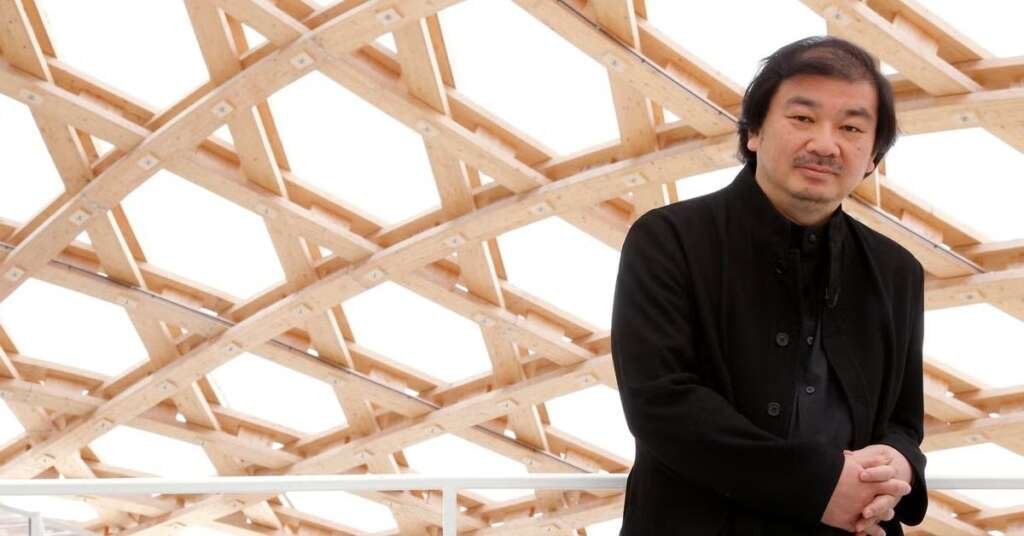
Portrait of Shigeru Ban, the Pritzker Prize-winning architect known for humanitarian and paper architecture.
Credits: https://www.independent.co.uk/arts-entertainment/architecture/japanese-architect-shigeru-ban-wins-2014-pritzker-architecture-prize-9213921.html
Unlike many architects known for iconic skylines, Ban became celebrated for designing emergency shelters, temporary housing, community buildings, museums, and cultural spaces using recyclable paper tubes, timber, and lightweight construction systems.
His projects have supported communities affected by earthquakes, wars, floods, and other natural disasters across Japan, Rwanda, Turkey, India, China, Nepal, and beyond.
What makes his work remarkable is that these structures are never treated as “temporary compromises.” They are carefully designed spaces that restore dignity, comfort, and hope.
Why Paper?
At first glance, building with paper sounds impractical.
Yet the paper tubes Ban uses are engineered products manufactured from recycled paper, compressed into dense cylindrical forms that possess surprising structural strength.
These tubes are:
| Material Quality | Architectural Benefit |
| Lightweight | Easy to transport and assemble |
| Recyclable | Minimizes environmental impact |
| Cost-effective | Affordable for humanitarian projects |
| Strong under compression | Suitable for structural applications |
| Readily available | Accessible almost anywhere in the world |
Close-up of structural paper tubes highlighting construction detailing and material innovation.
Credits: https://www.archdaily.com/913567/cardboard-from-industrial-workhouse-to-shigeru-bans-master-material
Rather than replacing conventional construction everywhere, Ban uses paper where it makes the greatest difference, particularly in situations where speed, affordability, and sustainability are essential.
Architecture That Responds to Crisis
One of the defining aspects of Ban’s career is his commitment to disaster relief architecture.
Following earthquakes and humanitarian emergencies, temporary shelters are often delivered quickly but rarely prioritize comfort or dignity.
Ban challenged this approach.
Instead of creating generic emergency camps, he designed shelters that provided privacy, ventilation, natural light, and a sense of belonging.

Emergency housing prototype demonstrating lightweight, recyclable construction
Credits: https://shigerubanarchitects.com/works/paper-tubes/paper-log-house-india/
His Paper Log Houses, first developed after the 1995 Kobe earthquake, became an important example of humanitarian architecture. Built using paper tubes, beer crates filled with sandbags, and locally available materials, the houses could be assembled rapidly by volunteers while remaining surprisingly durable.
These projects demonstrated that emergency housing could be thoughtful, sustainable, and humane.
The Cardboard Cathedral: A Symbol of Hope
Following the devastating Christchurch earthquake in New Zealand, the city’s historic cathedral suffered severe damage.
Rather than recreating the original building immediately, Shigeru Ban proposed something entirely different.
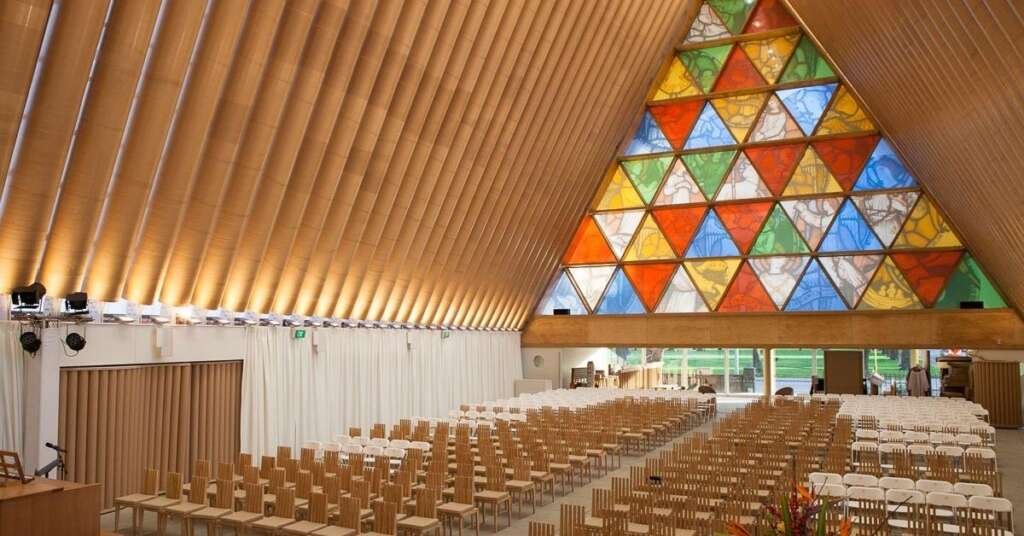
The iconic Cardboard Cathedral in Christ church illustrating paper tubes combined with timber and glass.
Credits: https://www.studiomatrx.org/guides/cardboard-cathedral
The Cardboard Cathedral, completed in 2013, combined paper tubes, timber, steel, and polycarbonate roofing to create a contemporary place of worship that could serve the community during recovery.
Far from feeling temporary, the building became a celebrated architectural landmark.
Natural daylight filters through the structure, while the exposed paper tubes create warmth, rhythm, and texture.
It became more than a replacement building. It became a symbol of resilience.
Paper Church: Simplicity With Emotion
Another remarkable project is the Paper Church, originally built after the Kobe earthquake.
Interior view of the Paper Church showcasing its circular paper tube structure.
Credits: https://www.designindaba.com/articles/creative-work/cardboard-city
The circular arrangement of paper columns creates a calm, contemplative atmosphere while demonstrating how modest materials can produce spaces of extraordinary emotional power.
The church later found a second life when it was dismantled, transported, and reconstructed in Taiwan.
This ability to relocate and reuse buildings reflects one of Ban’s core principles:
Architecture should adapt to people, not the other way around.
Designing for Sustainability Before It Became Mainstream
Long before sustainability became a defining conversation in architecture, Ban was already exploring recyclable materials and low-impact construction.
His philosophy extends beyond simply using environmentally friendly materials.
Instead, sustainability appears throughout the entire design process. He considers:
- Material sourcing
- Transportation
- Ease of construction
- Reusability
- Disassembly
- Waste reduction
- Local participation
The result is architecture that consumes fewer resources while remaining highly functional.
His work reminds us that sustainable architecture isn’t only about technology. Sometimes it’s about using less.
Engineering Hidden Inside Simplicity
One misconception about Ban’s work is that paper architecture is simple because the material appears ordinary.
In reality, these buildings involve rigorous structural engineering. Paper tubes are carefully tested for:
- Load-bearing capacity
- Moisture resistance
- Fire performance
- Joint detailing
- Structural stability
Protective coatings, thoughtful detailing, and hybrid construction systems allow the material to perform reliably even in demanding environments.
The apparent simplicity is supported by sophisticated engineering.
Lessons Every Architect Can Learn
Shigeru Ban’s projects offer lessons that extend far beyond paper construction.
| Design Principle | Why It Matters |
| Design with empathy | Places people before aesthetics |
| Challenge material assumptions | Innovation often begins with curiosity |
| Build sustainably | Reduce waste without compromising quality |
| Keep systems simple | Simplicity improves accessibility and efficiency |
| Design for adaptability | Buildings should evolve with changing needs |
These principles are increasingly relevant as architects respond to climate change, housing shortages, and resource limitations.
Can These Ideas Inspire India?
India faces a growing demand for affordable, climate-responsive, and resource-efficient construction.
While paper architecture may not replace conventional buildings on a large scale, Ban’s design philosophy offers valuable inspiration.
Lightweight modular systems could support:
- Disaster relief housing
- Temporary educational facilities
- Healthcare infrastructure
- Exhibition pavilions
- Community gathering spaces
Several architecture schools and research institutions in India have already begun experimenting with recyclable materials and modular construction methods, reflecting a broader shift toward sustainable building practices.
The lesson is not necessarily to build everything from paper.
It is to rethink what architecture can be built from.
Architecture That Places Humanity at the Center
Perhaps the greatest strength of Shigeru Ban’s work is that it never treats architecture as an isolated object.
His buildings respond to human emotion.
Whether someone has lost their home after an earthquake or is visiting a museum, his spaces aim to create comfort, dignity, and optimism.
That emotional quality is often what distinguishes meaningful architecture from merely impressive architecture.
His projects remind us that great design isn’t measured only by scale or budget. Sometimes it is measured by the lives it improves.
A Legacy Built on Compassion and Innovation
Shigeru Ban’s paper architecture continues to influence architects across the globe because it represents something larger than material experimentation.
It demonstrates that architecture can be innovative without being extravagant, sustainable without sacrificing beauty, and temporary without losing significance.
In a profession increasingly challenged by environmental concerns, rapid urbanization, and humanitarian crises, Ban’s work offers an alternative vision, one where design begins with responsibility and creativity works hand in hand with compassion.
For architects, students, and designers, his projects serve as an enduring reminder that the future of architecture may not always lie in discovering new materials. Sometimes, it lies in seeing familiar ones with entirely new possibilities.