

Share This Article
Airports are among the most complex public spaces in the world. Every day, thousands or even millions of passengers move through terminals with different destinations, languages, cultures, and travel needs. Despite this complexity, a well-designed airport can make the entire journey feel smooth, intuitive, and surprisingly stress-free. This is where airport interior design plays a crucial role.
Modern airport interior design is no longer limited to aesthetics. Today, airport terminals are carefully planned environments that influence passenger behavior, improve wayfinding, reduce anxiety, increase operational efficiency, and create memorable travel experiences. From the moment a traveler enters the terminal until they board their flight, every design element contributes to guiding movement and enhancing comfort.
As global air travel continues to grow, airport architecture and interior design have become essential tools for creating passenger-centric airports that prioritize convenience, safety, and wellbeing.
Why Airport Interior Design Matters
Air travel can be stressful. Long queues, security procedures, unfamiliar surroundings, flight schedules, and time constraints often create anxiety for passengers. Airport interior design helps address these challenges by creating spaces that are easy to navigate and comfortable to experience.
A thoughtfully designed airport terminal reduces confusion and allows passengers to move naturally from one point to another. When travelers can easily find check-in counters, security checkpoints, boarding gates, lounges, retail spaces, and baggage claim areas, their stress levels decrease significantly.
Modern airport design focuses on creating intuitive environments where passengers require minimal effort to understand where they need to go. This approach improves both passenger satisfaction and airport efficiency.
The Psychology Behind Airport Terminal Design
Successful airport interior design is deeply connected to environmental psychology. Designers study how people interact with spaces and use these insights to shape passenger experiences.
Travelers often experience heightened emotions when flying. Some may be excited, while others feel nervous or rushed. Airport interiors are designed to provide visual clarity, reduce cognitive overload, and create a sense of control.
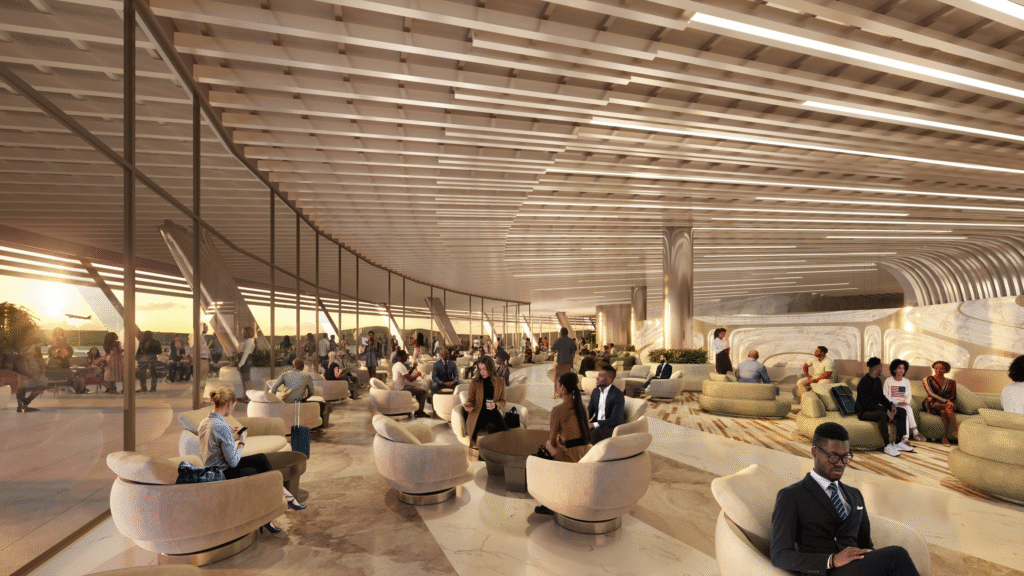
Open layouts, natural light, clear sightlines, and organized circulation paths help passengers feel oriented and comfortable. When people can visually understand a space, they are less likely to experience stress or confusion.
The best airport terminal design creates a feeling of confidence, allowing travelers to focus on their journey rather than worrying about finding their way.
How Airport Layouts Guide Passenger Movement
One of the primary objectives of airport interior design is managing passenger flow. Airports function like highly coordinated transportation hubs where movement must remain smooth and efficient.
Designers carefully organize the terminal layout to create logical sequences of movement. Check-in areas are positioned near entrances, followed by security checkpoints, departure lounges, retail zones, and boarding gates. This progression feels natural and minimizes unnecessary walking or backtracking.
Wide circulation corridors, spacious waiting areas, and strategically placed intersections prevent congestion during peak travel periods. Passenger flow analysis allows designers to identify bottlenecks and create layouts that maintain efficiency even under heavy traffic conditions.
This focus on circulation planning is one of the reasons why modern airport terminals can accommodate growing passenger numbers while maintaining a comfortable travel experience.
Also read – Top 7 World’s Most Anticipated Airports Taking Shape
The Role of Wayfinding in Airport Interior Design
Wayfinding is one of the most critical components of airport terminal design. Effective wayfinding systems help passengers navigate large and often unfamiliar environments with ease.
Airport wayfinding combines signage, digital displays, color coding, spatial organization, architectural landmarks, and visual cues. Together, these elements guide travelers through the terminal without creating confusion.
Good wayfinding begins before passengers even enter the building. Parking facilities, drop-off zones, terminal entrances, and transportation connections are designed to provide clear directional guidance.
Inside the terminal, consistent signage and intuitive layouts help passengers understand where they are and where they need to go next. This reduces stress and improves the overall airport experience.
Natural Light and Its Impact on Passenger Comfort
Natural light has become a defining feature of contemporary airport interior design. Large glass facades, skylights, and expansive windows are increasingly integrated into airport terminals around the world.
Exposure to daylight helps regulate biological rhythms and creates a more pleasant indoor environment. Travelers often spend several hours inside terminals, making access to natural light particularly important.
Bright and naturally illuminated spaces feel larger, cleaner, and more welcoming. Natural light also reduces feelings of confinement, which can be especially valuable in busy airport environments.
In addition to enhancing passenger wellbeing, daylight contributes to energy efficiency and sustainability goals, making it a valuable design strategy for modern airports.

Creating Stress-Free Waiting Areas Through Interior Design
Waiting is an unavoidable part of air travel. Whether passengers are waiting for check-in, security clearance, boarding, or connecting flights, they spend significant time in terminal waiting areas.
Airport interior design transforms these waiting periods into comfortable and productive experiences. Designers create seating arrangements that accommodate different passenger preferences, including individual travelers, families, business professionals, and groups.
Comfortable furniture, charging stations, quiet zones, workspaces, and relaxation areas help improve passenger satisfaction. Modern airport lounges and waiting areas are increasingly designed to resemble hospitality environments rather than traditional transportation facilities.
These enhancements make waiting less stressful and contribute to a more positive travel experience.
The Importance of Biophilic Design in Airports
Biophilic design is becoming an increasingly popular trend in airport interior design. This approach incorporates natural elements such as plants, water features, natural materials, and greenery into interior spaces.
Research consistently shows that exposure to nature can reduce stress and improve mental wellbeing. Airports are using biophilic design to create calmer and more restorative environments for travelers.
Indoor gardens, green walls, natural wood finishes, and landscaped gathering spaces help soften the highly technical nature of airport infrastructure. These features create visual interest while contributing to a more relaxing atmosphere.
Many of the world’s leading airports now integrate biophilic design principles as part of their passenger experience strategies.
Technology and Smart Airport Interior Design
Technology is reshaping airport terminal design in significant ways. Digital innovation has become a central component of modern airport interiors, helping improve convenience and operational efficiency.
Self-check-in kiosks, biometric screening systems, digital wayfinding displays, mobile integration, and real-time flight information systems allow passengers to navigate airports more independently.
Smart airport design ensures that technology is seamlessly integrated into the physical environment. Rather than creating complexity, these systems simplify the travel process and reduce waiting times.
As airports continue adopting digital solutions, interior design will play an important role in ensuring these technologies remain user-friendly and accessible.
Retail, Dining, and Passenger Experience Design
Today’s airports function as lifestyle destinations rather than simple transportation hubs. Retail and dining experiences have become major components of airport interior design.
Strategically positioned shops, restaurants, cafes, and experiential zones create opportunities for passengers to relax and enjoy their time in the terminal. Interior designers carefully plan these spaces to encourage exploration while maintaining smooth passenger circulation.
The integration of retail environments within airport terminals also generates significant revenue while enhancing passenger satisfaction. A well-designed commercial zone can transform idle waiting time into an engaging experience.
This balance between movement, commerce, and comfort represents a key objective of contemporary airport terminal planning.
Accessibility and Inclusive Airport Design
Modern airport interior design prioritizes accessibility and inclusivity. Airports must accommodate passengers of all ages, abilities, and backgrounds.
Universal design principles ensure that spaces remain accessible to wheelchair users, elderly travelers, families with children, and passengers with sensory or mobility challenges.
Clear signage, barrier-free circulation, tactile guidance systems, accessible seating, and inclusive facilities help create equitable travel experiences. By focusing on accessibility, airports become more welcoming and user-friendly for everyone.
Inclusive airport design is not simply a regulatory requirement—it is an essential aspect of creating world-class passenger experiences.
The Future of Airport Interior Design
The future of airport interior design will be shaped by technology, sustainability, passenger wellbeing, and operational flexibility. As air travel continues to evolve, airports will increasingly focus on creating environments that are intuitive, efficient, and emotionally supportive.
Future airport terminals are expected to incorporate more adaptive spaces, advanced digital technologies, sustainable materials, and wellness-focused environments. Designers will continue exploring new ways to reduce passenger stress while improving comfort and convenience.
The airport of the future will not simply move people from one location to another. It will provide a seamless, enjoyable, and memorable experience that begins the moment travelers enter the terminal.
Conclusion
Airport interior design is far more than a matter of aesthetics. It is a powerful tool that shapes passenger movement, influences behavior, improves efficiency, and reduces travel-related stress. Through thoughtful planning, intuitive wayfinding, natural light, biophilic elements, smart technology, and passenger-centered design strategies, modern airport terminals create smoother and more enjoyable travel experiences.
As airports compete to deliver exceptional passenger journeys, the importance of airport interior design will only continue to grow. The most successful terminals are those that guide travelers effortlessly through complex environments while making them feel comfortable, confident, and connected throughout their journey.