

Share This Article
Every city has a rhythm. Some grow slowly, layer by layer, while others rise suddenly, reshaped by bold ideas and fearless ambition. In modern India, many of these changing skylines share a common thread—the vision of architect Hafeez Contractor.
To understand who he is, you have to look beyond blueprints and buildings. His story is not just about architecture; it’s about scale, speed, confidence, and the belief that cities must evolve to survive.
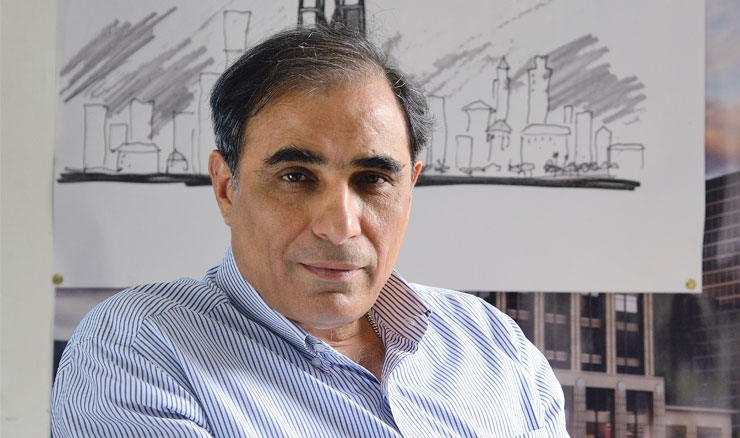
Where the Journey Began
Mumbai has always been a city of contradictions—crowded yet aspirational, chaotic yet ambitious. Growing up in this environment shaped Hafeez Contractor’s early relationship with space and structure. Buildings weren’t just static objects; they were living responses to density, climate, and human need.
While most people saw congestion, he saw opportunity. While others saw limitations, he imagined vertical solutions. Architecture, for him, was never about decoration—it was about solving problems at scale.
Learning the Language of Buildings
Architecture school refined his instincts, but real learning happened on site—watching buildings come together brick by brick, understanding how design decisions affect construction, cost, and timelines. Later exposure to international education expanded his thinking even further, introducing him to global ideas of urban planning, skyscraper engineering, and large-scale developments.
This blend of Indian realities and global thinking would become the foundation of his design approach.
The Rise of a Practice That Changed the Game
When Hafeez Contractor started his own architectural practice, the ambition was clear from day one. The firm didn’t grow slowly—it expanded rapidly, mirroring the pace of India’s urban growth.
What set him apart was not just creativity, but decisiveness. Developers trusted him because he understood economics as well as aesthetics. Cities trusted him because his designs responded to density rather than fighting it.
As India began building upward, Hafeez Contractor was already there—sketching towers, planning townships, and rethinking how people could live vertically without losing comfort or identity.
Buildings That Became Landmarks
Some architects design buildings. Others design moments in a city’s memory.
From residential towers that redefined luxury living to massive mixed-use developments that function like self-contained cities, Contractor’s projects didn’t just fill plots—they reshaped neighborhoods.
His skyscrapers became symbols of aspiration. His townships became templates for integrated urban living. Airports, stadiums, IT parks, and commercial hubs carried his design DNA—efficient, bold, and unmistakably contemporary.
Each project carried the same underlying question:
How will people experience this space, every single day?

A Design Philosophy Rooted in Reality
Hafeez Contractor has always believed that architecture must respond to its time. For a country growing as rapidly as India, this meant accepting height, density, and speed—not resisting them.
He has consistently advocated vertical growth as a solution to urban sprawl, especially in land-scarce cities. For him, tall buildings are not symbols of excess, but tools for efficiency—if designed responsibly.
His style is not about signature forms or visual drama. It is about clarity of intent. Clean lines, strong proportions, and practical layouts define his work more than ornamentation ever could.
Also Read – Exploring the Raw Beauty of Laurie Baker Architecture
Criticism, Confidence, and Conviction
No architect working at this scale escapes criticism. And Hafeez Contractor has faced plenty of it. But what defines him is his refusal to design defensively.
He designs with conviction. He believes cities must evolve, even if the process is uncomfortable. His work reflects confidence—sometimes controversial, always unapologetic.
This fearlessness has made him one of the most talked-about architects in the country, shaping debates around urban growth, sustainability, and the future of Indian cities.
More Than an Architect
Beyond buildings, Hafeez Contractor has influenced how architecture is discussed in India. His work is studied, debated, admired, and challenged—often all at once.
He represents a generation of architects who didn’t wait for permission to think big. Instead, they matched the ambition of a growing nation and gave its cities a new vertical identity.
The Legacy Still Rising
Hafeez Contractor’s story is not a completed chapter. His buildings continue to rise, his ideas continue to shape conversations, and his influence continues to stretch across skylines.
To ask “Who is architect Hafeez Contractor?” is really to ask a larger question—
Who decides how our cities grow?
In India’s modern architectural story, his answer is written not in words, but in steel, concrete, and glass—standing tall against the skyline.