

Share This Article
Explore the distinct features of Hoysala temples, from intricate carvings to the unique star-shaped floor plans. Understand the historical significance and architectural brilliance of these ancient structures in India.
The Hoysala temples, found predominantly in the Indian state of Karnataka, are not only architectural marvels but also cultural symbols of a bygone era. These temples, built during the Hoysala dynasty (between the 10th and 14th centuries), showcase an incredible blend of artistry, engineering, and religious devotion. What truly sets them apart from other temples in India is their distinctive architectural style—a style that has fascinated scholars, architects, and history enthusiasts for centuries.
In this blog, we will explore what makes Hoysala temples unique, their distinct architectural features, and why they continue to be celebrated as masterpieces of Indian temple architecture.
1. Distinctive Star-Shaped Floor Plan:
One of the first things that make Hoysala temples unique is their star-shaped floor plan. Unlike the conventional rectangular or square temples, Hoysala temples often feature a star-shaped design. This design is not just for aesthetic purposes—it is rooted in symbolism and engineering innovation.
The star-shaped structure represents the cosmic and spiritual balance, a theme commonly reflected in Hindu architecture. It also allows for a more intricate, multi-faceted layout that maximizes space, enhances the temple’s sense of depth, and allows for better ventilation and light flow. This innovative planning makes Hoysala temples feel expansive and inviting, offering a tactile and visual experience to those who enter.
Key Example:
- The Chennakesava Temple at Somanathapura is a perfect example of this star-shaped floor plan. Its complex, multi-lobed design enhances both its structural strength and aesthetic appeal.
2. Intricate Sculptures and Carvings:
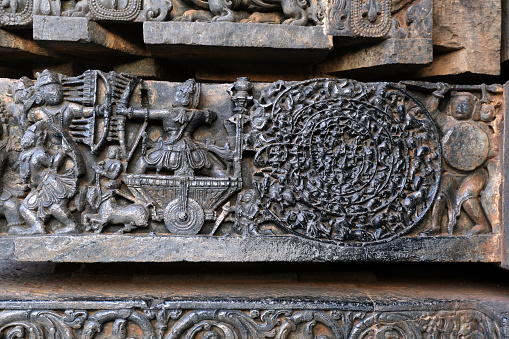
Hoysala temples are renowned for their exquisite carvings and intricate sculptures. These sculptures cover the walls of the temples and often depict mythological stories, deities, kings, and daily life. The Hoysala style of carving is detailed and precise, featuring fluid, realistic forms that set it apart from other Indian temples.
The craftsmanship reflects a deep understanding of the human body, wildlife, and nature. These sculptures are incredibly detailed, capturing expressions, movements, and attire with impressive precision.
The iconic Hoysala elephants, which often appear in relief carvings, are another example of their extraordinary craftsmanship. These elephants are sculpted with such realism that they almost seem to come to life.
Key Example:
- The Hoysaleswara Temple at Halebidu is renowned for its elaborate stone carvings. The walls are filled with beautifully detailed sculptures of gods and goddesses, mythological scenes, and famous battles.
3. Use of Soapstone:
Another defining feature of Hoysala temples is the extensive use of soapstone as a primary building material. Soapstone is a fine-grained, soft stone that allowed the sculptors to carve intricate and delicate designs, making it a popular choice for the temples’ architectural details and sculptural artwork.
Soapstone is not only easy to carve but also durable, which has allowed many Hoysala temples to stand the test of time. The stone’s smooth texture also adds to the temple’s beauty, especially when polished or weathered.
Key Example:
- The Keshava Temple at Somnathpur is one of the most well-known temples made primarily of soapstone. The intricate carvings and fine detailing showcase the full potential of this material.

4. Multiple Towers (Shikharas):
While many temples in India have a single tower or shikhara above the sanctum, Hoysala temples are known for having multiple smaller towers, which add to the distinctiveness of their design. The multiple towers give these temples an imposing and towering presence, even from a distance. This structural feature also reflects the Hoysala rulers’ ambition and grandeur.
The multiple towers are decorated with a series of detailed sculptures, which are often religious in nature, but sometimes also reflect royal portraits or mythological motifs.
Key Example:
- The Hoysaleswara Temple at Halebidu is a prime example of a multi-towered temple, with its central structure surrounded by smaller towers, each adorned with intricate carvings.
Also Read – How Long Did It Really Take to Build the Great Wall of China? The Answer May Surprise You
5. Unique Art Forms and Iconography:
In addition to the usual depictions of gods, goddesses, and mythological stories, Hoysala temples often feature unique iconography. These temples include several royal figures, such as kings and queens, often depicted in their finest attire and royal regalia. The portrayal of royalty in the temples highlights the close relationship between religion and power during the Hoysala era.
Moreover, the iconography often integrates symbols of the Hoysala dynasty, such as the elephant, which was a symbol of the dynasty’s strength and heritage.
Key Example:
- The Kedareshvara Temple in Bankapura is an excellent example of Hoysala art, with depictions of the royal family and dynastic symbols intricately carved into the walls.
6. Innovation in Temple Layout and Structure:
Hoysala temples are known for their innovative layouts. Unlike many other temples that follow a basic mandala (square) pattern, the Hoysala temples often have a circular or rectangular layout with multiple interconnected halls. This design allows for better flow of movement and spiritual progression as devotees move from one space to another during their worship.
The central sanctum, which houses the main deity, is often surrounded by multiple smaller shrines or ambulatory paths that encourage interaction with the space from multiple directions. This fluidity is not only practical but also symbolic, reflecting the continuous movement of time and the connection between the divine and human realms.
Key Example:
- The Chennakesava Temple in Belur is another masterpiece of layout design, with its innovative temple space divided into multiple sections, creating a more dynamic experience for devotees.
7. Cultural Significance and Preservation:
The Hoysala temples are not just architectural landmarks; they are also cultural treasures that preserve the art, religion, and values of the time. The detailed carvings and sculptures provide a window into ancient life, including fashion, rituals, warfare, and spiritual beliefs. These temples reflect the Hoysala dynasty’s contributions to art and architecture and are a testament to the importance of preserving cultural heritage for future generations.
In recent years, efforts have been made to restore and protect these temples. Organizations, both government and non-government, have taken steps to maintain these iconic structures for posterity, ensuring their place in the world’s architectural history.
Conclusion
The Hoysala temples are a unique blend of architectural brilliance, spiritual depth, and artistic innovation. From their star-shaped floor plans to their intricate carvings and use of local materials, these temples stand as testaments to the ingenuity of the Hoysala dynasty. They represent a deep connection between culture, heritage, and architecture, offering a glimpse into the sophisticated design philosophy of ancient India.
By continuing to explore and study these iconic structures, we can gain a greater appreciation for the rich architectural heritage that India has to offer. The Hoysala temples remain, to this day, a symbol of India’s architectural excellence, beautifully blending the past with the present.