

Share This Article
A beautifully designed room can still feel incomplete when the lighting is wrong. Furniture may be perfectly placed, colours may work together and finishes may look impressive during the day, yet the entire space can become flat or uncomfortable after sunset. This is exactly where Layered Lighting makes a difference.
Instead of depending on one ceiling light to illuminate an entire room, Layered Lighting combines different types of light for different purposes. Ambient lighting provides general illumination, task lighting helps with specific activities, and accent lighting highlights architecture, objects and visual details.
Understanding Layered Lighting can completely change how a home looks and feels. More importantly, it can make spaces easier to use, more comfortable to live in and visually more interesting without necessarily adding expensive fixtures everywhere.
What Is Layered Lighting and Why Does It Matter?
Layered Lighting is the practice of using multiple sources of light within the same space rather than expecting a single fixture to perform every function. Each source has a particular role, and together they create a balanced lighting environment.
A room with good Layered Lighting might include recessed ceiling lights for overall brightness, a pendant above a dining table, a lamp beside a sofa and concealed lighting highlighting artwork or architectural surfaces. Every light contributes differently to the overall experience.
The biggest advantage of Layered Lighting is flexibility. A room rarely serves only one purpose throughout the day. A living room might be bright and active in the afternoon, comfortable for conversation in the evening and softly illuminated while watching television at night.
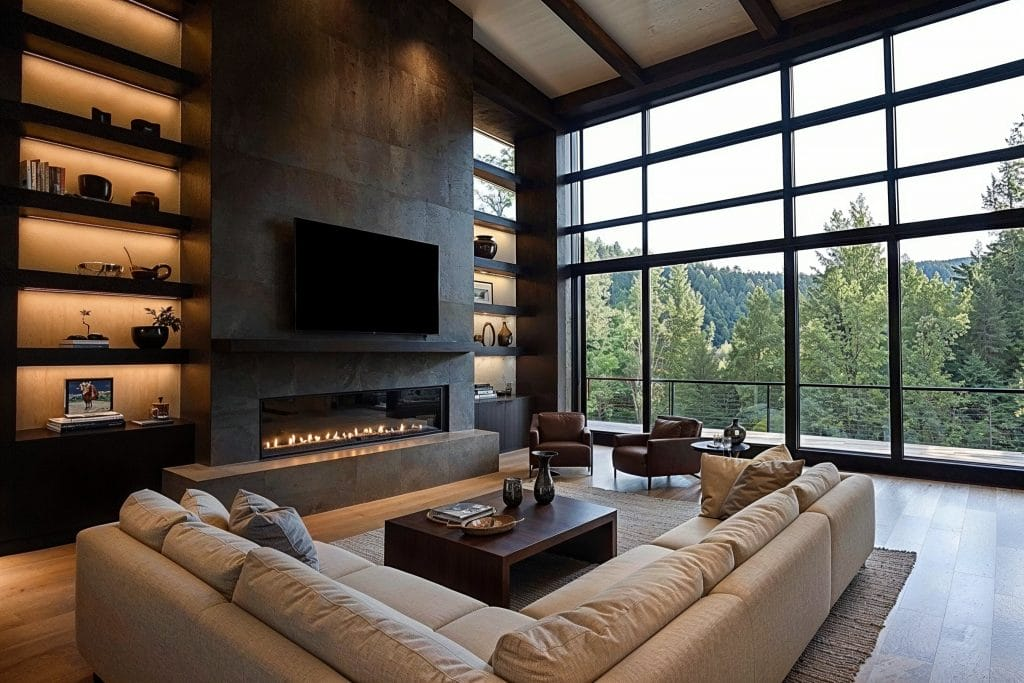
The Three Layers That Make Good Lighting Work
Most Layered Lighting schemes are built around three fundamental types of light: ambient lighting, task lighting and accent lighting. Understanding the difference between these three makes planning a room significantly easier.
Ambient lighting establishes the overall level of illumination. Task lighting provides focused light where an activity is performed. Accent lighting draws attention to a specific object, material or architectural feature.
The secret behind successful Layered Lighting is not simply installing all three. It is understanding how much of each layer the room actually requires and how they should work together without competing visually.
Also read – A Better Mumbai Skyline: Powerful Architecture Lessons for the Future
Ambient Lighting: The Foundation of Layered Lighting
Ambient lighting is the general illumination that allows you to move comfortably through a space. It is usually the first layer people notice when entering a room and forms the foundation of most Layered Lighting plans.
Ceiling-mounted fixtures, recessed lights, track lighting, chandeliers, large pendants and indirect ceiling illumination can all provide ambient light. Natural daylight also forms an important part of the ambient lighting condition during the day.
However, ambient lighting should not automatically mean extremely bright lighting. Effective Layered Lighting creates enough general illumination while leaving space for other lighting layers to add depth and character.
When ambient lighting becomes too dominant, everything receives approximately the same visual importance. That is often why rooms illuminated only with rows of downlights can feel functional but surprisingly lifeless.
Task Lighting: Putting Light Exactly Where It Is Needed
Task lighting is designed around activity. Reading, cooking, applying makeup, working at a desk, studying, dressing and preparing food all require more focused illumination than general ambient lighting may provide.
In Layered Lighting, task lights should be positioned according to what someone actually does in the space. A desk lamp should illuminate a work surface, kitchen lighting should reach countertops and bedside lighting should make reading comfortable without filling the entire bedroom with brightness.
Pendant lights over kitchen islands, under-cabinet lights, vanity lights, reading lamps and desk lamps are common examples. The important idea is that Layered Lighting places light where it serves a practical purpose rather than simply increasing the brightness of the whole room.
Good task lighting can also reduce visual strain because the eyes are not forced to work harder in areas where detailed activity takes place.
Accent Lighting: The Layer That Gives a Room Character
If ambient lighting helps you see the room and task lighting helps you use it, accent lighting helps you notice it.
Accent lighting is one of the most expressive elements of Layered Lighting because it directs attention. It can highlight a painting, textured wall, sculpture, bookshelf, plant, architectural column or material surface.
Wall washers, adjustable spotlights, picture lights, concealed LED strips and carefully positioned decorative fixtures are often used as accent lighting. The intention is not necessarily to make the room brighter. It is to create a visual hierarchy.
Without accent lighting, beautifully designed details can disappear after dark. With thoughtful Layered Lighting, those details become part of the evening experience of the interior.

Why One Ceiling Light Rarely Does Enough
Many homes still rely on a single central ceiling fixture. While it may technically illuminate the room, it rarely produces the most comfortable or attractive result.
One overhead source can create harsh shadows while making the room appear visually flat. Corners can remain dark, faces can be poorly lit and important design details may disappear completely.
Layered Lighting solves this problem by distributing illumination across different heights and locations. Light can come from the ceiling, walls, furniture level, floor level and concealed architectural details.
The result is not simply more light. Successful Layered Lighting creates better light.
Layered Lighting for the Living Room
The living room is one of the best places to understand why Layered Lighting matters because it usually supports several activities. People may entertain guests, read, watch television, work casually or simply relax in the same room.
Ambient lighting can come from recessed lights, ceiling fixtures or indirect cove lighting. Task lighting might appear as a floor lamp beside a reading chair or a table lamp near a sofa.
Accent lighting can then highlight artwork, wall textures, shelving or architectural elements. When these sources are combined, Layered Lighting allows the room to move between brighter social settings and softer evening environments.
Instead of switching every fixture on simultaneously, different combinations can create different moods.
Layered Lighting for the Bedroom
Bedroom lighting should support both function and relaxation. Extremely bright overhead illumination alone can make the room feel unnecessarily clinical, particularly late in the evening.
A good Layered Lighting plan may begin with soft ambient lighting and then introduce bedside lamps, wall-mounted reading lights or pendants as task lighting. Accent lighting can gently illuminate artwork, curtains, a headboard wall or architectural niches.
Wardrobe lighting can form another functional layer, particularly in deeper storage areas where ceiling light may not reach effectively.
The biggest advantage of Layered Lighting in bedrooms is control. Someone getting ready in the morning requires a very different lighting condition from someone preparing to sleep.
Layered Lighting for the Kitchen
Kitchen lighting needs more than attractive pendant lights. Since chopping, cooking, cleaning and food preparation involve detailed tasks, lighting must be planned around work surfaces.
Ambient illumination provides overall brightness, while under-cabinet lights can illuminate counters that may otherwise fall into shadow. Pendants above an island can provide task lighting while simultaneously becoming decorative features.
Accent lighting can highlight open shelving, cabinetry or selected materials. In a well-designed kitchen, Layered Lighting combines practicality with atmosphere rather than forcing homeowners to choose between the two.
A particularly important principle is to avoid placing all light behind the person using a countertop. Proper Layered Lighting ensures the working surface itself receives sufficient illumination.
Layered Lighting for the Dining Room
Dining rooms offer an opportunity to make lighting feel more intimate and expressive. A pendant or chandelier above the table often becomes the visual centre, but it should not be expected to light the entire room.
In effective Layered Lighting, the central fixture works alongside softer ambient illumination. Wall lights, concealed lights or adjustable spotlights can introduce another layer around the perimeter.
Accent lighting may highlight art, crockery displays or textured walls. The combined effect can make the dining table feel important without leaving everything surrounding it in darkness.
Dimmers are particularly valuable here because Layered Lighting can transition from brighter family meals to softer lighting for longer evening gatherings.
Layered Lighting for the Bathroom
Bathrooms require careful balancing because the lighting needs to be functional while still supporting a calm atmosphere.
General ceiling illumination can provide ambient light, but vanity lighting deserves special attention. A light directly above a mirror can create shadows under the eyes and chin, whereas balanced lighting near both sides of the face is often much more useful.
Layered Lighting in bathrooms can also include concealed illumination beneath vanities, inside niches or around mirrors. These layers introduce depth while providing softer alternatives to strong ceiling lights.
The goal of Layered Lighting here is to create enough clarity for grooming while maintaining the comfortable atmosphere expected from a contemporary bathroom.
Layered Lighting for a Home Office or Study
Working from home has made lighting quality increasingly important. A room may look bright enough while still producing glare, screen reflections or uncomfortable contrast around a workstation.
Good Layered Lighting starts with balanced ambient illumination and adds a dedicated desk or task light. The task light should illuminate documents and working surfaces without reflecting directly into a computer screen.
Indirect lighting behind or around the workspace can help soften the visual difference between a bright monitor and a dark background.
For longer working hours, Layered Lighting becomes less about decoration and more about creating a visually comfortable environment that can adapt between daytime and evening use.
Layered Lighting for Hallways and Circulation Spaces
Hallways are often treated as purely functional areas, which means lighting design is frequently reduced to a row of ceiling lights. Yet circulation spaces offer excellent opportunities for architectural lighting.
Ambient lighting still provides safe movement, but Layered Lighting can introduce wall washers, concealed floor-level illumination, artwork lighting or decorative sconces.
These additional layers can make a corridor feel less like leftover space and more like an intentional part of the interior.
In homes with artwork or textured walls, Layered Lighting can turn a hallway into a simple gallery experience without requiring major decorative additions.
Colour Temperature Can Change the Entire Effect
Even the best Layered Lighting arrangement can feel inconsistent if different fixtures use dramatically different colour temperatures.
Warm white lighting generally creates a softer, more relaxed atmosphere, while cooler white lighting can appear clearer and more energetic. The appropriate choice depends on the room, materials and activity.
Consistency is particularly important when several fixtures are visible together. A warm pendant beside noticeably cooler downlights can make Layered Lighting appear uncoordinated even when the fixture placement itself is good.
Instead of choosing lamps independently, consider how the colour of every layer will interact once all the lights are switched on.
Brightness Is Not the Same as Good Lighting
One of the most common lighting mistakes is assuming that adding more fixtures automatically improves a room.
A successful Layered Lighting scheme is based on contrast, control and distribution rather than maximum brightness. Some surfaces should appear brighter while others can remain quieter.
When every area receives identical illumination, the eye has nowhere particular to look. Layered Lighting intentionally varies brightness so that important zones become visually prominent while supporting areas remain softer.
This is why a room with fewer strategically positioned lights can sometimes feel richer than a room filled with powerful ceiling fixtures.
Dimmers Make Layered Lighting Far More Flexible
Lighting needs to change throughout the day, which is why dimmers can significantly improve Layered Lighting.
A living room that requires brighter illumination while cleaning may need only soft light during a film. A dining space used for morning work may need more brightness than the same space during dinner.
Dimmers allow each lighting layer to be adjusted rather than simply switched on or off. This makes Layered Lighting much more responsive to real life.
Smart lighting controls can take this idea further by creating different scenes for activities such as working, entertaining, dining or relaxing.
How Decorative Lights Fit Into Layered Lighting
Decorative lighting includes fixtures chosen partly because of how they look rather than only because of how much illumination they produce.
Chandeliers, statement pendants, sculptural lamps and decorative sconces can all contribute to Layered Lighting, but their role should be considered carefully. Some may provide ambient light, others may provide task light, and some may primarily create atmosphere.
A beautiful fixture does not automatically mean the lighting around it is complete.
The strongest Layered Lighting designs treat decorative fixtures as part of a wider composition rather than asking one statement piece to handle every lighting requirement.
Common Layered Lighting Mistakes That Make Rooms Feel Flat
The first common mistake is relying almost entirely on recessed downlights. Downlights are useful, but repeating them evenly across every ceiling often produces uniform rather than atmospheric illumination.
Another mistake is ignoring shadows. Poorly positioned task lighting can leave countertops, mirrors and desks darker exactly where light is needed.
Using too many competing decorative fixtures can also weaken Layered Lighting. When every pendant, wall light and lamp demands attention, the room loses visual hierarchy.
Good Layered Lighting is less about collecting fixtures and more about deciding what should be illuminated, why it should be illuminated and how strongly it should stand out.
Layered Lighting Should Respond to Architecture
Lighting works best when it develops alongside the architecture and interior design rather than being added at the end.
A textured wall may benefit from grazing light. A deep shelf may require integrated illumination. A double-height space may need fixtures positioned very differently from those in a conventional room.
This architectural approach makes Layered Lighting feel integrated instead of decorative.
Rather than asking, “Where should another light go?”, designers can ask, “What should someone notice or be able to do here?” That shift in thinking usually produces stronger Layered Lighting.
Natural Light Is Part of the Layering Strategy Too
Layered Lighting does not begin only after sunset. Daylight plays an important role in how artificial illumination should be planned.
Rooms with large windows may require relatively little ambient lighting during the day but still need task illumination in deeper corners. Spaces with limited daylight may require a different balance from morning onward.
Window orientation, curtains, blinds and reflective surfaces also influence the amount and character of natural light entering a room.
Thinking about daylight alongside artificial Layered Lighting creates spaces that transition more comfortably from morning to night.
Layered Lighting Can Make Small Rooms Feel More Spacious
Small rooms are often overlit because homeowners assume additional brightness will make them feel larger. In reality, one extremely bright overhead source can make boundaries and corners appear more obvious.
Layered Lighting can create a greater sense of depth by illuminating different planes. A softly lit wall, glowing shelf or highlighted artwork can visually extend the space beyond its centre.
Lighting vertical surfaces is particularly useful because the eye perceives brightness across the walls rather than only on the floor.
This is one reason thoughtful Layered Lighting can make compact apartments feel richer and more spacious without changing their physical dimensions.
Layered Lighting Can Also Improve Material Expression
Materials behave differently under different types of light. Stone can reveal texture when illuminated from an angle, polished surfaces can reflect light dramatically and timber can appear warmer under appropriate lighting.
Layered Lighting gives designers greater control over how these materials are experienced after dark.
A textured surface illuminated uniformly may appear flat. The same surface under directional accent lighting can suddenly reveal shadows, depth and variation.
This relationship between illumination and material is particularly important in interiors where architectural finishes are intended to become visual features.
The Best Layered Lighting Changes With the Room
There is no single formula that works for every space. A kitchen requires stronger task lighting than a lounge, while a bedroom generally benefits from softer ambient illumination than a workspace.
This is why Layered Lighting should begin with the activities, architecture and atmosphere of each room.
The three basic categories remain useful, but their proportions change. A home office may rely heavily on task lighting, while a gallery-like hallway may depend more on accent lighting.
Successful Layered Lighting responds to how a space is actually used rather than simply following a decorative trend.
Why Layered Lighting Makes Interiors Feel More Finished
Professional interiors often feel visually richer not because they contain more objects, but because lighting helps reveal different parts of the design.
Layered Lighting creates visual rhythm. The eye moves from an illuminated wall to a pendant, from a table lamp to artwork, rather than experiencing the entire room at one brightness level.
This variation makes an interior feel considered.
Even relatively simple rooms can gain depth when Layered Lighting highlights the right surfaces and provides comfortable illumination at several heights.
Layered Lighting Is About Control, Not Complexity
At first, Layered Lighting can sound like a complicated technical system involving dozens of fixtures. It does not have to be.
A modest room might use only a ceiling fixture, a floor lamp and one accent light. If each has a clear purpose, those three sources can create effective Layered Lighting.
The principle matters more than the quantity of fixtures.
Ask what the room needs for general visibility, what activities require additional light and what features deserve attention. Those three questions naturally correspond to ambient, task and accent lighting.
Layered Lighting Can Completely Change a Room
Lighting should do more than make a room visible. It should support the activities taking place within it, reveal architectural details and help create the atmosphere people experience throughout the day.
That is the real strength of Layered Lighting.
Ambient lighting establishes the foundation. Task lighting makes everyday activities easier. Accent lighting introduces focus, character and depth. When these three elements work together, Layered Lighting can make even a relatively simple interior feel significantly more considered.
Instead of asking how many lights a room needs, think about how the space needs to function at different times. A room may need bright illumination in the morning, focused lighting while working and softer illumination in the evening.
The best Layered Lighting adapts to all three.
Whether you are planning a new home, renovating an apartment or simply improving an existing room, Layered Lighting is one of the most effective ways to improve both function and atmosphere. It allows the same architecture to feel energetic, intimate, practical or dramatic depending on how each lighting layer is used.
Ultimately, Layered Lighting is not about filling a ceiling with fixtures. It is about placing the right light in the right place for the right reason.
And when Layered Lighting is planned well, you may notice the room more than you notice the lights themselves.