
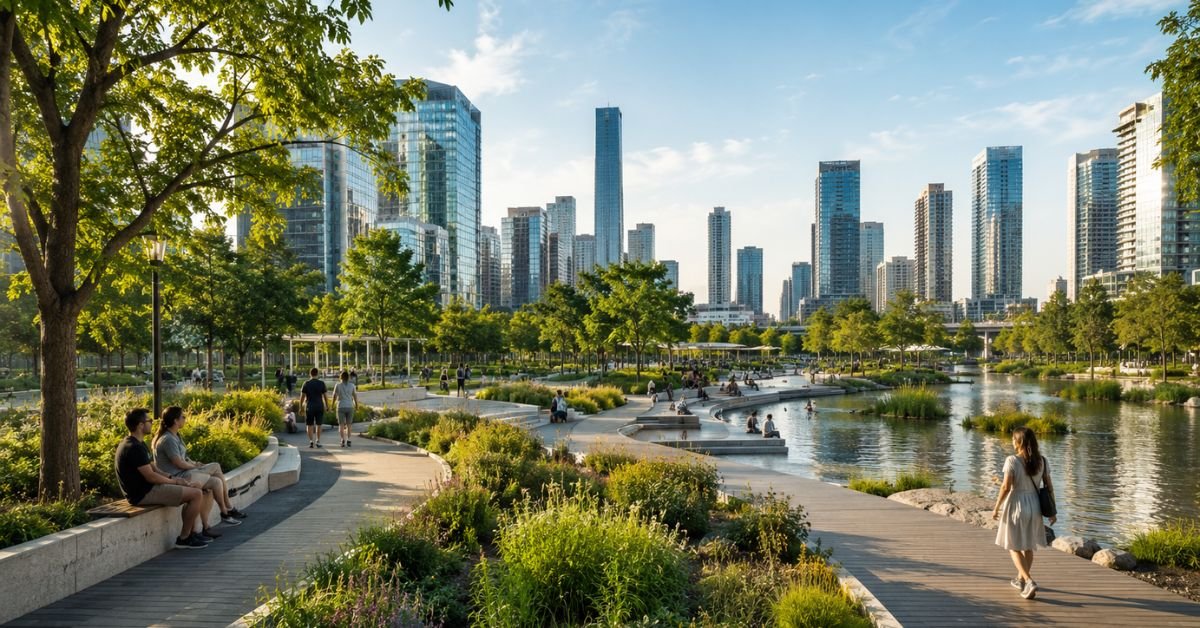
Landscape architecture shapes experiences. It connects buildings with nature, infrastructure with communities and urban development with environmental responsibility.
When people think of great cities, iconic skylines often come to mind first. Yet what makes those cities memorable isn’t only their architecture, it’s the experience of walking through a shaded avenue, relaxing in a vibrant public square, cycling along a waterfront or discovering a hidden urban park.
As climate change, rapid urbanization, and population growth challenge cities worldwide, landscape architects are designing outdoor environments that not only look beautiful but also improve public health, strengthen ecosystems, and make urban life more enjoyable.
More Than Gardens: What Is Landscape Architecture?
Landscape architecture is the design and planning of outdoor spaces that balance functionality, ecology, culture, and aesthetics. It encompasses everything from neighborhood parks and botanical gardens to university campuses, public plazas, green roofs, waterfront developments, and entire urban districts.
Unlike traditional gardening or beautification projects, landscape architecture addresses complex urban issues such as stormwater management, biodiversity, pedestrian movement, heat reduction, and social interaction.
In many ways, it acts as the connective tissue between architecture and urban planning.
Why Outdoor Spaces Matter More Than Ever
Modern cities are becoming increasingly dense, leaving less room for nature. At the same time, people are seeking healthier lifestyles, cleaner environments, and stronger community connections.
Landscape architecture responds to these changing needs by transforming outdoor spaces into multifunctional environments.
| Urban Challenge | Landscape Architecture Solution |
| Rising temperatures | Tree canopies, shaded parks, green roofs |
| Flooding | Rain gardens, wetlands, permeable pavements |
| Air pollution | Urban forests and green corridors |
| Social isolation | Parks, plazas, community spaces |
| Mental stress | Restorative landscapes and natural environments |
Rather than treating green spaces as leftover land, today’s cities recognize them as essential urban infrastructure.
The Power of Public Spaces
One of the greatest strengths of landscape architecture is its ability to create places where people naturally come together.
A thoughtfully designed public space encourages movement, conversation, recreation, and cultural exchange. Whether it’s a family picnic in a city park, an outdoor concert, or children playing in an open plaza, these experiences strengthen communities in subtle yet meaningful ways.
Cities with successful public spaces often feel more inclusive because they provide equal access to everyone, regardless of age or background.
Great landscape architecture doesn’t simply design beautiful parks, it creates environments that people genuinely want to use.
Nature as Urban Infrastructure
One of the biggest shifts in modern landscape architecture is viewing nature as critical infrastructure rather than decoration.
Trees reduce urban temperatures, absorb carbon dioxide, improve air quality, and provide shade for pedestrians. Wetlands naturally filter water and reduce flood risks. Green roofs improve insulation while creating habitats for birds and pollinators.
Instead of relying solely on engineered systems, cities increasingly combine natural processes with urban development.
This approach not only makes cities more resilient but also reduces long-term maintenance costs and environmental impact.
Learning from Cities Around the World
Some of the world’s most admired cities have invested heavily in landscape architecture, proving that outdoor spaces can become defining elements of urban identity.
Singapore: A City in a Garden
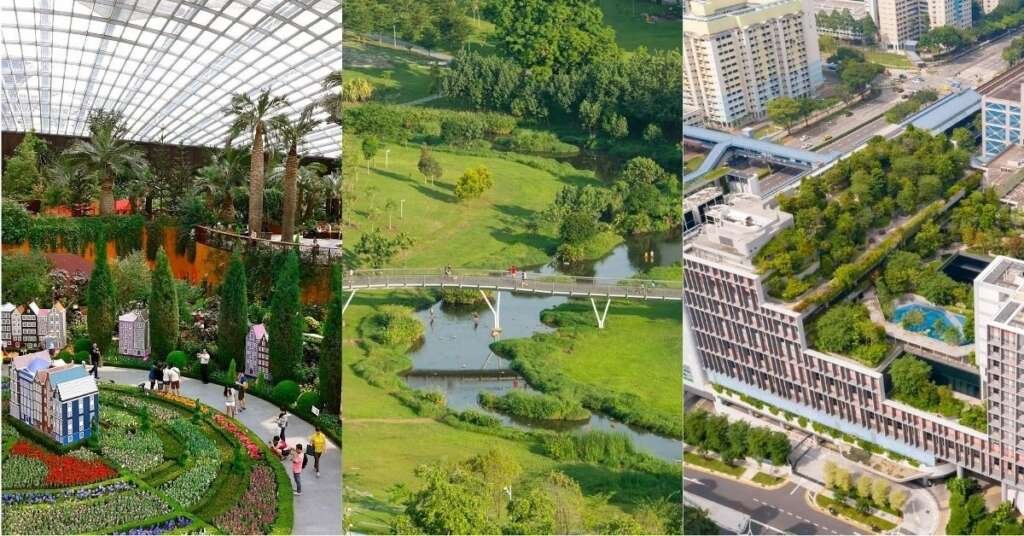
Above Gardens by Bay, Bishan-Ang Mo Kio Park, and Kampung Admiralty
Credits: https://henninglarsen.com/projects/kampung-admiralty
Singapore has become a global benchmark for integrating greenery into dense urban environments. Rather than separating nature from development, the city has embedded landscape architecture into residential neighborhoods, commercial districts, and transportation infrastructure.
Projects like Gardens by the Bay, Bishan-Ang Mo Kio Park, and Kampung Admiralty demonstrate how ecology, recreation, and architecture can coexist seamlessly.
The result is a city where green spaces are experienced as everyday environments rather than occasional destinations.
The High Line, New York
Credits: https://www.metalocus.es/en/news/highline-new-york-phase-ii
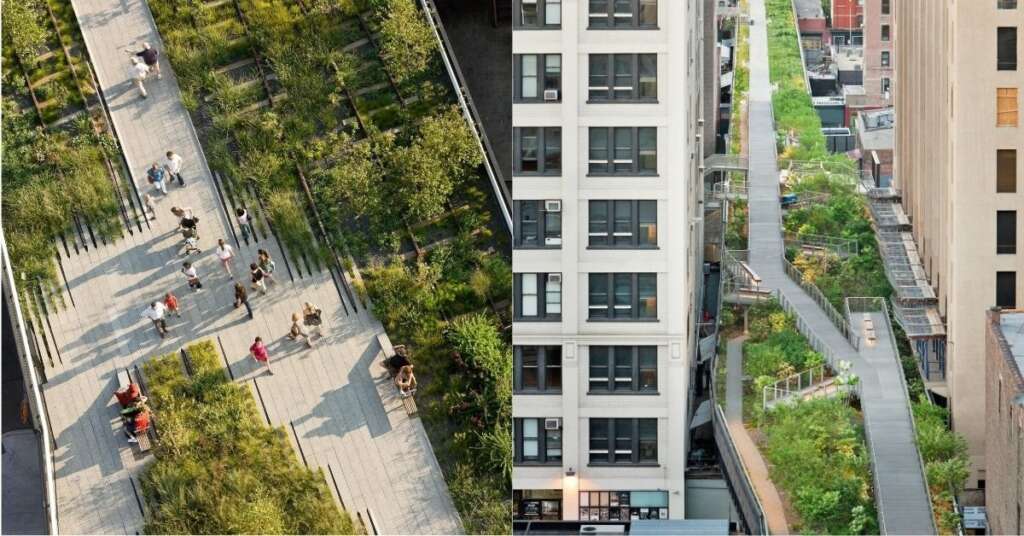
What was once an abandoned elevated railway has become one of the world’s most celebrated examples of adaptive landscape architecture.
The High Line transformed obsolete infrastructure into a linear public park filled with native planting, public art, and social spaces, proving that neglected urban assets can be reimagined into thriving community destinations.
Madrid Río, Spain
Credits: https://landscape.coac.net/en/node/2394
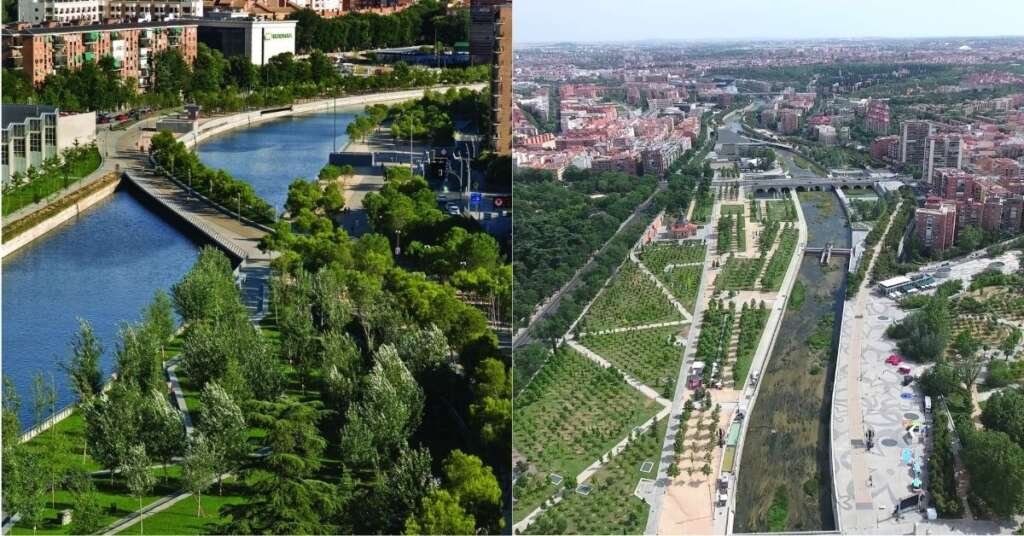
Madrid Río converted a highway corridor into an expansive network of parks, cycling paths, playgrounds, and riverside promenades.
The project significantly improved public access to the river while reconnecting neighborhoods that had long been divided by infrastructure.
It stands as an excellent example of landscape architecture restoring both ecological systems and community life.
India’s Growing Landscape Architecture Movement
India is also embracing landscape-led urban development.
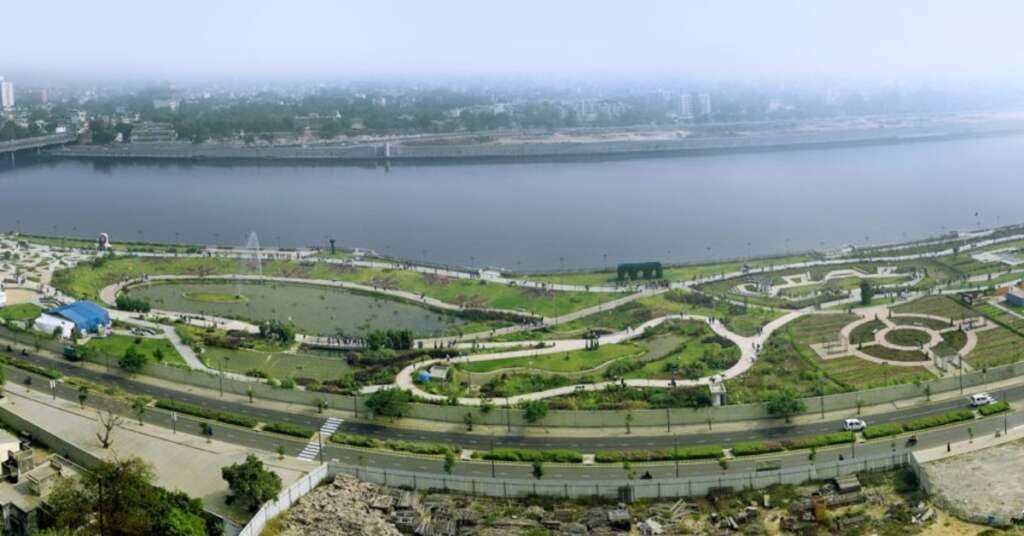
Credits: https://www.sabarmatiriverfront.com/img/park-banner-img.jpg
Projects such as the Sabarmati Riverfront in Ahmedabad have transformed neglected river edges into active public spaces that support recreation, cultural events, and pedestrian movement.
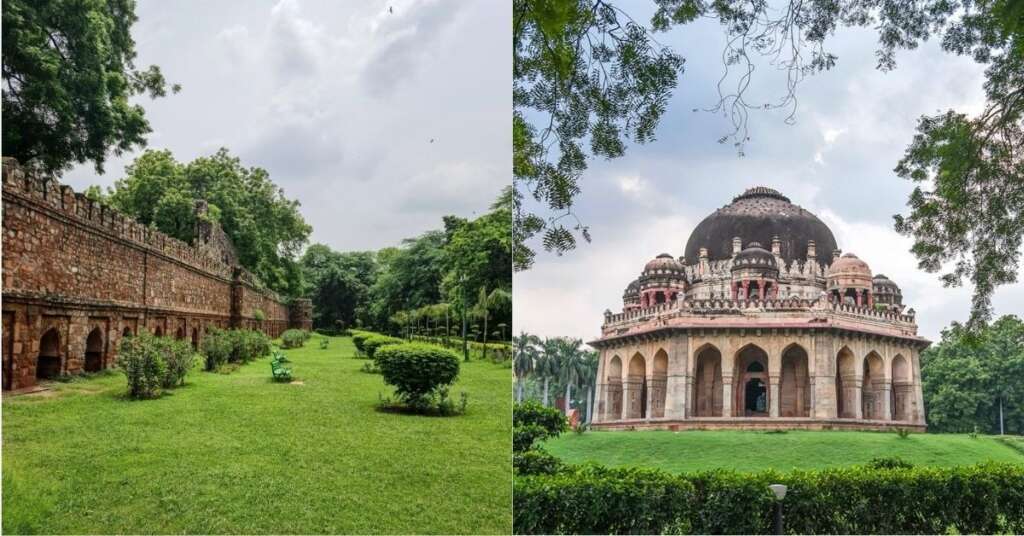
Similarly, Lodhi Garden in New Delhi demonstrates how heritage landscapes can successfully combine history, biodiversity, and public life within a modern city.
Many new institutional campuses, IT parks, and mixed-use developments are also prioritizing landscape architecture as an essential design component rather than an afterthought.
As Indian cities continue to expand, integrating green infrastructure will become increasingly important for improving livability and environmental resilience.
Designing for Climate Resilience
Landscape architecture has become one of the most effective tools for helping cities adapt to climate change.
Instead of relying only on concrete flood barriers or drainage systems, landscape architects design parks that temporarily store stormwater, wetlands that naturally filter runoff, and tree-lined streets that reduce the urban heat island effect.
These nature-based solutions work with environmental systems rather than against them.
The Human Side of Landscape Design
While environmental performance is important, landscape architecture ultimately succeeds when it improves people’s daily lives.
Think about your favorite outdoor place.
Perhaps it’s a quiet park bench beneath a large tree, a lively public square filled with cafés, or a waterfront promenade where you enjoy evening walks.
These places leave lasting impressions because they create emotional connections.
Good landscape architecture understands human behavior. It considers how people gather, rest, exercise, interact, and experience seasons throughout the year.
Sometimes the most memorable urban spaces are the simplest ones.
Key Principles Behind Successful Landscape Architecture
Rather than focusing only on visual appeal, successful outdoor spaces are designed around several fundamental principles.
| Principle | Why It Matters |
| Accessibility | Inclusive spaces for all ages and abilities |
| Sustainability | Supports biodiversity and environmental health |
| Comfort | Shade, seating, lighting, and walkability |
| Flexibility | Spaces that adapt to different activities |
| Identity | Reflects local culture and character |
| Connectivity | Links neighborhoods and public transport |
When these principles work together, cities become more livable, resilient, and engaging.
Technology Is Changing Landscape Architecture
Digital tools are helping landscape architects design smarter outdoor environments.
Today, designers use environmental simulations to study sunlight, wind movement, water flow, and vegetation growth before construction begins.
Smart irrigation systems reduce water consumption, while environmental sensors help monitor soil conditions and plant health.
Technology isn’t replacing nature, it is helping designers understand and protect it more effectively.
Also Read: How School Architecture Can Improve Learning, Safety and Creativity
Why Landscape Architecture Matters for Future Cities
As cities continue to evolve, success will no longer be measured solely by the height of skyscrapers or the scale of infrastructure.
Instead, it will increasingly depend on the quality of everyday public life.
Can children safely play outdoors?
Can elderly residents comfortably walk through shaded streets?
Can neighborhoods remain cool during extreme summers?
Can biodiversity coexist alongside urban growth?
Landscape architecture provides practical answers to all these questions.
It reminds us that cities function best when buildings and nature are designed together rather than separately.
Final Thoughts
Landscape Architecture is quietly transforming cities into healthier, greener, and more connected places. It proves that the spaces between buildings are just as important as the buildings themselves. From climate resilience and biodiversity to public health and community interaction, well-designed landscapes influence nearly every aspect of urban life.
As architects, planners, and city leaders continue to rethink the future of urban environments, landscape architecture will remain at the heart of creating cities that are not only sustainable but also enjoyable to live in. After all, great cities are remembered not just for their skylines, but for the parks, pathways, gardens, and public spaces where everyday life unfolds.




Join the discussion