

Share This Article
Let me ask you something—when you picture the Great Wall of China, what comes to mind?
A massive stone serpent winding through misty mountains? Centuries-old towers standing defiant against time? A “bucket list” backdrop for that iconic hiking selfie?
What most people don’t realise is that the Great Wall isn’t just a wall. It’s a story. A staggeringly long one—written in earth, brick, blood, and dynasties.
And when I first looked into how long it took to build, I expected a single answer. Maybe 50 years? A century, tops?
I was way off.
So, how many years did it take to build the Great Wall of China?
Well, depending on how you define “building,” the answer could be 20 years… or over 2,000 years.
The Wall That Refused to Be Finished
Let’s rewind to the 7th century BCE. That’s when individual Chinese states first began building small defensive walls against nomadic invasions. These weren’t the stone giants we see today—they were made from tamped earth and wood.
Fast forward to 221 BCE: China is unified under Emperor Qin Shi Huang of the Qin Dynasty. He’s the one often (wrongly) credited with building the Great Wall.
What he actually did was connect several regional walls and fortify them to form a unified defense system in the north. This phase alone took about 20 years, involving hundreds of thousands of laborers, including soldiers, peasants, and prisoners. Conditions were brutal. Many didn’t survive.
But here’s the thing—this wall didn’t last. Most of it eroded over time.
Enter: The Ming Dynasty
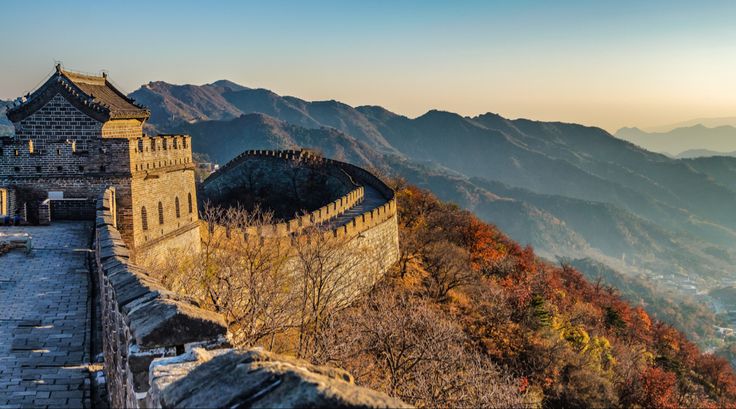
The most iconic parts of the Wall—the stone pathways, the watchtowers, the dramatic zig-zags over mountain ridges—those came much later, during the Ming Dynasty (1368–1644 CE). The Ming rulers faced constant threats from northern tribes and needed something stronger, more permanent.
So they built. And built. Over 276 years, they constructed nearly 8,850 kilometers of wall using bricks, stones, lime mortar, and ingenious military planning.
This is the version we travel to see today.
So… What’s the Final Count?
If you consider every phase—from the early state walls in the 7th century BCE to the final expansions in the 17th century CE—it took over 2,300 years for the Great Wall to take shape.
Let that sink in.
That’s longer than the existence of most modern nations. It spanned multiple empires, dynasties, rulers, and building techniques. It was torn down, rebuilt, and reimagined again and again.
Why Does This Matter?
To me, the timeline of the Great Wall isn’t just a fun fact—it’s a metaphor.
We often think of great achievements as sudden. As if someone woke up one morning, picked up some bricks, and built a world wonder.
But real change? Real legacy? That takes time. Revisions. Reinvention. Perseverance.
The Great Wall isn’t just a monument—it’s a timeline carved into the earth. A collective memory of a civilisation constantly reshaping itself.
And it reminds us: Sometimes, the most powerful things are built slowly.
A Few More Fascinating Wall Facts
- The Wall once stretched over 21,000 kilometers in total length (including trenches and natural barriers).
- You can’t actually see it from space with the naked eye (sorry, urban myth).
- The Wall passes through 15 Chinese provinces, and much of it is still undiscovered or unpreserved.
What Can We Learn from a Wall That Took Centuries?
So the next time someone asks how long it took to build the Great Wall of China, you can smile and say, “Oh, just about 20 centuries or so.”
Because some walls weren’t made to go up quickly. They were made to last.
