

Share This Article
Mumbai is a city where architecture rarely gets the luxury of being simple. Space is scarce, land values are high, the climate is demanding, heritage sits beside rapid redevelopment, and every new project becomes part of an exceptionally dense urban fabric.
It is perhaps why some of the top architects in Mumbai have developed such distinctive approaches to design. From high-rise residential towers and commercial developments to cultural institutions, experimental homes, public spaces and carefully restored heritage buildings, Mumbai-based architects have influenced the architectural identity of India far beyond the city itself.
There is, of course, no single official ranking of the best architects in Mumbai. Architecture is too subjective for that. A practice designing a large urban development cannot really be judged by the same criteria as one restoring a century-old landmark or creating a highly crafted private residence.
This list brings together 10 of the most recognised and influential architects associated with Mumbai, arranged in alphabetical order, based on the strength of their work, contribution to architectural discourse, industry recognition and distinctive design philosophies.
Why Mumbai Continues to Produce Some of India’s Best Architects
Mumbai offers almost every architectural condition imaginable within one metropolitan region. Colonial buildings and Art Deco neighbourhoods coexist with glass towers, industrial precincts, informal settlements, coastal landscapes and some of India’s most ambitious residential and commercial developments.
For the leading architects in Mumbai, designing here means constantly negotiating density, infrastructure, climate, community, heritage and rapidly changing lifestyles. That complexity has created architecture firms capable of working across dramatically different scales.
Many famous architects in Mumbai have consequently built practices that are recognised across India and internationally while continuing to respond to Indian materials, construction techniques, cultural conditions and urban realities.
Also read – Indian Bazaars: 7 Powerful Architecture Lessons for Modern Retail Design
Abha Narain Lambah: Giving Mumbai’s Architectural Heritage a New Life
Anyone interested in Mumbai heritage architecture will quickly encounter the work of Abha Narain Lambah.
Her Mumbai-based practice specialises in architectural conservation, building restoration, adaptive reuse, historic interiors, museums and conservation management. Over the years, the firm has worked on numerous heritage landmarks across India while building a particularly strong relationship with Mumbai’s historic architecture.
In Mumbai, her practice has been associated with the restoration and conservation of landmarks such as the Royal Opera House, David Sassoon Library, Byculla Station, Keneseth Eliyahoo Synagogue and historic structures belonging to the University of Mumbai.
Lambah’s place among the leading architects in Mumbai is significant because great architecture does not always mean creating something new. In a city where development pressures can easily erase older layers of history, conservation becomes an equally powerful act of design.
Her work demonstrates how sensitive restoration can preserve architectural character while helping historic buildings remain relevant to contemporary life.
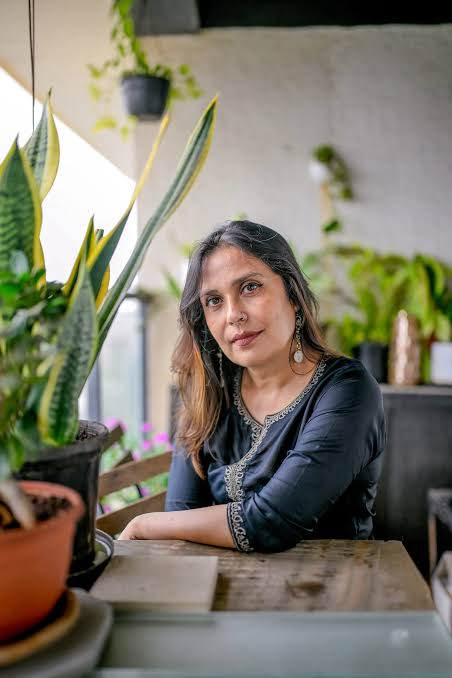
Bijoy Jain: Where Architecture, Craft and Nature Become One
The work of Bijoy Jain and Studio Mumbai represents a quieter and more tactile approach to architecture.
While Mumbai is often associated with speed, vertical growth and large-scale construction, Jain’s architecture pays close attention to material, craftsmanship, landscape, air, water and the process of making.
Studio Mumbai works closely with artisans, craftspeople and builders, allowing construction knowledge to become a central part of the design process. Timber, stone, metal, lime and earth are treated not simply as finishes but as elements that shape the atmosphere and experience of a space.
Bijoy Jain’s work has received significant international recognition and has helped introduce a wider global audience to an Indian architectural language that values slowness, material intelligence and craftsmanship.
Among the top architects in Mumbai, Jain stands out because his architecture proves that powerful design does not always need dramatic scale. A carefully framed opening, a handmade junction or the relationship between a room and its landscape can often create an equally memorable experience.

Brinda Somaya: Protecting History While Designing for the Future
Mumbai’s architectural story would be incomplete without the contribution of Brinda Somaya.
Founder of Somaya & Kalappa Consultants, Somaya has built a career spanning architecture, urban conservation, restoration, institutional design and large-scale corporate projects.
Her work consistently explores the relationship between the past and the future. Instead of treating historic structures as objects that should simply be preserved, her practice often examines how older buildings can evolve, adapt and remain useful.
One of the most recognised projects associated with the firm is the restoration of the Rajabai Clock Tower and Library at the University of Mumbai, an important landmark within the city’s architectural heritage.
What makes Brinda Somaya one of the best architects in Mumbai is the breadth of her thinking. New construction, conservation and adaptive reuse are not treated as isolated disciplines but as parts of a wider architectural responsibility.
Her work asks an important question for rapidly changing cities: what should be preserved, what should be transformed and how can architecture carry cultural memory into the future?
Hafeez Contractor: The Architect Who Changed the Scale of Urban India
Few architects are as closely associated with the dramatic transformation of urban India as Hafeez Contractor.
Based in Mumbai, Architect Hafeez Contractor has worked across residential developments, townships, commercial buildings, institutional campuses, hospitality, sports facilities and large-scale urban projects.
His influence is particularly visible in India’s high-rise residential development and the expansion of large private townships. Projects associated with the practice include Hiranandani Gardens in Powai, DLF Cyber City and DY Patil Stadium, among many others.
Contractor’s contribution lies largely in understanding the enormous scale and complexity of contemporary development in India.
For those researching the top architects in Mumbai for large-scale architecture, his name is difficult to overlook. His practice has participated in shaping the visual and physical identity of several Indian cities over the last few decades.
Whether one agrees with every stylistic decision or not, his influence on contemporary Indian urban architecture remains undeniable.
Kapil Gupta: Reimagining Familiar Building Types
As co-founder of Serie Architects and principal of its Mumbai studio, Kapil Gupta has developed a design approach strongly rooted in architecture, urbanism and the study of building types.
Rather than rejecting traditional or familiar architectural models, Serie Architects often studies them closely and reinterprets them for contemporary needs.
Projects such as The Tote in Mumbai demonstrate this approach. The project transformed an existing structure into a hospitality environment that responded closely to the mature rain trees surrounding the site.
More recent residential projects continue to explore the relationship between urban density, tropical climate and changing forms of living.
Kapil Gupta is therefore an important name among contemporary architects in Mumbai because his architecture is driven not only by appearance but by typology and spatial organisation.
His work demonstrates how familiar ideas such as courtyards, verandahs, clusters and traditional circulation systems can be reconsidered within modern urban conditions.
Nuru Karim: Pushing Architecture Into the Digital Age
Nuru Karim, founder and principal of NUDES, represents the experimental and computational side of Mumbai architecture.
His studio operates at the intersection of art, architecture, digital fabrication, geometry and environmental design. Karim’s background includes architectural education at the Architectural Association in London as well as professional experience with Zaha Hadid Architects.
That influence can be seen in the practice’s interest in unconventional geometry, computational processes and expressive architectural forms.
Projects such as the BookWorm Pavilion and Ismaili Jamatkhana and Community Centre demonstrate how experimental design can be applied to educational, community and cultural environments.
Karim’s work is particularly relevant for those searching for innovative architects in Mumbai because it explores how advanced digital tools can become part of architectural thinking rather than simply being used to produce drawings.
Through experimentation with fabrication, form and performance, NUDES contributes to a younger and more technologically driven direction within contemporary Indian architecture.
Rahul Mehrotra: Reading the City Before Designing the Building
For Rahul Mehrotra, architecture extends far beyond the boundaries of an individual building.
An architect, urbanist, educator and founder principal of RMA Architects, Mehrotra has spent decades examining how cities grow, adapt and change.
His practice has worked across architecture, urban design, conservation, institutional projects, residences, cultural spaces and adaptive reuse. At the same time, his writing and academic work have contributed significantly to conversations around Indian cities and urbanisation.
What makes Mehrotra one of the most influential architects in Mumbai is his ability to understand architecture as part of a larger social and urban system.
Buildings are rarely treated as isolated objects. Instead, they become part of broader questions surrounding temporality, infrastructure, public life, culture and rapid urban transformation.
For architecture students and professionals studying urban architecture in Mumbai, Rahul Mehrotra remains an especially important figure because his influence exists not only through built work but through research, teaching and critical architectural discourse.
Rooshad Shroff: Where Architecture Meets Craft and Luxury
Rooshad Shroff occupies an interesting position between architecture, interiors, furniture and collectible design.
His Mumbai-based studio is known for a highly integrated approach where architecture, interior design, furniture and craftsmanship are often considered as part of one complete spatial experience.
Traditional Indian skills such as stone carving, embroidery and handcraft frequently appear within highly contemporary environments.
This combination gives Shroff’s work a distinctive identity, particularly within high-end residential, hospitality and luxury design.
For clients exploring luxury architects in Mumbai, his practice demonstrates how bespoke detailing can become much more than decoration. Materials, furniture and craftsmanship are used to create spaces with a strong sense of character and refinement.
His work also reflects a broader movement within contemporary Indian design where traditional making techniques are being reinterpreted rather than simply preserved.
Sameep Padora: Architecture That Turns Constraints Into Ideas
Sameep Padora represents a research-oriented direction within contemporary Mumbai architecture.
Founder of sP+a, Padora has developed a practice that explores architecture through context, construction methods, material systems, urban conditions and the hidden opportunities found within difficult sites.
The associated research initiative sPare further investigates questions surrounding housing, urbanism and architecture in India.
One of Padora’s most recognised projects is the Maya Somaiya Library in Maharashtra. Instead of creating a conventional school library, the practice designed a brick-vaulted structure that emerges almost like an extension of the ground itself.
The roof becomes a playable landscape, allowing architecture and public space to merge.
It is this willingness to question conventional building types that makes Sameep Padora one of the best contemporary architects in Mumbai.
His work often demonstrates that limitations such as budgets, compact sites or construction constraints do not necessarily reduce architectural possibilities. They can instead become the starting point for stronger ideas.
Sanjay Puri: Sculptural Architecture Designed Around Climate
Few contemporary Indian architects are as instantly recognisable as Sanjay Puri.
Mumbai-based Sanjay Puri Architects has developed a wide-ranging portfolio encompassing residential architecture, offices, hospitality projects, institutional buildings and large commercial developments.
The practice is particularly known for expressive geometry, dramatic façades and the careful manipulation of natural light.
At the same time, many projects respond closely to India’s climatic conditions through screens, courtyards, shaded spaces, deep overhangs and strategic openings.
Rather than treating environmental response as something added later, Sanjay Puri’s architecture often allows climate itself to influence form.
This combination of performance and sculptural expression has made him one of the most visible names among the top architects in Mumbai.
For clients looking for contemporary architecture with a strong visual identity, Sanjay Puri Architects remains one of the most recognised practices in India today.
What Makes These Top Architects in Mumbai Stand Out?
What makes the top architecture firms in Mumbai interesting is not that they follow one common architectural style.
In fact, the strongest names in the city often approach architecture from completely different directions.
Abha Narain Lambah and Brinda Somaya demonstrate the importance of architectural conservation. Bijoy Jain brings design closer to craftsmanship and landscape. Hafeez Contractor works at metropolitan scale, while Kapil Gupta explores typology and urban form.
Nuru Karim experiments with computational design, Rahul Mehrotra examines architecture through the larger city, Rooshad Shroff explores craftsmanship and luxury, Sameep Padora uses research and constraints as design tools, and Sanjay Puri transforms climate into expressive architectural form.
That diversity is precisely what makes architecture in Mumbai so compelling.
How to Choose the Best Architect in Mumbai for Your Project
The most famous architect is not automatically the best architect for every project.
Someone planning a luxury residence may need a very different design practice from a developer commissioning a high-rise, an institution developing a campus or an organisation restoring a historic property.
Before choosing among the best architects in Mumbai, study the architect’s previous projects, experience, scale of work and design philosophy.
Look beyond attractive photographs and examine planning, climate response, material choices, circulation, detailing and how completed buildings perform over time.
The strongest architect-client relationships usually emerge when the ambitions of the client align naturally with the architect’s design approach.
Mumbai Architecture Is Constantly Being Rewritten
Mumbai has never had one architectural identity.
Its skyline tells overlapping stories of colonial planning, Art Deco optimism, post-independence modernism, industrial growth, high-rise housing, heritage conservation and contemporary experimentation.
For anyone exploring the top architects in Mumbai, best architecture firms in Mumbai, famous architects in Mumbai, contemporary architects in Mumbai, residential architects in Mumbai, commercial architects in Mumbai, luxury architects in Mumbai or heritage conservation architects in Mumbai, these ten names provide an excellent starting point for understanding the remarkable breadth of architectural thinking emerging from the city.