

Share This Article
Some buildings impress us with their height. Others amaze us with technology or bold forms. But only a handful of buildings transform the way we experience architecture itself. Therme Vals, designed by Peter Zumthor, belongs to that rare category. Hidden within the Alpine village of Vals in Switzerland, this remarkable thermal bath is more than just a wellness destination, it is one of the greatest architectural masterpieces of the modern era.
Completed in 1996, Therme Vals has become a benchmark for architects, designers, and students around the world. The project demonstrates how architecture can create emotions through materials, light, sound, texture, and movement rather than relying on extravagant forms. Every wall, every stone slab, every beam of light, and every pool has been carefully composed to create an unforgettable sensory experience.
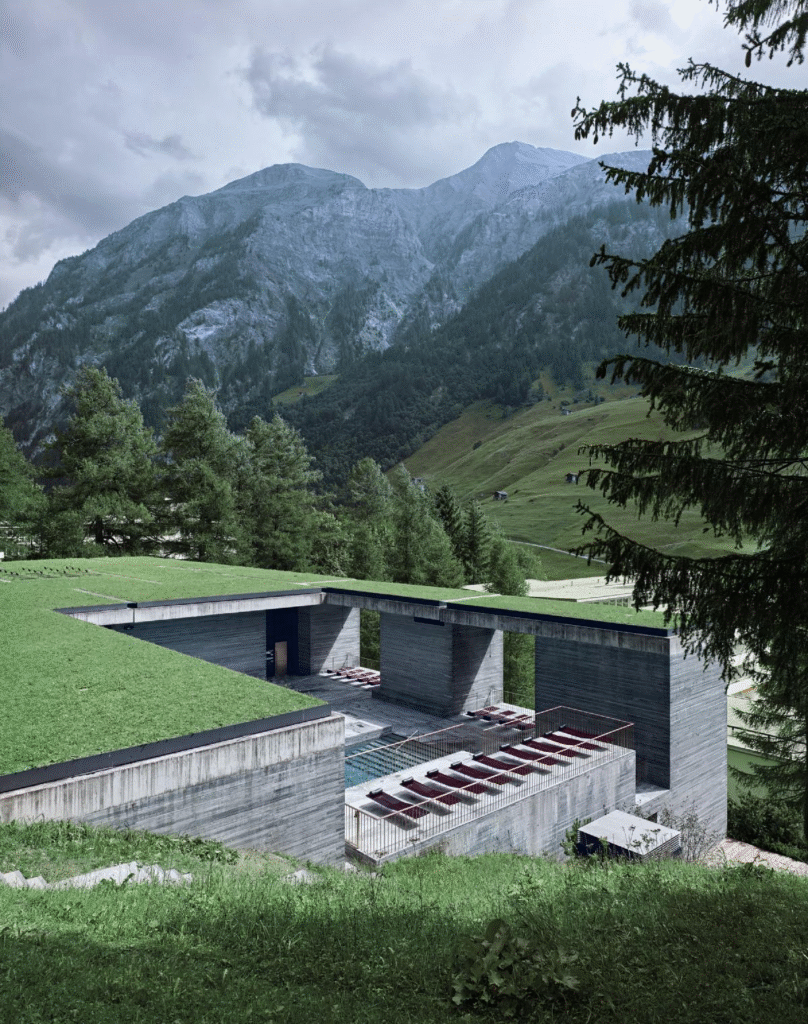
Unlike many contemporary buildings that compete for attention, Therme Vals quietly becomes part of its landscape. Peter Zumthor’s vision was never about creating a landmark. Instead, he wanted visitors to feel as though the building had always existed within the mountain. The result is an extraordinary example of stone architecture, minimalist architecture, and experiential architecture that continues to inspire designers decades after its completion.
A Vision Born from the Mountains
The success of Therme Vals begins with understanding its setting. Located in the Swiss Alps, the village of Vals has been famous for its naturally heated mineral springs for centuries. These thermal waters emerge from deep underground and have long attracted visitors seeking relaxation and healing.
Peter Zumthor approached the site with enormous respect. Rather than designing an object that dominates the landscape, he imagined the building as an extension of the mountain itself. This philosophy became the foundation of the project. Instead of sitting on top of nature, the architecture appears to emerge naturally from it.
This connection between architecture and landscape has become one of the defining qualities of Therme Vals architecture. Visitors often describe the building as feeling ancient, almost geological, despite being relatively modern. The project demonstrates how thoughtful architecture can strengthen the identity of a place instead of replacing it.
Stone That Becomes Architecture
Perhaps the most recognizable feature of Therme Vals is its extraordinary use of stone. More than 60,000 slabs of locally quarried Vals Quartzite were used throughout the building, creating walls that feel both monumental and intimate.
The stone is not simply a decorative material. It defines the entire architectural language. Every layer has been carefully stacked to create texture, rhythm, and depth. The precise arrangement gives the walls an almost geological appearance, making it difficult to distinguish where nature ends and architecture begins.
This exceptional use of local materials is one reason why Therme Vals is frequently studied as one of the world’s finest examples of materiality in architecture. Peter Zumthor believed that materials should possess honesty and authenticity. Instead of hiding construction behind finishes, he celebrated the natural beauty, weight, and texture of stone.
The tactile quality of the quartzite encourages visitors to touch the walls, observe subtle color variations, and appreciate how natural materials change under different lighting conditions. Every surface contributes to the overall architectural experience.
Water as the Heart of the Design
While stone gives Therme Vals its identity, water gives it life.
The thermal water flows through a carefully choreographed sequence of pools, each offering a unique atmosphere. Some spaces are warm and comforting, while others are intentionally cooler, creating contrast that heightens physical awareness. Visitors move slowly between these environments, experiencing changing temperatures, sounds, and emotions.
Instead of designing one large swimming pool, Peter Zumthor created a collection of interconnected spaces. Each pool feels like discovering another hidden chamber carved inside the mountain. This gradual exploration transforms a simple visit into an architectural journey.
Water is treated as an architectural material rather than merely a functional feature. Reflections animate the stone walls, ripples soften rigid geometry, and moving water constantly reshapes the atmosphere. The relationship between water and architecture becomes inseparable.
This sophisticated integration makes Therme Vals one of the most influential examples of thermal bath architecture ever created.
Also read – How Pearl Academy Jaipur Masters Passive Cooling Without Heavy Air Conditioning
The Magic of Light and Shadow
Light is often called the invisible building material at Therme Vals.
Natural daylight enters through carefully positioned openings in the roof rather than large windows. As sunlight filters into the bathing spaces, it gently washes across the stone surfaces, creating constantly changing patterns throughout the day.
Rather than flooding the interiors with brightness, Peter Zumthor deliberately embraced shadow. Some areas remain dim and contemplative, encouraging visitors to slow down and become more aware of their surroundings. Other spaces suddenly open to dramatic shafts of sunlight, producing moments of surprise and delight.
This thoughtful balance between light and darkness creates emotional richness rarely found in contemporary architecture. Visitors experience architecture not only visually but also psychologically.
The project demonstrates that great design does not always require more light, it requires better light.

Architecture That Engages Every Sense
Most buildings are experienced primarily through sight. Therme Vals is different because it engages every human sense simultaneously.
The texture of cool stone beneath bare feet, the gentle echo of dripping water, the warmth of steam rising from the pools, the scent of mineral water, and the subtle shifts in temperature all contribute to an immersive architectural experience.
Peter Zumthor often speaks about atmosphere as the true purpose of architecture. At Therme Vals, the atmosphere is carefully designed rather than accidentally created. Every sensory detail has been considered with remarkable precision.
This multi-sensory approach explains why visitors frequently remember not only what the building looked like but how it made them feel. Few architectural projects achieve such emotional depth.
Simplicity That Feels Monumental
One of the greatest lessons from Therme Vals is the power of restraint.
The building avoids unnecessary decoration, complex forms, or flashy materials. Instead, simple geometric volumes are carefully arranged to create rhythm, balance, and mystery. Thick stone walls separate spaces while narrow openings reveal glimpses of the next room.
This controlled sequence creates anticipation. Visitors are never shown everything at once. Instead, the architecture unfolds gradually, rewarding curiosity and slow movement.
Such simplicity requires extraordinary precision. Every proportion, every joint, and every material transition has been refined until nothing feels excessive. This disciplined approach has made Therme Vals an enduring icon of minimalist architecture.
The Emotional Journey Through Space
Therme Vals is often described as architecture that tells a story without words.
Instead of following a direct path, visitors wander through interconnected chambers, discovering intimate pools, quiet resting areas, and dramatic open spaces. The building encourages exploration rather than efficiency.
This carefully orchestrated circulation creates moments of surprise, solitude, reflection, and connection. Narrow corridors suddenly open into expansive bathing halls. Dark passages lead toward luminous spaces. Warm environments transition into cool pools.
Each movement becomes part of a carefully designed narrative. Architecture is experienced through time rather than a single visual impression.
This concept has influenced countless architects who now view movement as an essential component of architectural design.
Why Therme Vals Changed Contemporary Architecture
Since its completion, Therme Vals has become one of the most studied architectural projects in universities across the world.
Its influence extends far beyond spa architecture. Architects frequently reference the project when discussing experiential architecture, materiality, architectural atmosphere, and context-sensitive design.
At a time when many buildings compete through spectacular appearances, Therme Vals reminds designers that architecture can also succeed through silence, restraint, and emotional depth.
The project shifted conversations from visual aesthetics toward human experience. It proved that buildings should not simply be photographed, they should be felt.
This philosophy continues to shape contemporary architecture across museums, homes, hotels, cultural institutions, and wellness spaces worldwide.
Peter Zumthor’s Philosophy Lives Within Every Detail
Peter Zumthor has always believed that architecture should create memories rather than monuments.
His design process focuses on materials, craftsmanship, context, and atmosphere instead of iconic forms. Every architectural decision at Therme Vals reflects this philosophy.
From the carefully layered quartzite walls to the precisely controlled natural lighting, every detail contributes to one unified experience. Nothing feels accidental. Nothing exists purely for visual effect.
This dedication to craftsmanship has helped establish Peter Zumthor as one of the most respected architects of the modern era, earning him the prestigious Pritzker Architecture Prize in 2009.
Therme Vals remains the clearest expression of his belief that architecture should touch both the body and the mind.
Sustainability Before It Became a Trend
Although Therme Vals was completed long before sustainability became a mainstream architectural priority, many of its design principles align closely with today’s environmental thinking.
The building makes extensive use of locally sourced stone, reducing transportation while strengthening the project’s connection to its landscape. Its partially embedded structure benefits from the natural insulation provided by the mountain, helping regulate interior temperatures throughout the year.
Natural daylight reduces reliance on artificial lighting during the day, while the thermal spring itself serves as the central feature around which the building is organized. Rather than forcing the site to accommodate architecture, the architecture works in harmony with the site’s natural resources.
This environmentally sensitive approach demonstrates that sustainable architecture is not only about technology but also about respecting local climate, materials, and geography.
Why Architects Continue to Visit Therme Vals
Nearly three decades after its completion, Therme Vals continues to attract architects, designers, photographers, and students from every corner of the world.
Many visit not simply to admire the building but to understand how architecture can evoke emotion without relying on dramatic forms. Sketchbooks replace cameras as visitors study proportions, construction details, lighting strategies, and material connections.
The building teaches lessons that cannot be fully understood through photographs. Its atmosphere, acoustics, textures, and changing light reveal themselves only through physical experience.
That enduring educational value has transformed Therme Vals into a living classroom for architectural excellence.
The Timeless Legacy of Therme Vals
Few buildings have influenced modern architecture as profoundly as Therme Vals. Peter Zumthor transformed a simple thermal bath into an unforgettable exploration of stone architecture, water, light, and human experience. Every space demonstrates that remarkable architecture does not depend on extravagance but on sensitivity, craftsmanship, and an intimate understanding of place.
Its enduring legacy lies in its ability to slow people down, encouraging them to notice the subtle beauty of materials, the changing quality of natural light, and the calming rhythm of water. In an age where many buildings seek instant visual impact, Therme Vals reminds us that the most powerful architecture is often the quietest.
For architects, designers, and anyone passionate about the built environment, Therme Vals remains more than a celebrated project. It is a timeless lesson in creating atmosphere, respecting nature, and designing spaces that resonate deeply with the human senses. Decades after its completion, Peter Zumthor’s masterpiece continues to define what meaningful, enduring architecture can truly be.