

Share This Article
Brutalist Architecture Is Back and if social media, architecture magazines, design exhibitions, and contemporary interiors are anything to go by, concrete has officially become cool again.
For decades, Brutalism carried a difficult reputation. Many people associated it with grey government buildings, imposing housing blocks, and urban landscapes that felt harsh rather than inviting. Entire cities spent years trying to soften or hide these structures behind glass facades, colorful renovations, and modern redevelopment projects.
Yet today, something fascinating is happening. Architects are revisiting Brutalist principles. Luxury homes are embracing exposed concrete. Interior designers are celebrating raw materials.
Young creatives are photographing concrete buildings with the same admiration once reserved for Art Deco landmarks or Modernist icons.
In a world increasingly filled with polished digital experiences, Brutalist Architecture suddenly feels refreshingly real.
What Exactly Is Brutalism?
Despite its intimidating name, Brutalism isn’t about being brutal. The term comes from the French phrase “béton brut,” meaning raw concrete.
Emerging primarily between the 1950s and 1970s, Brutalist architecture focused on honesty in construction. Rather than hiding materials behind decorative finishes, architects chose to expose them.
Concrete remained concrete. The structure remained visible. Materials were celebrated for what they were. Some of the defining characteristics include:
| Brutalist Feature | Purpose |
| Exposed Concrete | Material honesty |
| Geometric Forms | Strong architectural expression |
| Visible Structure | Functional transparency |
| Repetition | Rhythm and order |
| Monumental Scale | Civic presence |
The result was architecture that felt powerful, direct, and uncompromising.
Why Brutalism Fell Out of Favor
For many years, Brutalism became one of architecture’s most misunderstood movements. As cities evolved, many people began associating concrete buildings with:
- Urban decay
- Aging infrastructure
- Institutional environments
- Monotonous housing projects
- Cold public spaces
Meanwhile, architecture shifted toward glass skyscrapers, sleek facades, and highly polished surfaces.
Compared to these newer styles, Brutalist buildings often appeared heavy and outdated. But architecture, like fashion, tends to move in cycles. And what was once considered unattractive often returns with fresh relevance.
The Return of Material Honesty
One reason Brutalism feels contemporary again is because people are increasingly drawn to authenticity. Today’s consumers are surrounded by:
- Digital filters
- Artificial finishes
- Manufactured perfection
- Algorithm-driven aesthetics
In contrast, exposed concrete feels refreshingly honest. It doesn’t pretend to be something else. Its imperfections become part of its character. Its texture tells a story. Its weathering becomes part of the architecture.
This appreciation for authenticity aligns perfectly with broader design trends focused on natural materials, craftsmanship, and sustainability.
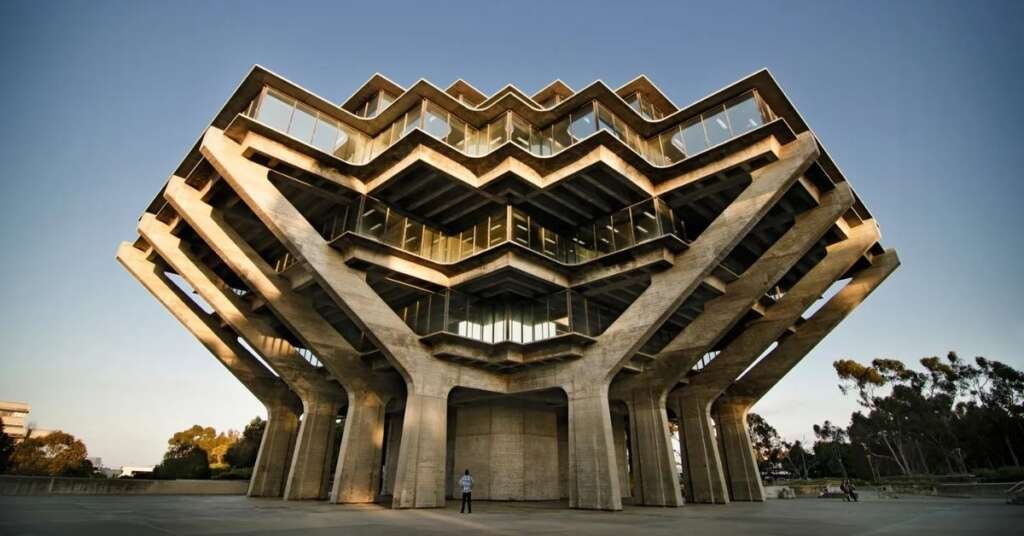
Iconic Brutalist building featuring exposed concrete surfaces, geometric forms, and dramatic architectural shadows.
Credits: https://www.gq.com/story/9-brutalist-wonders-of-the-architecture-world-1
Why Concrete Works So Well in Contemporary Design
One of the biggest misconceptions about Brutalism is that it only belongs to large institutional buildings. Today, architects are using concrete in entirely different ways.
Contemporary homes, galleries, offices, and hospitality projects often incorporate exposed concrete because it offers:
- Durability
- Simplicity
- Material richness
- Low maintenance
- Sculptural quality
Concrete has become less about monumentality and more about atmosphere. When paired with warm materials such as wood, stone, linen and greenery, concrete creates spaces that feel both sophisticated and grounded.
This balance explains why modern luxury interiors frequently borrow elements from Brutalist architecture.
Social Media Helped Reintroduce Brutalism
Ironically, one of the most analog architectural styles has found new life through digital culture. Platforms like Instagram, Pinterest and architecture-focused publications have transformed public perception of Brutalist buildings. Photographers discovered that:
- Concrete creates dramatic shadows
- Geometric forms photograph beautifully
- Minimal compositions highlight architectural details
- Weathered surfaces add visual depth
Buildings once dismissed as ugly suddenly became highly photogenic. What changed wasn’t necessarily the architecture. It was the way people learned to see it.
Brutalism and the Rise of Minimalism
Another reason Brutalist Architecture feels relevant today is its unexpected relationship with minimalism. Modern minimalism often focuses on:
- Simplicity
- Function
- Clean forms
- Material authenticity
Interestingly, these values align closely with Brutalist design principles. Both reject unnecessary ornamentation. Both prioritize form and function. Both embrace restraint. This shared philosophy has allowed Brutalist influences to naturally re-enter contemporary architecture.
Many modern minimalist homes could easily be described as softer, warmer interpretations of Brutalist thinking. Modern minimalist residence using exposed concrete, natural light, and clean architectural geometry.
Some Brutalist Icons Worth Studying
Many of the world’s most celebrated architects contributed to the Brutalist movement.
Le Corbusier: Unité d’Habitation, France
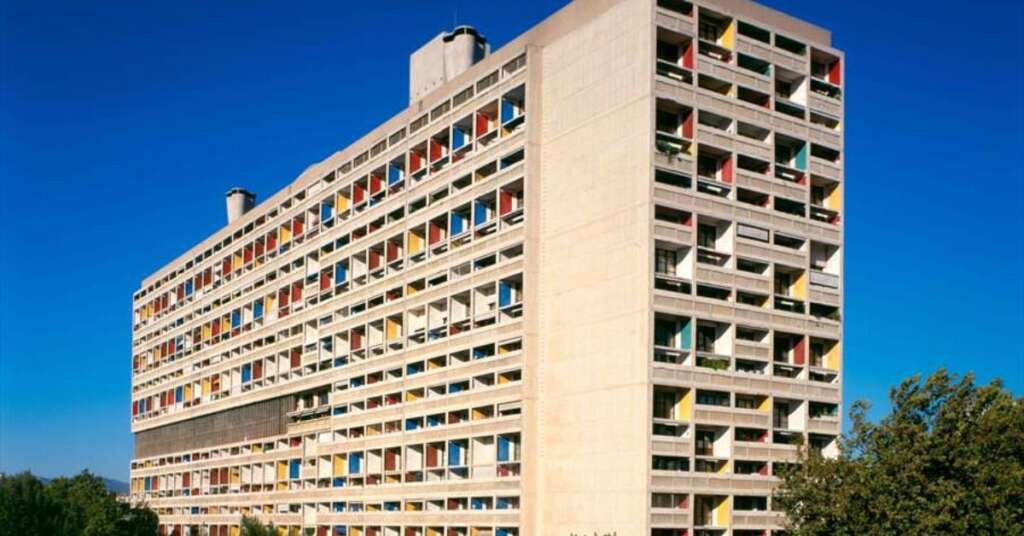
A pioneering housing project that influenced generations of architects through its bold use of concrete and community-focused planning.
Paul Rudolph: Yale Art and Architecture Building

Known for its complex spatial organization and sculptural concrete expression.
Marcel Breuer: Whitney Museum (Original Building), New York
Credits: https://www.wallpaper.com/architecture/sothebys-breuer-building-new-york
A powerful example of Brutalism’s ability to create iconic cultural architecture.
Balkrishna Doshi: Indian Institute of Management Bangalore
While not purely Brutalist, its exposed materials, monumental forms, and climate-responsive architecture reflect many Brutalist influences interpreted through an Indian lens.
Why Architects Are Looking at Brutalism Differently Today
Modern architects aren’t simply copying Brutalist buildings. They’re extracting lessons from them. Some of those lessons include:
| Brutalist Principle | Contemporary Relevance |
| Material Honesty | Sustainable design thinking |
| Structural Expression | Reduced visual clutter |
| Longevity | Durable architecture |
| Simplicity | Minimalist aesthetics |
| Spatial Drama | Experiential environments |
This reinterpretation has led to what many describe as Neo-Brutalism, where concrete remains central but is paired with warmer materials and more human-centered spaces.
Concrete Doesn’t Have to Feel Cold
Perhaps the biggest misconception about Brutalism is that concrete automatically creates uncomfortable environments. Today’s architects prove otherwise. Many contemporary projects combine concrete with:
- Timber ceilings
- Warm lighting
- Natural textiles
- Indoor landscaping
- Soft furnishings
The result feels surprisingly inviting. Instead of dominating a space, concrete becomes a calm and neutral backdrop.
This shift has played a huge role in Brutalism’s resurgence. People are discovering that concrete can feel warm when thoughtfully designed.
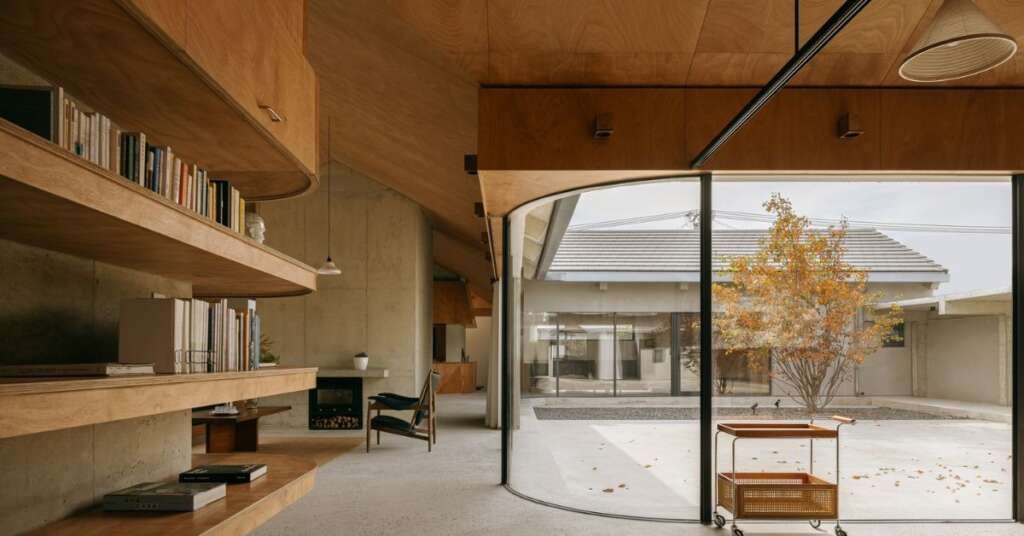
Contemporary interior combining exposed concrete walls with warm wood finishes, soft lighting and natural textures.
Credits: https://www.archdaily.com/933343/raw-interiors-20-projects-that-used-exposed-wood-and-concrete
Sustainability Is Changing the Conversation
Another reason Brutalism feels relevant today is durability. Many Brutalist buildings have survived for decades with remarkable structural resilience. In an era increasingly focused on sustainability, architects are asking an important question:
Is preserving and adapting existing buildings more sustainable than demolishing and rebuilding?
This has sparked renewed interest in many Brutalist landmarks around the world. Instead of viewing them as outdated structures, cities are beginning to see them as valuable architectural assets worth reimagining.
Also Read: Louvre Abu Dhabi Architecture: How Light, Shadow and Culture Come Together
Why Brutalism Feels Modern Again
The return of Brutalism isn’t really about nostalgia. It’s about values.
In a design culture increasingly focused on authenticity, material honesty, sustainability, and simplicity, Brutalist principles feel surprisingly aligned with contemporary priorities. People are once again appreciating:
- Real materials
- Strong architectural identity
- Timeless construction
- Minimal visual noise
- Expressive forms
What was once dismissed as harsh is now being understood as confident. What once felt outdated now feels enduring.
Final Thoughts
Brutalist Architecture Is Back because the world has changed.
As architecture moves away from excessive ornamentation and embraces authenticity, many of Brutalism’s original ideas suddenly feel relevant again. Exposed concrete, structural honesty, geometric clarity, and material expression are no longer viewed as relics of the past, they are becoming important tools for contemporary design.
The movement’s resurgence reminds us that architecture is often cyclical. Buildings once criticized can become admired. Styles once rejected can return with renewed significance.
And perhaps the biggest lesson of all is that Great architecture doesn’t always need to be beautiful at first glance. Sometimes it simply needs time for the world to catch up.