

Share This Article
The workspaces are not a place where we go to work anymore. It is a place where we spend a lot of time. It can affect how we feel. The people who design buildings and offices are starting to think about how they can make these places better for our health. They want to create spaces that’re good for our emotional balance, creativity and overall well-being.
Companies are starting to realize that the design of their offices can affect how happy and healthy their employees are. This is why the design of workspaces is becoming very important. Architects and designers are trying to create offices that’re not just efficient, but also comfortable and good for our mental health.
They are using things like light flexible layouts and elements from nature to create a sense of calm and well-being. The goal is to make workspaces where people feel motivated, calm and connected to others.
Why Well-Being Matters in Workspaces Design?
Our mental health is very important and it can be affected by the workspaces we are in. When we are in a space that’s not comfortable or calming it can make us feel stressed and anxious. This is why architects and designers are starting to think about how they can create spaces that’re good for our mental health.
They are trying to create offices that reduce stress, improve focus and encourage interaction. They are using things like calming colors, natural textures and comfortable furniture to create a sense of well-being.
Some of the things they are focusing on include:
- Reducing stress through calming environments
- Improving focus and concentration
- Encouraging interaction and collaboration
- Supporting flexibility and movement
- Enhancing comfort through planning
By doing these things companies can create healthier environments that make their employees happier and more productive.
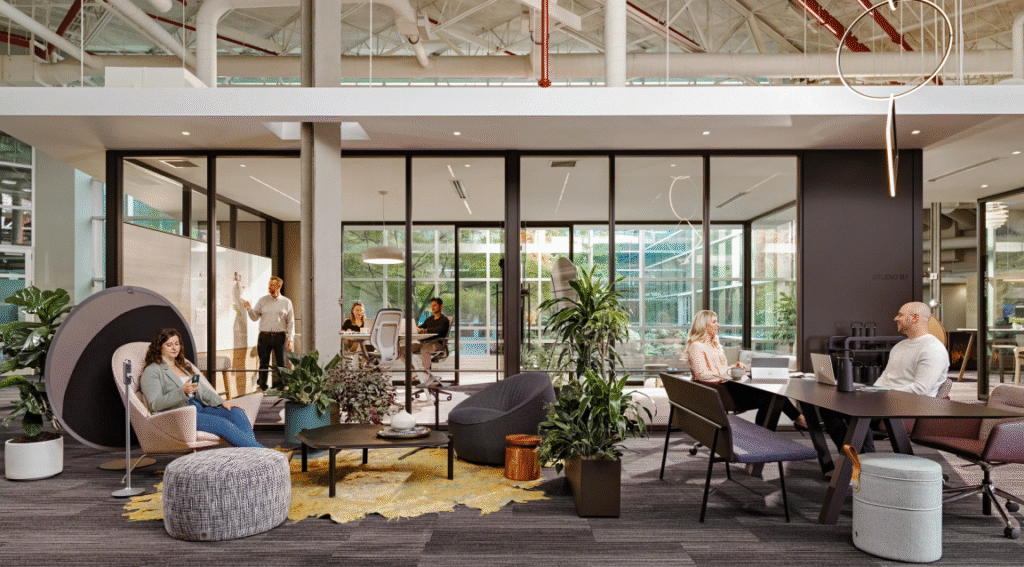
Natural Light and Biophilic Design for Workspaces
Natural light is very important for our well-being. It can improve our mood, energy levels and productivity. Architects are trying to use light as much as possible in their designs.
They are using things like:
- Windows
- Open layouts
- Skylights
- Courtyards
- Transparent partitions to bring natural light into the office.
They are also using elements from nature like plants and natural textures to create a sense of calm and well-being. This is called design.
Biophilic design can help reduce stress and improve air quality. It can also make the office feel more welcoming and comfortable.

Flexible Layouts and Adaptive Environments in Workspaces
The modern workplace is changing. More and more people are working remotely. Offices need to be flexible to accommodate different working styles.
Architects are designing offices that have types of spaces like:
- Collaborative zones
- Quiet focus rooms
- Informal lounges
- Multi-purpose meeting spaces
- Breakout areas
- Wellness rooms
These spaces can help reduce stress and improve productivity. They can also make the office feel more comfortable and welcoming.
Acoustic Comfort and Noise Reduction in Workspaces
Noise can be a problem in the workplace. It can be. Stressful. Architects are trying to reduce noise levels in offices by using things like:
- ceiling systems
- Sound-absorbing wall panels
- Upholstered furniture
- Zoned layouts
- Private meeting pods
- Soft flooring materials
They are also trying to create spaces that are quiet and calm where people can focus and concentrate.
The Role of Color and Materiality in Workspaces
The colors and materials used in an office can affect how we feel. Architects are trying to use colors and materials that are calming and comfortable.
They are using things like:
- earthy tones
- Warm wood finishes
- stone textures
- Soft fabrics
- Matte surfaces
These colors and materials can help create a sense of calm and well-being. They can also make the office feel more welcoming and comfortable.
Wellness-Focused Amenities in Contemporary Workspaces
Offices are not just about desks and meeting rooms. They are also about creating spaces that support our mental health.
Architects are designing offices that have amenities like:
- Meditation rooms
- Fitness areas
- Outdoor terraces
- Cafés and social lounges
- Relaxation spaces
- Indoor gardens
These amenities can help us take breaks, socialize and recharge during the workday.
Sustainability and Healthy Interiors in Workspaces
Sustainable architecture is very important for our well-being. It can help reduce stress and improve air quality.
Architects are designing offices that use materials and systems like:
- Low-VOC materials
- Energy-efficient lighting
- Natural ventilation
- Recycled materials
- Passive cooling systems
- Sustainable furniture
These systems can help create environments that are good for us and the planet.
Technology and Smart Workplaces Design
Technology is changing the way we design offices. It can help create spaces that’re more responsive and personalized.
Architects are using technology like:
- Automated lighting controls
- Occupancy sensors
- Temperature regulation
- Air quality monitoring
- Adjustable ergonomic furniture
- Digital collaboration systems
These technologies can help improve our comfort and productivity. They can also help reduce stress and improve our well-being.
The Future of Wellness-Centered Workplaces Architecture
The future of office design is about creating spaces that support our emotional experience and well-being. Architects are designing offices that’re like holistic ecosystems. They are using things like design, neuroarchitecture principles and sensory-responsive interiors to create spaces that are good for our mental health.
The future of office design is exciting. It is about creating spaces that support our well-being and make us happy and productive. As companies continue to realize the importance of employee wellness the design of workplaces will become more important. Architects will continue to create spaces that’re good for our mental health and well-being.
In the end the design of our workplaces can have an impact on our lives. It can affect how we feel, our productivity and our overall well-being. This is why it is so important to create spaces that’re good for us.
Also read: “The Future of Work: Revamping the Workplace with Smart Office Design Ideas”