


Share This Article
Some architects create impact through scale.
Some through complexity.
And then there is Tadao Ando — who creates impact through silence.
His architecture does not demand attention.
It earns it, slowly and deeply.
In a world dominated by visual noise and expressive forms, Tadao Ando architecture stands apart as something profoundly calm, almost meditative. It invites you not to look harder, but to feel more. And that is what makes his work truly inspiring.
If you enjoy exploring inspiring architecture and design insights, you can discover more curated content on our platform at SMART.POV.
Who Is Tadao Ando?
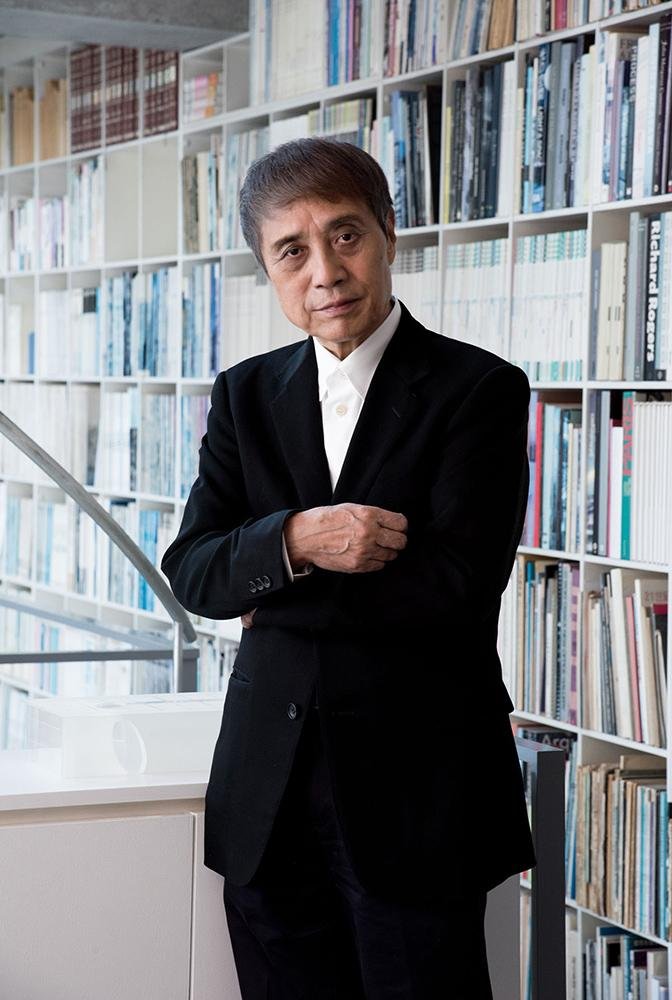
Tadao Ando is one of the most influential figures in contemporary architecture, known globally for redefining minimalist architecture through a deeply philosophical approach.
What makes his journey even more compelling is that he is entirely self-taught. Without formal architectural education, Ando traveled extensively, studying buildings firsthand, sketching, observing, and absorbing spatial experiences from around the world. Before architecture, he explored boxing — a discipline that perhaps influenced the precision and control seen in his work.
He later received the prestigious Pritzker Architecture Prize, establishing himself among the greatest architects of our time. However, what truly defines Tadao Ando architecture is not awards or recognition, but the clarity of thought that runs through every project.
His work is not about showing more.
It is about revealing what truly matters.
The Philosophy Behind Tadao Ando Architecture
At the core of Tadao Ando architecture lies a powerful belief — simplicity is not the absence of design, but the essence of it.
His spaces are defined by restraint. There is no unnecessary ornamentation, no visual clutter, and no attempt to impress through excess. Instead, Ando focuses on the fundamental elements of architecture — space, light, material, and proportion.
As an architect, what I find most inspiring about his work is the discipline it reflects. Designing with fewer elements is far more challenging than adding more. It requires clarity of vision and a deep understanding of how space affects human emotion.
Ando’s architecture does not overwhelm you.
It slows you down.
It creates a pause — a rare quality in today’s fast-paced environments.
Designing with Light: The Invisible Material
One of the most defining aspects of Tadao Ando architecture is his extraordinary use of light.
Unlike conventional approaches where lighting is treated as an addition, Ando designs light as if it were a physical material. He carefully orchestrates how natural light enters a space, how it moves across surfaces, and how it changes throughout the day.
This results in spaces that feel alive.
Light creates contrast against raw concrete surfaces, forming shadows that shift with time. These subtle changes transform static structures into dynamic experiences.
In many of his projects, light carries symbolic meaning. It is not just functional — it is emotional, even spiritual.
This approach is clearly visible in his iconic work, the Church of the Light, where a simple opening transforms an entire space into a powerful experience.
Iconic Project: Church of the Light

The Church of the Light is perhaps the most celebrated example of Tadao Ando architecture.
At first glance, the structure appears almost ordinary — a simple concrete volume with clean geometry. But as you enter the space, the experience transforms completely.
A cross-shaped opening in the wall allows natural light to enter, cutting through the darkness and defining the entire interior. There are no decorative elements, no distractions, and no unnecessary details.
What remains is pure architecture — space, light, and silence.
This project demonstrates Ando’s ability to create profound emotional impact using the simplest means. It is not the form that inspires, but the experience it creates.
Materiality: The Poetry of Concrete
Concrete is one of the most widely used materials in architecture, often associated with heaviness and rigidity. However, in Tadao Ando architecture, concrete becomes something entirely different.
His concrete surfaces are smooth, refined, and almost tactile in their quality. They reflect light softly, creating subtle variations in tone and texture.
What makes this approach inspiring is how Ando transforms a common material into something poetic.
Concrete in his work does not feel cold.
It feels calm.
It provides a neutral backdrop that allows light and space to take center stage. This careful balance between material and atmosphere is what gives his architecture its unique identity.
Nature and Architecture: A Quiet Dialogue
Another defining aspect of Tadao Ando architecture is its relationship with nature.
Rather than dominating the site, his buildings coexist with their surroundings. He often integrates elements such as water, courtyards, and framed views to create a connection between the built environment and nature.
This relationship is not loud or obvious.
It is subtle and intentional.
In many of his projects, you become more aware of nature because of how it is framed within the architecture. A view becomes more meaningful, light becomes more noticeable, and silence becomes more powerful.
This creates spaces that are not just functional, but deeply reflective.
Interior Experience: Designing for Emotion
Tadao Ando’s approach to interior design is inseparable from his architecture.
His interiors are not decorated — they are experienced.
Walls, floors, and ceilings are treated as continuous surfaces, creating a sense of flow and unity. There is a deliberate absence of distraction, allowing occupants to engage more deeply with the space.
What makes these interiors inspiring is their emotional quality. They do not overwhelm the senses. Instead, they create a sense of calm, encouraging reflection and awareness.
In a time where interior design trends often focus on visual impact, Ando’s work reminds us that true design lies in how a space makes you feel.
What Architects Can Learn from Tadao Ando
Tadao Ando architecture offers valuable lessons for every designer.
It teaches us that simplicity requires discipline, that materials should be respected, and that light is one of the most powerful tools in design.
Most importantly, it reminds us that architecture is not about adding more elements, but about making meaningful choices.
In a world where complexity is often celebrated, Ando shows us that clarity can be far more impactful.
While Tadao Ando architecture focuses on silence and minimalism, architects like Zaha Hadid explored fluidity and bold expression — a contrast you can explore on FOAID also they had explain a proper work of Zaha Hadid
Conclusion
Tadao Ando architecture stands as a powerful example of how minimalism can create maximum impact.
His work does not rely on spectacle or excess.
It relies on understanding — of space, light, material, and human experience.
That is what makes it truly inspiring.
As architects and designers, there is much to learn from his philosophy. Not just in how we design buildings, but in how we think about space itself.
Because sometimes, the most powerful architecture is not the one that demands attention —
but the one that stays with you long after you have left.