

Share This Article
Architecture is often used to show power, ambition and identity. Few private estates show this dramatically than Hacienda Nápoles, the once-infamous property owned by Pablo Escobar.
Located between Medellín and Bogotá in Colombia, Hacienda Nápoles was more than a residential estate. At its peak in the 1970s and 1980s it was a huge architectural and recreational complex that combined luxury living, entertainment, landscape design and private leisure facilities on a big scale.
Even though the estate is controversial because of its connection to Escobar and the violence of the drug trade, its architectural scale and engineering ambition still attract attention. Today Hacienda Nápoles is both a reminder of excess and an example of how architecture can shape memory.
1- The Beginnings of Pablo Escobar Hacienda Nápoles
Hacienda Nápoles was established around 1978 after Pablo Escobar and his associates bought thousands of acres of land in Puerto Triunfo, Antioquia. The estate quickly expanded into a self-contained complex covering 20 square kilometers.
Unlike luxury estates of the period Hacienda Nápoles was designed not just as a private residence but as a large-scale environment combining hospitality, recreation, transportation and entertainment.
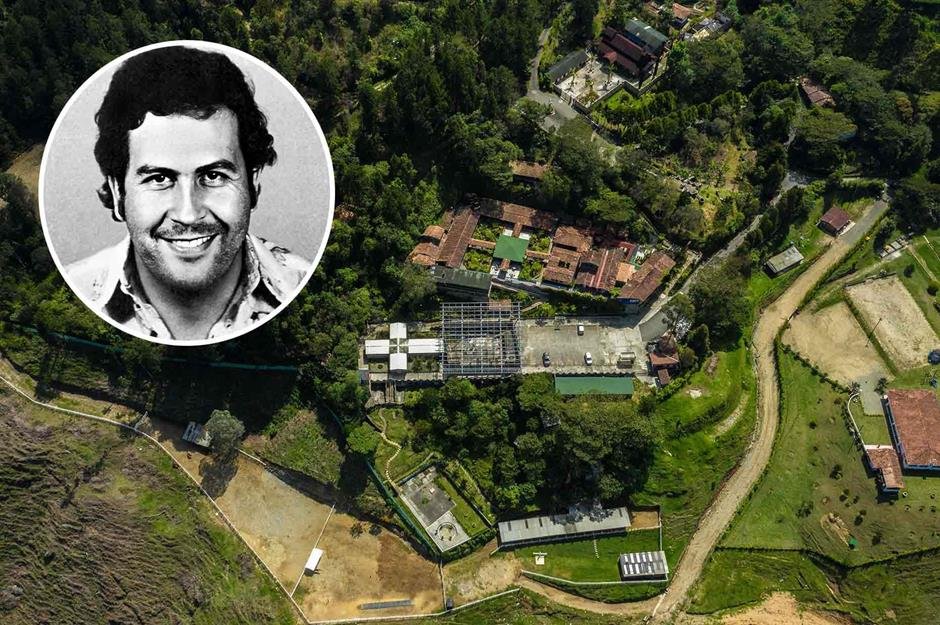
The property included:
* A Spanish colonial-style mansion
* Artificial lakes and landscaped gardens
* A private zoo with animals
* A bullring
*. Helipads
* Multiple swimming pools
* Sculpture gardens and themed installations
This scale of development was extremely unusual in Colombia during the 1980s and immediately distinguished the estate from conventional luxury homes.
2-Architectural Style and Design (Pablo House)
The architectural character of Hacienda Nápoles drew heavily from colonial influences blended with resort-style planning.
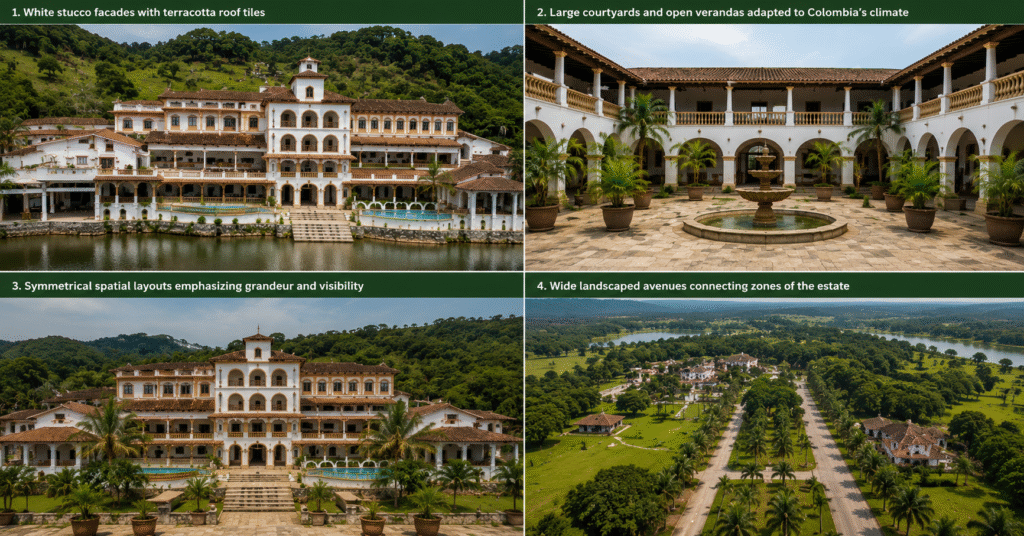
Key Architectural Features:
* White stucco facades with terracotta roof tiles
* Large courtyards and open verandas adapted to Colombia’s climate
* Symmetrical spatial layouts emphasizing grandeur and visibility
* Wide landscaped avenues connecting zones of the estate
The main residence was designed more like a luxury resort compound than a traditional family home. Large open spaces, expansive terraces and recreational zones created an atmosphere of spectacle rather than intimacy.Hacienda Nápoles relied heavily on scale and abundance. Every architectural gesture from pools to decorative gardens was intended to reinforce exclusivity and dominance.
3-Engineering and Infrastructure (Pablo House)
One of the remarkable aspects of Hacienda Nápoles was the level of infrastructure integrated into the property.
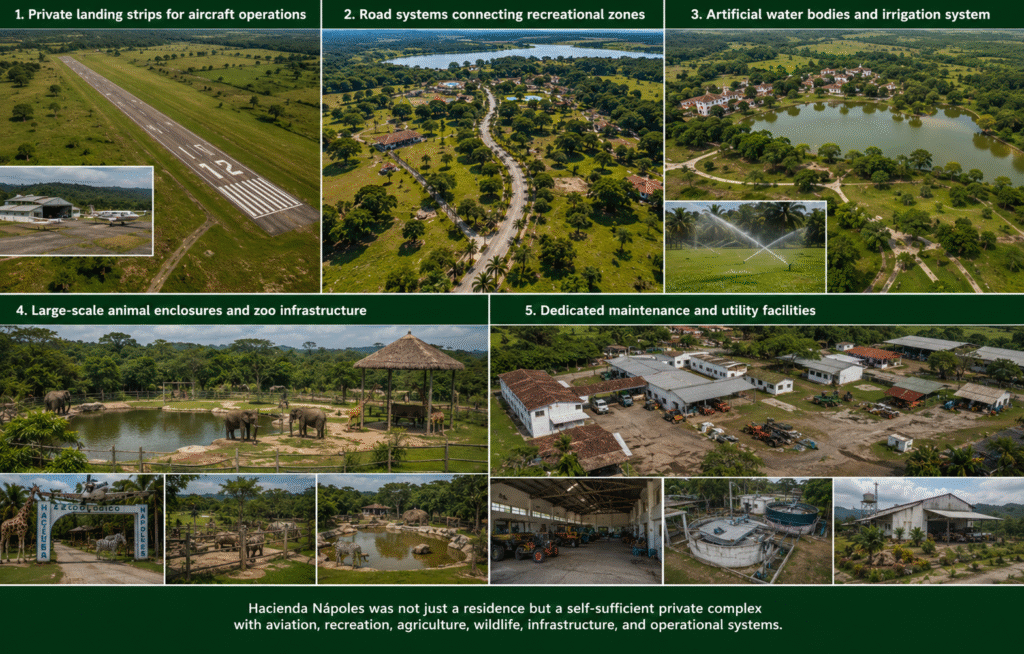
Significant Developments Within the Estate:
* Private landing strips for aircraft operations
* road systems connecting recreational zones
* Artificial water bodies and irrigation system
* Large-scale animal enclosures and zoo infrastructure
* Dedicated maintenance and utility facilities
The estate reportedly required hundreds of workers for landscaping, maintenance, logistics and operations during its peak years.The inclusion of a zoo featuring elephants, giraffes, hippopotamuses and exotic birds transformed the estate into one of the most unusual private residential compounds in the world. The famous “cocaine hippos” that still inhabit parts of Colombia originated from this property.
4-What Made Pablo Escobar ‘s Hacienda Nápoles Different ?
While many luxury homes focus on refinement or exclusivity, Hacienda Nápoles distinguished itself through scale, spectacle and self-sufficiency.
Elements That Made the Estate Unique:
1. Resort-Scale Planning–The property functioned more like a city or entertainment complex than a residence.
2. Integration of Recreation and Architecture–Features such as race tracks, zoos, lakes and theme-based landscapes transformed the estate into an environment.
3. Transportation Infrastructure:The presence of airstrips and helipads reflected a level of infrastructural planning rarely seen in residential estates.
4. Symbolic Architecture–Many elements of the property were designed to communicate status and authority rather than subtle luxury.
5. Cultural Mythology–The estate eventually became globally recognized through documentaries, films, media coverage and popular culture references.
5-The Transformation of Pablo Escobar’s Hacienda Nápoles
After Pablo Escobar’s death in 1993 the estate was seized by the government and gradually abandoned. Parts of the property fell into disrepair while others were demolished or repurposed. In years sections of Hacienda Nápoles were redeveloped into a public theme park and tourism destination. The transformation represented an attempt to reclaim the site from its historical associations and convert it into a recreational and educational environment.
Today the property includes:
* Water parks
* Wildlife attractions
* Museums and historical exhibits
* Hotels and family recreation zones
This adaptive reuse demonstrates how architecture and urban spaces can evolve over time shifting from symbols of power to publicly accessible cultural infrastructure.

6-Cultural Fascination and Global Fame earned by Pablo Residence
Hacienda Nápoles became internationally famous not because of its owner but because of the surreal scale of the estate itself.Images of animals, abandoned mansions, luxury vehicles and enormous recreational spaces created a myth-like public perception around the property.
Television series, documentaries and international media further amplified interest in the estate.Colombia has increasingly attempted to move from the glorification of narcoculture by reframing these spaces through historical education and memorialization.This tension between architecture, memory and cultural identity continues to shape how Hacienda Nápoles is viewed today.
7- Architecture, Power and Social Influence held by Pablo’s Hacienda Nápoles
The story of Hacienda Nápoles highlights how architecture can become deeply connected to politics, economics and public imagination.The estate demonstrates how built environments can communicate influence and control through scale, infrastructure and spectacle. At the time its later transformation reflects society’s ability to reinterpret architecture over generations.
Today the property serves as an example of how architecture can outlive its purpose and acquire entirely new meanings through historical change.
8- A Living Paradise to be remembered
Hacienda Nápoles remains one of the extraordinary and controversial residential estates ever constructed in Latin America. From its colonial-inspired mansion to its massive recreational infrastructure the estate blurred the boundaries between private residence, entertainment complex and symbolic monument.
The legacy surrounding Pablo Escobar remains deeply complex and controversial. The architectural scale and cultural impact of Hacienda Nápoles continue to fascinate historians, architects and visitors alike.
Ultimately the estate stands as a reminder that architecture is not only about buildings it is also about the stories, ambitions and histories attached to them. A quick look into Pablo Escobar’s Life is explained in the link here-https://youtu.be/bSOi7FEjcyw?si=rDoX4Nw3x5QniUrq.
One such design set in pune in today’s time with minimalist luxury can be studied following this blog-https://smart-pov.com/minimalist-luxury-meets-nature-in-this-pune-villa-by-span-architects/
FAQ
What is this post about? It covers the main idea with practical takeaways and examples.